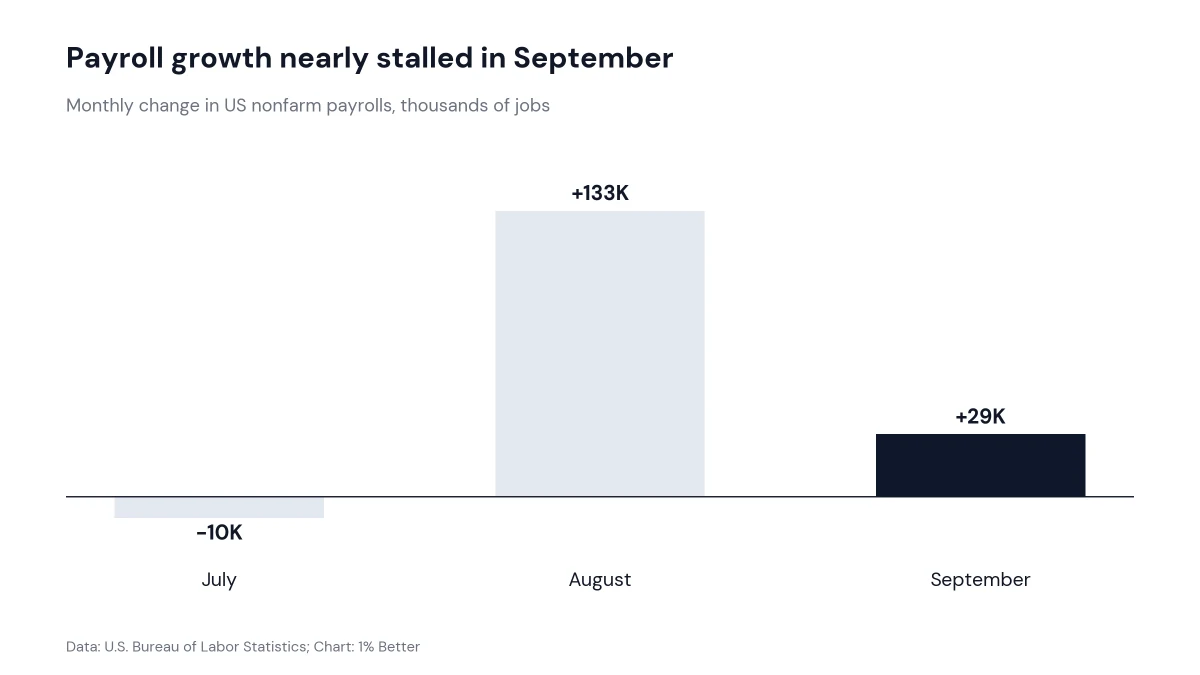
Nonfarm payrolls grew by 29,000 in September and the unemployment rate edged up to 4.2%, the Bureau of Labor Statistics reported Friday.
By the numbers: Payrolls rose 29,000 against the 84,000 economists surveyed by Dow Jones had expected, and unemployment ticked up to 4.2%. The prior 12 months averaged 45,000 jobs a month.
- July was revised from a gain of 21,000 to a loss of 10,000, and August fell from 162,000 to 133,000.
Zoom in: Health care added 17,000 jobs, construction 11,000 and manufacturing 9,000. Financial activities shed 7,000 and is down 129,000 since a May 2025 peak, with insurance carriers accounting for 90,000 of that.
The backstory: The jobless rate has stayed in a 4.1% to 4.3% band since March, and the household survey ran hotter than the payroll count. Employment there rose 406,000 and the labor force grew 485,000, lifting participation to 61.8%.
- "For the Fed, this number should be the nail in the coffin for an October hike," said Thomas Simons, chief US economist at Jefferies.
Between the lines: Markets read the miss as a reason for the Fed to stand pat: odds of a hold at the October 27-28 meeting jumped to 82.8% on CME Group's FedWatch tool, and traders now look to December for the next move.
- "Americans are frustrated by the lack of opportunities right now," said Heather Long, chief economist at Navy Federal Credit Union, who called wage growth a new five-year low.
Yes, but: Wages kept cooling. Average hourly earnings rose 5 cents to $37.81, up 3.0% over the year, which CNBC noted is the slowest pace since May 2021.
Why it matters: Hiring this slow with inflation near 3% squeezes both sides of a household budget: fewer openings for job seekers and wage growth that barely keeps up with prices. The next report lands November 6.