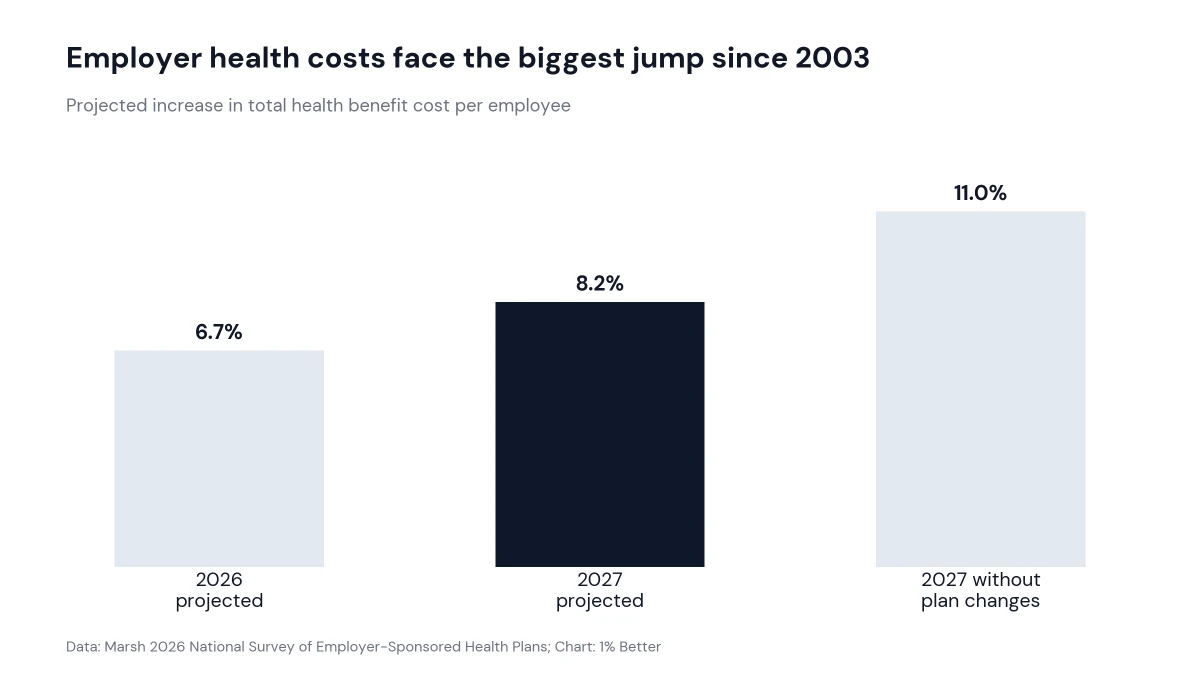
Total health benefit cost per employee is set to rise 8.2% in 2027, the steepest increase since 2003, according to Marsh's national employer survey.
By the numbers: The 8.2% figure already accounts for planned cost-reduction measures. Employers said their current plans would cost 11% more in 2027 if they took no action, against a 6.7% average increase projected for this year.
- 2027 would be the fifth consecutive year of elevated growth and the steepest of the five, Marsh said.
Zoom in: Marsh's US chief actuary for health and benefits, Sunit Patel, put GLP-1 weight management drugs at a full percentage point of 2027 cost growth. He also cited AI-enabled billing software that files more and higher-level claims, and payouts to out-of-network providers under the No Surprises Act.
What they're saying: "Few organizations can absorb health cost increases that outpace inflation without making difficult financial decisions," said Simon Camaj, Marsh's US health and benefits leader.
Between the lines: About two-thirds of employers with 500 or more workers expect to raise the employee share of premiums, so many paycheck deductions will climb by more than the 8.2% average.
- About 166 million Americans under 65 get coverage at work, and the average worker paid $6,850 in annual premiums in 2025 while employers contributed more than $20,000, per KFF figures cited by CNBC.
What's next: Open enrollment is the lever workers actually control. Over a third of large employers will offer a non-traditional option in 2027, such as variable copay or high-performance network plans that cut both deductions and out-of-pocket costs.
Why it matters: A higher deductible moves the cost from the paycheck to the moment someone needs care, so the headline premium tells only part of the story. Comparing plan options during open enrollment is the one decision that changes the number.