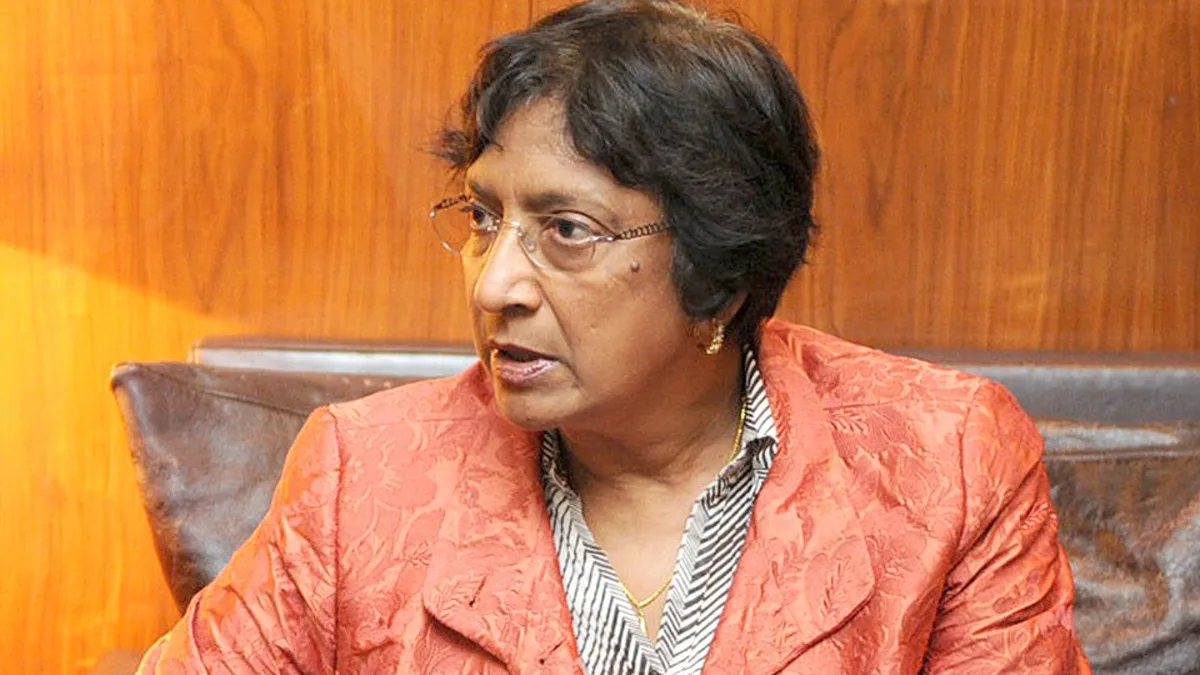
The Norwegian Nobel Committee awarded the 125th Nobel Peace Prize to Navanethem Pillay on Friday for her efforts to promote peace and international law.
The backstory: Pillay was born into a family of Indian Tamil origin under apartheid in Durban, South Africa, and became a lawyer who defended Nelson Mandela and others who stood up against apartheid. She went on to serve as a judge on the High Court in South Africa.
- She chaired the UN Independent International Commission of Inquiry on the Occupied Palestinian Territory and served as UN High Commissioner for Human Rights.
Zoom in: At the International Criminal Tribunal for Rwanda, the committee said her influence was a significant factor in establishing that rape and sexual violence could constitute a crime against humanity and genocide.
- In the same case a defendant faced charges of incitement to commit genocide purely for spreading propaganda, a first in international law.
The big picture: The committee framed the award as a defence of a system under strain, writing that the rules based international order has never been perfect and that the greatest powers have often evaded responsibility.
Between the lines: The committee also noted that cases brought under international law have produced different results depending on who is the perpetrator and who is the victim, a rare acknowledgement of the system’s limits inside a prize citation.
What they're saying: Whenever might overtakes right, it undermines stability, trust and peaceful co-existence, the committee wrote, adding that peace requires justice.
What's next: Pillay today sits as a judge on the International Court of Justice in the case where Myanmar stands accused of genocide.
Why it matters: The prize lands as international courts face sanctions and political attack, and the committee chose to honour the machinery of international law itself over any single peace deal.