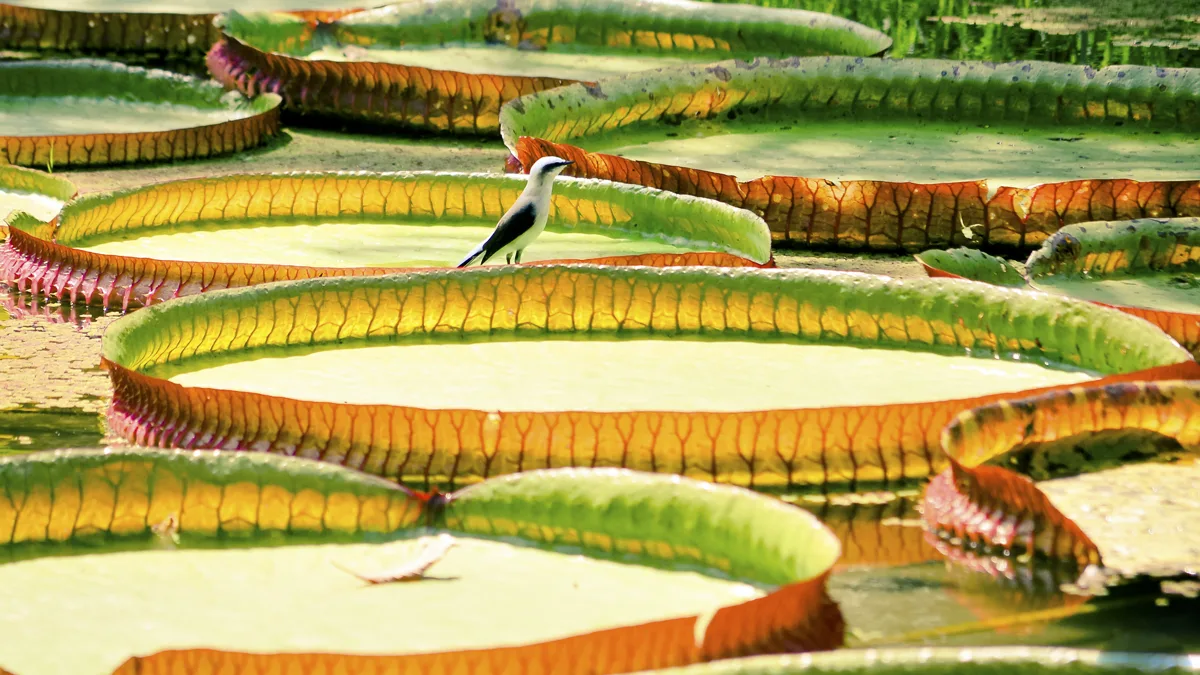
A paper published Friday in the journal Phytotaxa confirmed Victoria colombiana as the fourth known species of giant waterlily, three years after a tourist’s Instagram photo tipped off a Kew expert.
The backstory: Three years ago Carlos Magdalena, a waterlily expert at the Royal Botanic Gardens, Kew, was scrolling Instagram and saw a photo of someone swimming among giant waterlilies in the Inirida River in Guainia, Colombia. He immediately suspected something unusual, because the range of the common Victoria amazonica stops short of that river.
- Jeremiah Harris, who took the photo and runs a carnivorous plant nursery in the US, had identified it as the common species.
Zoom in: Magdalena messaged Harris to pin down the location, then spent years on satellite imagery, funding and permits before a five-day expedition with a team from the Jardin Botanico in Bogota and members of local indigenous reserves.
What they're saying: The team found nothing for days until their driver pointed them somewhere new. With 10 hours left before their flight, they sailed overnight in darkness to a small lake deep in flooded rainforest and located a population.
- It was so emotional I shed a tear, Magdalena said, calling the find jaw dropping.
By the numbers: Giant waterlilies can measure up to three metres across and carry the weight of a small child. The team estimates 30 to 50 Victoria colombiana plants remain in the wild.
The big picture: Taxonomist Maarten Christenhusz said new species are found all the time, though few are as large, spectacular and emblematic as this one, which can even be seen from space.
What's next: The team is working toward an IUCN Red List designation and hopes to collect seed, cultivate it in Bogota and possibly establish a naturalised population in a more accessible lake within indigenous territory.
Why it matters: One of the largest flowering plants on Earth sat undescribed until a holidaymaker posted a selfie, a useful measure of how much of the planet remains uncatalogued.