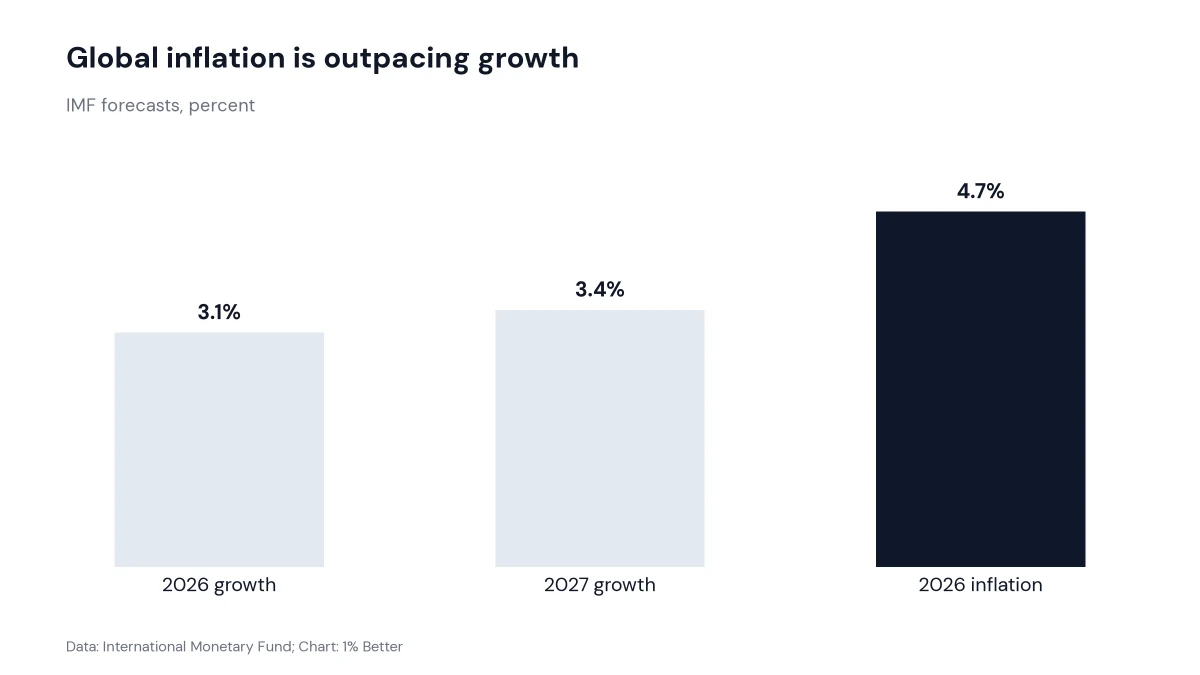
The IMF says global growth remains resilient, though inflation will reach 4.7% this year and countries have less room to absorb another shock.
By the numbers: The International Monetary Fund projects global growth of 3.1% in 2026 and 3.4% in 2027. It expects inflation to reach 4.7% this year as energy and food prices rise.
- Countries benefiting from AI investment or favorable trade prices are performing relatively well, the IMF says. Energy importers and lower-income economies face a harder combination of price pressure and weak growth.
The big picture: The world economy has absorbed recent shocks better than expected, but the IMF says the margins that enabled that resilience are narrowing quickly. High debt and rising borrowing costs leave governments with less fiscal space.
- Deniz Igan of the IMF's Research Department said the outlook is increasingly uneven beneath the global totals. Middle East escalation, elevated sovereign bond yields and renewed trade tension all tilt the risks downward.
Between the lines: AI cuts both ways in the forecast. Investment is lifting countries tied to the boom, while expectations that outrun eventual profits could produce a financial-market correction.
- The IMF also sees an upside if AI productivity gains arrive sooner. That makes technology investment one of the few forces that could raise growth while war and energy costs pull the other way.
What's next: The fund recommends data-dependent monetary policy and temporary, targeted help for households facing food and energy costs. It also urges countries to rebuild fiscal buffers, strengthen energy security and preserve open trade.
Why it matters: A global average can hide the pressure felt at a grocery store, utility bill or bond auction. Higher near-term inflation reduces the odds of quick rate relief, while shrinking government buffers make the next crisis harder to cushion.