Researchers mapped 1.7 million weight measurements from 52,236 cancer patients to identify when dangerous wasting begins and what predicts it.
The big picture: Cancer cachexia is progressive, unintentional weight loss with muscle wasting, and it affects about half of patients with cancer. A new Nature Medicine study turns routine weight, blood and tumor data into a timeline of when these episodes appear.
- Researchers analyzed 52,236 adults treated at Memorial Sloan Kettering across 589 cancer types and subtypes. The data included about 1.7 million weight measurements collected from 2010 through 2024.
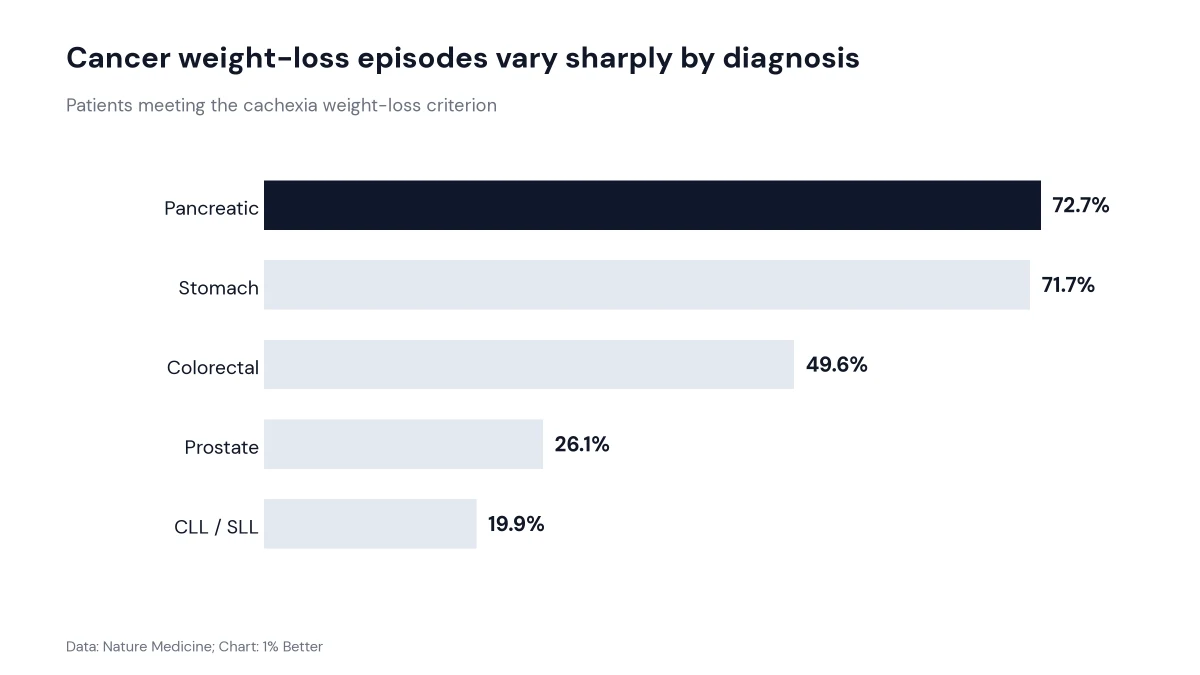
By the numbers: Weight-loss episodes affected 72.7% of patients with pancreatic cancer, 71.7% with stomach cancer and 49.6% with colorectal cancer. Rates were 26.1% in prostate cancer and 19.9% in chronic lymphocytic leukemia or small lymphocytic lymphoma.
- In an outside Dana-Farber group of 5,785 patients, 55.2% met the weight-loss criterion at least once. About 32% of those patients experienced two or more episodes.
Zoom in: Episodes clustered near disease progression and carried consistent blood patterns: lower albumin and hemoglobin plus higher liver enzymes. Several tumor genotypes, especially TP53 mutations, were associated with more frequent onset.
- The team built risk models for lung, colorectal and prostate cancers and validated them outside the original hospital. The study links prediction to measurements already collected during routine care.
Yes, but: The work is observational, so the weight loss can signal advancing disease without proving that it caused worse survival. Different cancers also showed sharply different timing and prevalence.
Why it matters: Unplanned weight loss during cancer treatment is clinical information, not a cosmetic side effect. Tracking the pattern alongside routine labs could help care teams intervene earlier, preserve treatment tolerance and recognize progression sooner.