A Kandinsky that fetched 22,000 pounds at a 1964 Guggenheim Foundation sale returns to auction on November 17 with an estimate of $60 million to $80 million.
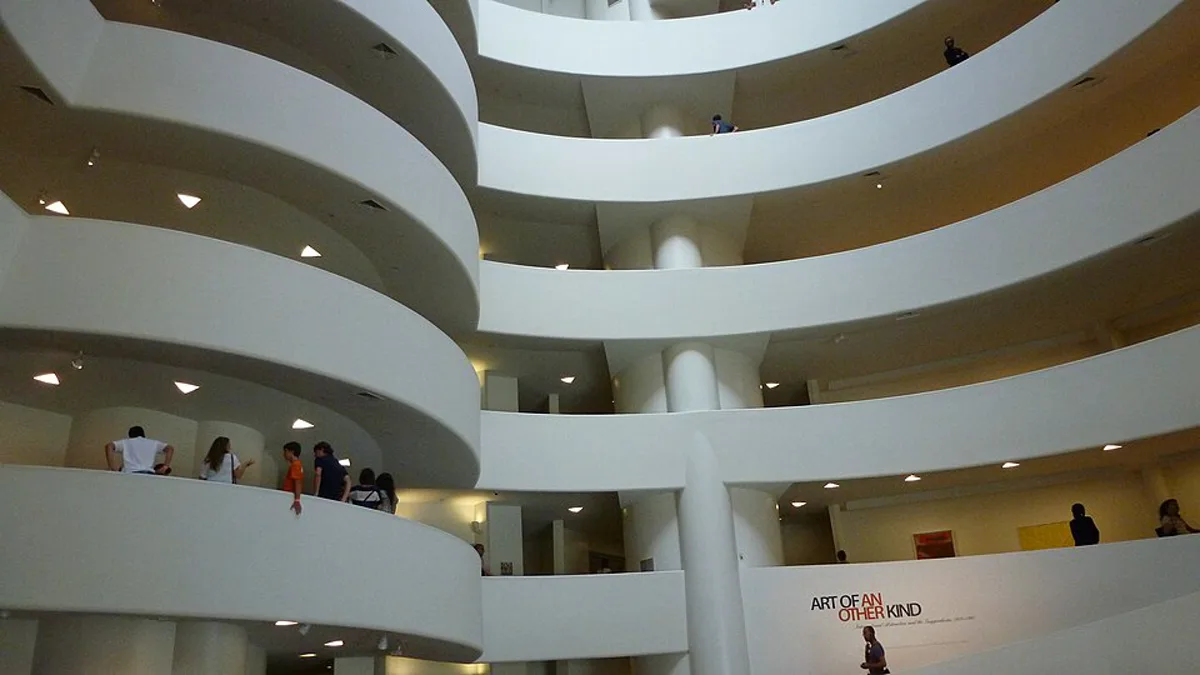
The backstory: Fifteen years after Solomon R. Guggenheim died, his foundation decided it held more Kandinskys than it could show. In 1964 it put 50 of its 170 Kandinsky works up for sale for want of space.
- His nephew Harry F. Guggenheim said trustees feared the art would otherwise stay hidden away in the vaults, and that they had concluded this should not be the fate of these paintings.
By the numbers: The 50 paintings together brought 536,580 pounds at the London auction, around $1.5 million at the time. Betonte Ecken alone drew a winning bid of 22,000 pounds, roughly $62,000 then or $540,000 in today's money.
Zoom in: Kandinsky painted the 130 by 130 centimetre canvas at the Bauhaus between December 1922 and January 1923, chasing what he called a harmony of clashing discords. Christie's offers it in the 20th Century Evening Sale in New York on November 17.
What they're saying: "The Guggenheim had such an embarrassment of riches back then," said Max Carter, global chairman of 20th and 21st century art at Christie's. The foundation "sold tremendous masterpieces, which would be unthinkable to sell today."
- Alex Rotter, global president of Christie's, called the work an explosive fusion of colour, line and form, with undulating hills and a steeple flashing in and out of focus.
The bottom line: Christie's says a guarantor has confirmed an offer above the 37.2 million pound ($44.55 million) record paid for Kandinsky's Murnau mit Kirche II in 2023, so the artist's record falls on the night.
What's next: The current owners bought the work at a sale in 1986, per Christie's, and bidding opens in New York on November 17.
Why it matters: Deaccessioning looks cheap in the moment and expensive in hindsight. A museum traded this canvas for about $62,000 in 1964 to free up storage, and the same canvas now carries a $60 million to $80 million estimate.