Federal Reserve officials expect to raise interest rates once more before the end of the year to push back on inflation that has run above target for more than five years.
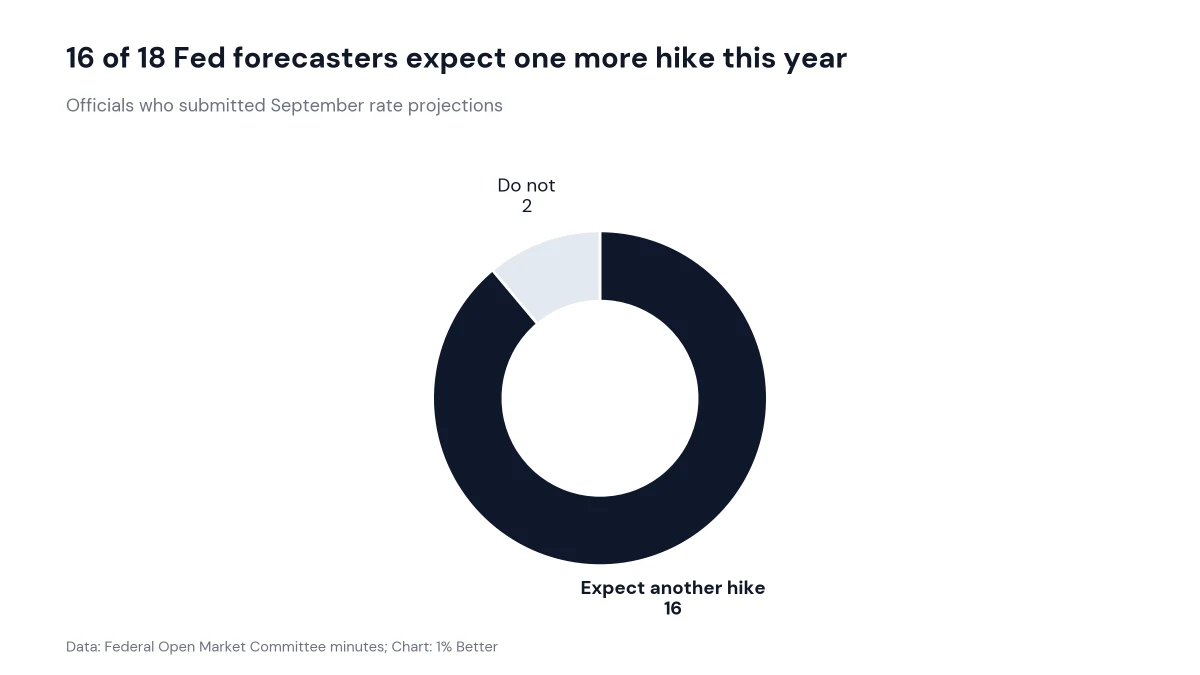
By the numbers: Of the 18 FOMC officials who submitted forecasts, 16 said they expected another increase this year, and as a group the committee penciled in none for 2027. The September vote to raise the benchmark rate a quarter point was unanimous.
- "With regard to the outlook for monetary policy beyond the current meeting, most participants assessed that another increase in the target range for the federal funds rate would likely be appropriate by year end," the minutes said.
Between the lines: The minutes withhold the timing. Participants stressed that they approach each meeting with an open mind and that future decisions depend on incoming information and the balance of risks. The Fed next sets rates on October 28 and again on December 9.
The backstory: Several officials had signaled reluctance before the September meeting and backed the hike anyway. Many participants argued a higher path was prudent on risk-management grounds, insurance against inflation staying above target because of stronger demand or fresh supply shocks.
Yes, but: Markets briefly bet on a follow-up at the late-October meeting, and recent data cooled that. Core PCE inflation ran 3% in August and the headline reading 3.4%, both above the 2% target yet softer than forecasters expected.
- Treasury yields sit near levels last seen in 2002, a rise officials attributed to expectations for higher Fed rates, the artificial intelligence buildout and solid growth. Staff economists said some of the move may trace to the Treasury's debt buyback program.
Why it matters: Mortgage, car loan and credit card rates track the Fed's path, so another quarter point lands on household budgets before the holidays. Savers collect the other side of it in higher yields on cash.