Tesla unveiled its long-delayed next-generation Roadster on Thursday from a SpaceX test site in McGregor, Texas, nearly a decade after the company began taking deposits for the car.
Zoom in: A white two-seater raced up a curved ramp, clung to it upside down, vaulted off, flipped in mid-air and hovered slowly before landing. Tesla’s timer showed zero to 60 miles per hour in under one second, a run vehicle engineering VP Lars Moravy demonstrated for the live audience.
- "You’re going to see the results of what happens when you have a collaboration with the world’s best car company and the world’s best rocket company," Elon Musk said at the event.
By the numbers: The prototype carries SpaceX thrusters, carbon overlay pressure vessels, diffusers and powerful fans, plus a steer-by-wire system and a steering yoke, and is built to be as lightweight as possible. Tesla reopened reservations in recent weeks at $50,000 in the US, Canada and China.
The backstory: Musk first promoted the refreshed Roadster at an event in November 2017, then missed every targeted delivery date. OpenAI co-founder Sam Altman asked for his deposit back last year, writing that he was excited for the car and understood delays, "but 7.5 years has felt like a long time to wait."
Yes, but: Musk set production for 2028 and announced no price. Tesla withheld specifications for other performance variants, and the Roadster is expected to be a high-end, low-volume model.
- The car ships without Tesla’s FSD driver-assistance system. Musk said it will be the last vehicle the company produces that is intended to be controlled by a human driver.
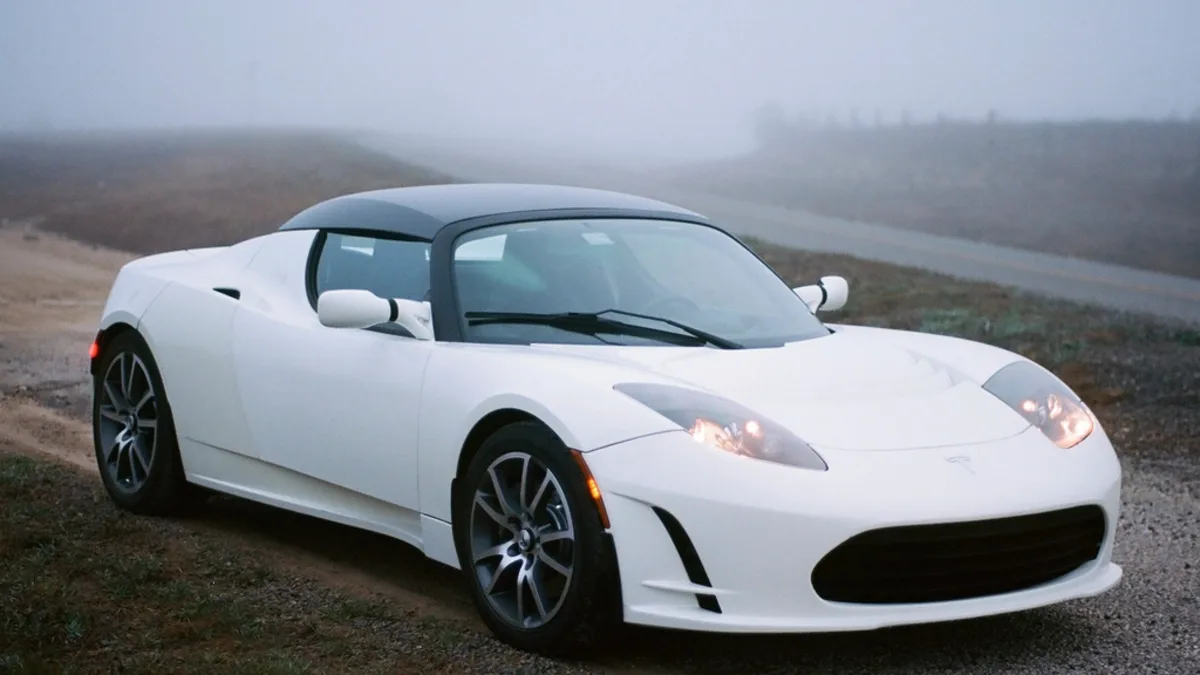
The big picture: The original Roadster, engineered by a team under founding CEO Martin Eberhard on a Lotus Elise chassis, was delivered from 2008 until 2012 in small volumes at roughly $100,000.
Why it matters: A halo car barely moves Tesla’s earnings, but the hardware inside this one is the clearest public demonstration yet of Musk folding SpaceX engineering into a consumer product.