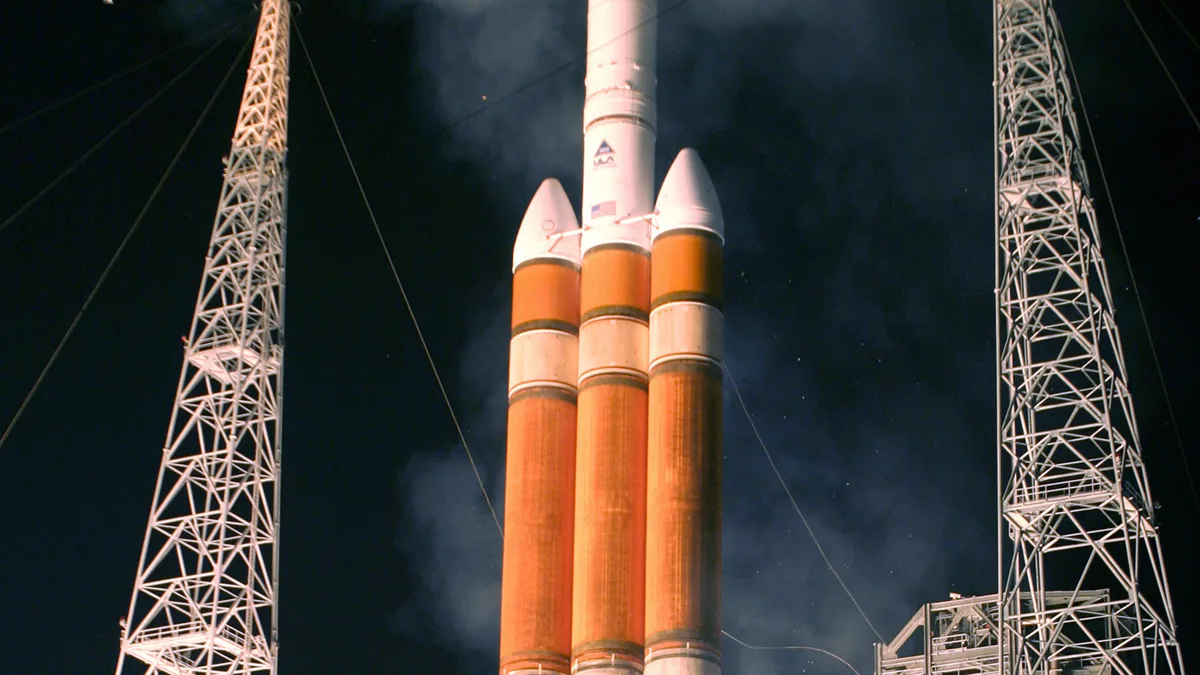
The US Space Force said the final two Defense Support Program satellites have been retired, ending more than half a century of space-based missile warning.
The big picture: The first DSP satellite launched in November 1970 on a Titan IIIC from what is now Cape Canaveral Space Force Station. The constellation used infrared sensors in geosynchronous orbit to catch the heat of a missile launch and relay it to ground stations worldwide.
- Early satellites weighed about a metric ton and carried roughly 2,000 infrared detectors. Later versions carried more than 6,000 detectors and weighed about 2.5 tons, per Ars Technica.
Zoom in: The two survivors performed on-orbit maneuvers during US Space Command's Apollo Maneuvers 2026 live-fly exercise in September, then raised their orbits into supersynchronous disposal.
What they're saying: "These last two satellites were the culminating end to over a half century of space-based early warning," said Space Force Colonel Brandon Davenport, the Mission Delta 4 commander, crediting DSP with ensuring deterrence through the Cold War.
The backstory: Built to catch Soviet ICBMs, the satellites later proved useful against Iraqi Scud launches. Launches of new DSP spacecraft continued until 2007, and one rode the shuttle Atlantis to orbit in 1991.
- "Retiring our legacy DSP system allows us to best posture for the future," said Lieutenant Colonel Ann Hughes, who commands the 2nd Space Warning Squadron.
What's next: The Space Based Infrared System, flying since 2011, carries the mission now with sensors that catch dimmer events and buy longer warning time. Next-Generation Overhead Persistent Infrared satellites follow, with the first possibly launching within 12 months on a Vulcan rocket.
Why it matters: Missile warning is the tripwire the entire US nuclear posture rests on, and swapping it out is a rare, high-stakes handover of a system that ran continuously for 55 years.