Patient actors simulating avian influenza A(H5) were both masked and isolated in only 44 of 73 unannounced drills at health care facilities, the CDC reported.
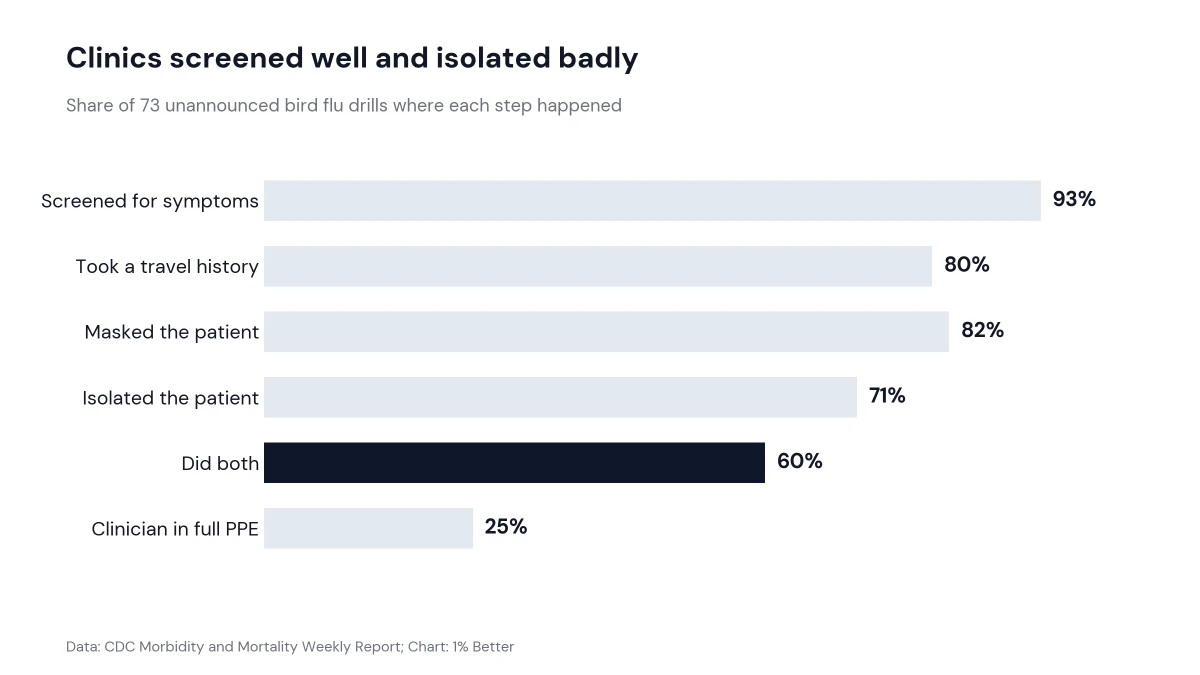
By the numbers: The drills ran from January through June 2026 across New Jersey, New York and the US Virgin Islands. Masking and isolation both happened in 44 of 73 drills, or 60%.
- Median time to masking was 2 minutes against a 1-minute target. Median time to isolation was 11 minutes against a 10-minute target.
Zoom in: Facilities screened for symptoms in 68 drills (93%) and took a travel history in 58 (80%). The clinician wore every recommended piece of protective equipment in 17 drills (25%), and teams planned to alert infection control in 40 (54%).
The backstory: New York City’s health department has run unannounced drills in emergency departments for years, and extended them here to outpatient clinics and urgent care centers, which have become the default door for acute infections and had rarely been tested.
- The actors wore makeup to look ill, used eye drops and petroleum jelly to mimic pink eye, faked a cough and reported taking Motrin, Ars Technica reported. Asked about sick contacts, they offered: "Does a sick bird count?"
Yes, but: The scenario was designed to be hard. The patient reported no foreign travel, so staff had to catch the animal exposure from a volunteered story about a duck instead of a travel question.
Why it matters: The first two minutes at a clinic door decide whether one patient becomes an outbreak. The authors wrote that the drills show where staff need training on earlier identification, masking and isolation of feverish patients.
- Practical version for a reader: bring your own mask to urgent care, and lead with the exposure, not the symptom.