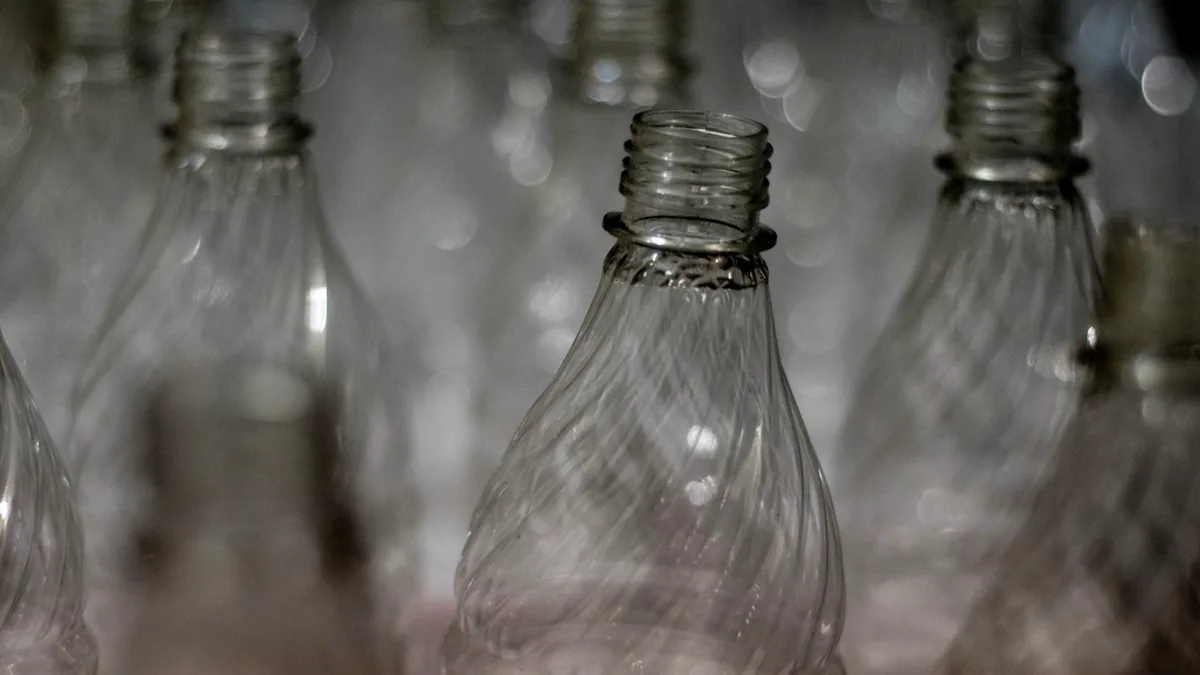
Plastics long assumed to be chemically inert generate reactive oxygen species simply by sitting in water, Columbia University researchers reported in Nature on Wednesday.
Zoom in: The team stirred polystyrene powder into water containing methyl orange, a yellow dye that reactive oxygen species break apart. Over 10 days the solution faded almost to colorless, losing nearly 90% of the dye, while the dye held up in ethanol and other solvents.
By the numbers: All six plastics tested generated radicals: polyethylene, polypropylene, polystyrene, PVC, PET and acrylic. The most water-repellent, polyethylene and polypropylene, were the most active, and PET and acrylic were the least.
- "ROS will essentially bump into proteins, lipids, DNA, and cause damage," said Wei Min, the Columbia chemist whose lab led the work. "You could break a DNA strand into segments. You could mutate DNA; you could misfold proteins."
The big picture: Water molecules pressed against a water-repellent surface lose some of their hydrogen bonds. The team’s simulations showed that lowers the energy needed to turn hydroxide ions into hydroxyl radicals, and the plastic surfaces also build up a negative charge in water that lowers the cost further.
Between the lines: Mouse red blood cells that touched polystyrene particles broke into fragments, and the damage from each plastic tracked how many radicals it produced. Adding caffeine, which mops up radicals, largely stopped a common test protein from clumping on the surface.
Yes, but: Min’s earlier microdroplet work drew criticism that its reactive chemicals came from contamination. His team used several independent detection methods plus a surfactant control, and he says they cannot rule out impurities 100%.
Why it matters: Microplastics already turn up in drinking water, human blood, arteries and brains. Whether they directly cause human disease is still being researched, Min said, and this work hands that research a specific mechanism to test.