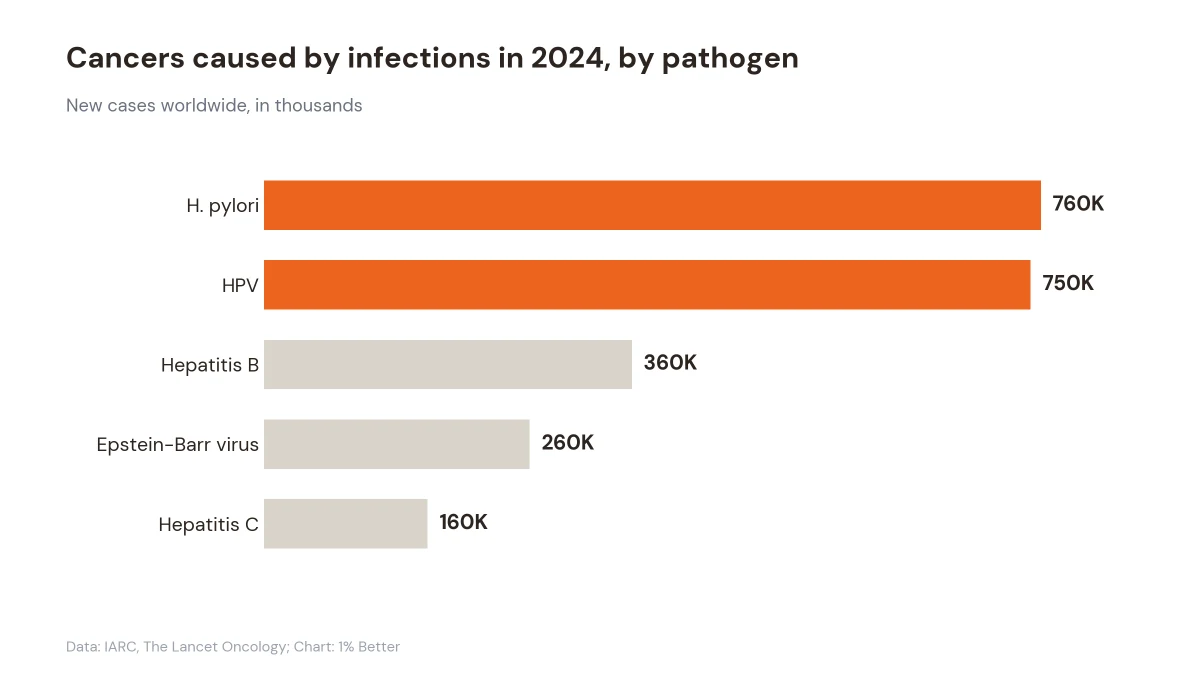
An estimated 2.3 million new cancer cases in 2024, about 12% of the global total, were caused by infections, according to a study from the WHO's International Agency for Research on Cancer published in The Lancet Oncology.
Five agents account for almost all of it: the stomach bacterium H. pylori (760,000 cases), human papillomavirus or HPV (750,000), hepatitis B (about 360,000), Epstein-Barr virus (about 260,000) and hepatitis C (about 160,000).
The analysis adds newer links, including HIV, Merkel cell polyomavirus and evidence tying Epstein-Barr virus to stomach cancer. It draws on IARC's Global Cancer Observatory database.
The burden is uneven. Eastern Asia accounts for 42% of infection-related cancers, driven by H. pylori and hepatitis B, and more than three quarters of cases occur in low- and middle-income countries.
IARC's prescription is already on the shelf: HPV and hepatitis B vaccination, testing and treatment for H. pylori and viral hepatitis, HIV prevention and care, and screening for HPV-related cancers. The agency also called for new vaccines, especially against Epstein-Barr virus.