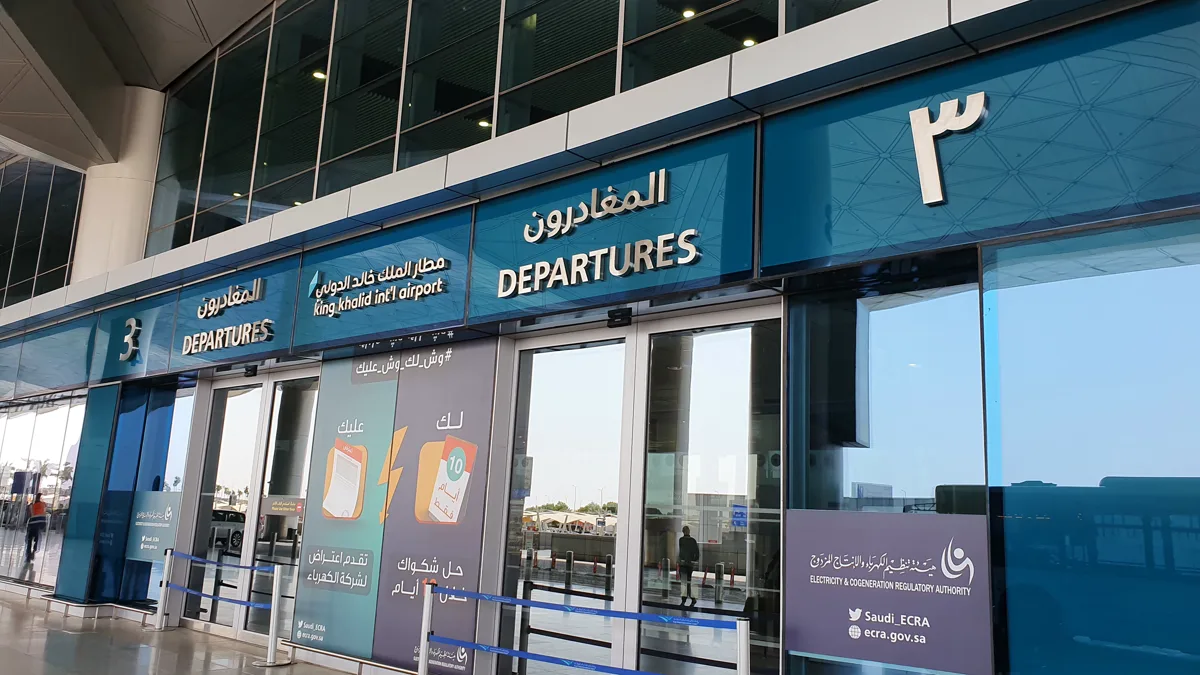
Saudi civil aviation authorities said early Sunday that a Saturday attack on Riyadh's main airport killed 12 people from eight countries and injured more than 300.
The big picture: The dead included four Saudi citizens, two Bangladeshis and one person each from the United States, Egypt, Jordan, Syria, Sudan and Palestine, the General Authority of Civil Aviation said. At least 309 people were wounded, some critically.
- It was the third Houthi assault on King Khalid International Airport in a week. Thursday's strikes killed three Saudi citizens, including a pilot.
The backstory: The surge followed a Saudi-led offensive against the Iran-backed Houthis launched a week ago, after Houthi gains along Yemen's Red Sea coast gave the rebels better surveillance of a shipping corridor that serves as an alternative to the Strait of Hormuz.
What they're saying: President Donald Trump said he was evaluating whether the United States should join Saudi strikes against the Houthis.
- "We may. We're going to look at it," Trump said of joining the campaign. "We move very quickly."
Zoom in: The Saudi-led coalition called the attack a full-fledged war crime, and spokesman Major General Turki al-Malki said it would respond decisively. Saudi Arabia has run low on missile interceptors and has asked France, Britain, Pakistan and Egypt for air defense support.
Yes, but: Airlines were already pulling back. Air India, FlyDubai, Lufthansa Group and Pakistan International Airlines suspended flights to Saudi airports, and European regulators warned that missile and drone activity raises the risk of civil aircraft being misidentified.
Why it matters: Saudi Arabia is the world's top oil exporter, and attacks reaching its capital push already high global fuel prices higher. The kingdom's energy ministry still planned to open an international energy conference in Riyadh on Sunday.