The Federal Reserve's once-every-three-years Survey of Consumer Finances found American families missing payments at a rate last seen after the financial crisis.
By the numbers: The share of families behind on a loan payment climbed to nearly 20% at the end of 2025 from about 12% in the 2022 survey, CNBC reported from the Fed's summary. Families two months or more behind rose to more than 8% from 5%.
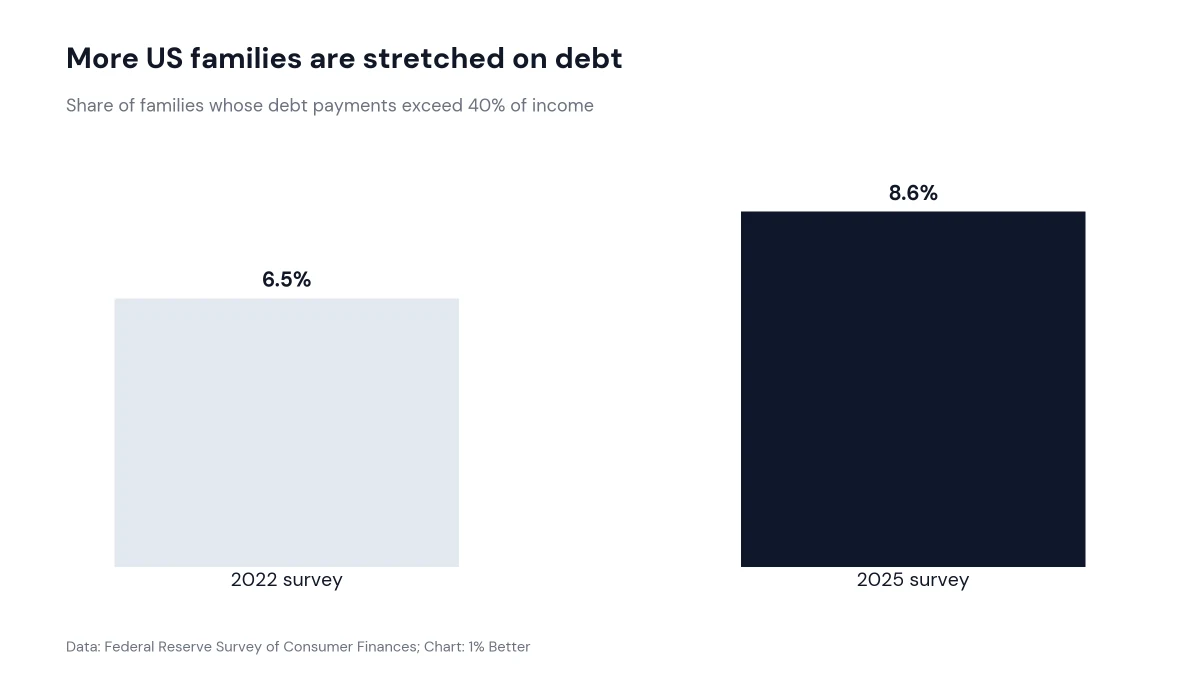
Zoom in: The Fed said families whose debt payments exceed 40% of income grew to 8.6% from 6.5%, a share last seen in the 2013 survey.
- The report states that families were more likely to be behind on their financial obligations than at any point since the 2010 survey.
Yes, but: Balance sheets improved on paper. Real median family income rose 7% to $82,200 and real median net worth rose 2% to $215,900, while mean net worth rose 7% to $1.24 million.
Between the lines: The gains landed unevenly. Income rose for families at the lower end of the distribution and fell at the top, which narrowed measured inequality, while median net worth for the bottom quarter of earners fell 6%.
The big picture: Homeownership held at 66% and median net housing value rose to $230,000 from $218,900. Stock market participation slipped to 56% from 58%, though median holdings among owners grew 36% to $77,400.
Why it matters: Rising income alongside rising delinquency means households are covering higher prices with credit. If a debt payment eats more than 40% of your income, that is the Fed's own stress threshold and a signal to refinance or renegotiate before a late mark lands on your credit report.