At least 39% of the royal household members buried beside Egypt's First Dynasty tombs may have been deliberately killed by blows to the head, a new study finds.
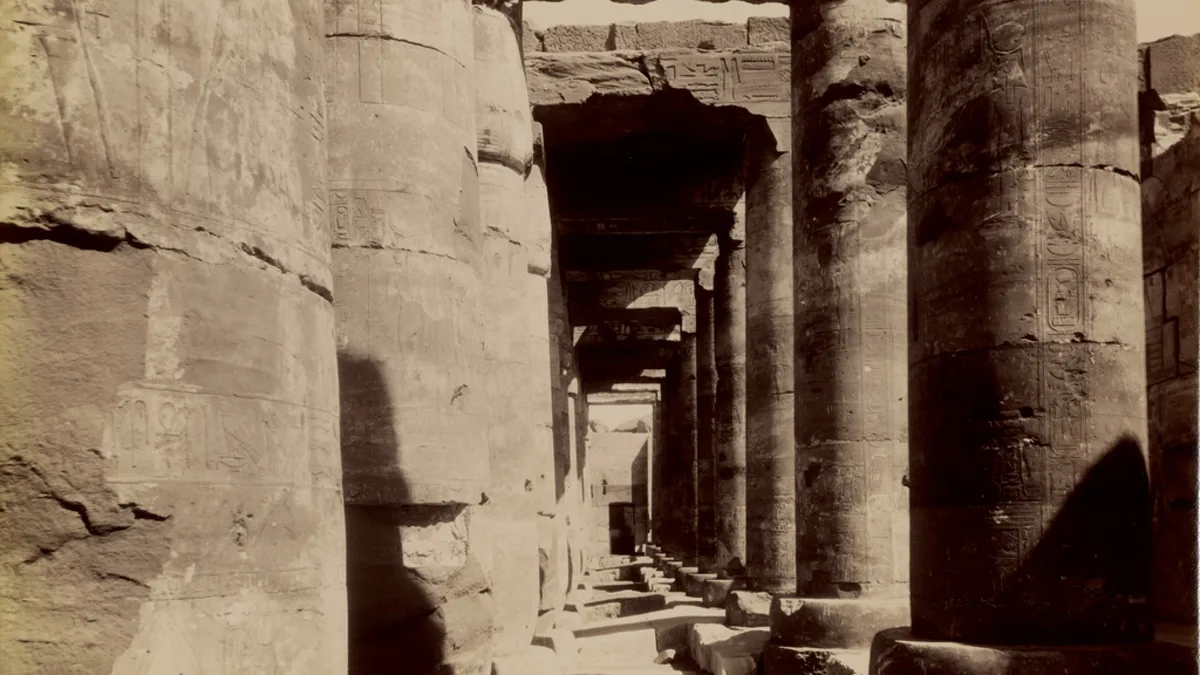
The backstory: Around 3000 BCE, more than 500 years before the Great Pyramid, Egypt's first kings were buried at Abydos inside complexes ringed by rows of simple graves holding household officials and artisans who appear to have died at the same time.
Zoom in: Flinders Petrie, who excavated the site in the 1920s, suspected retainer sacrifice because so many people could hardly have died of natural causes at once. He found no wounds on the bones, so the cause of death stayed in doubt.
- Petrie reburied most of the remains but kept the skulls, sending some to the UK. Roselyn Campbell of Purdue University tracked 46 of them to Cambridge University's Duckworth Collection and re-examined them.
By the numbers: 18 of the 46 crania showed significant cranial trauma, linear fractures that Petrie seems to have mistaken for naturally caused damage. Advances in forensic science let researchers recognize them as perimortem injuries.
What they're saying: "The injuries on the preserved crania are generally linear fractures, which would likely cause rapid unconsciousness, internal bleeding, and death," Campbell said, also reporting sharp-force trauma including a chopping injury to one individual's eye.
Yes, but: The weapon stays unidentified. A mace, the tool kings are shown wielding in Egyptian art, would have caused depressed fractures, and a fall hard enough to crack a skull would probably have broken other bones that Petrie photographed or recorded.
Between the lines: Campbell says some retainers might have volunteered to die for eternal life or honor while others were chosen or even forced, and that retainer sacrifice also worked as a visceral display of a ruler's power.
Why it matters: The work closes a century-old cold case and shows how much old excavation material can still yield when revisited with modern methods, even for incomplete datasets. It ran in Frontiers in Environmental Archaeology.