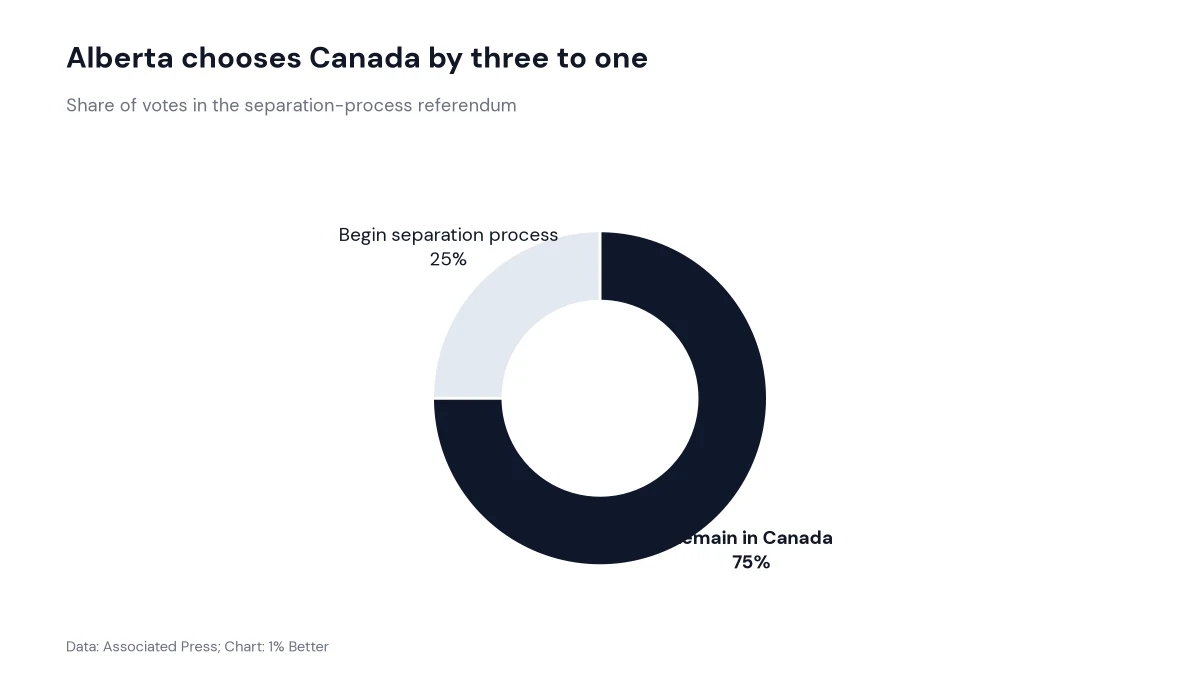
Alberta voters rejected starting a separation process, with 75% backing Canada and 25% supporting a path toward a future independence vote.
By the numbers: More than 1.9 million votes had been counted from 90% of voting areas when unofficial results showed a 75% to 25% result for remaining in Canada. The ballot asked whether to begin a separation process, rather than deciding independence directly.
- "It's a great result for Canada that Albertans have chosen unity," Prime Minister Mark Carney said before a Cabinet meeting Tuesday.
- Alberta holds the world's fourth-largest proven oil reserves. Its conservative political culture and long-running disputes with Ottawa helped turn a cause that once drew 1% or 2% support into a province-wide referendum.
The other side: Separatist organizer Jeff Rath said the movement would continue and argued it had dominated Alberta's political conversation. Before the vote, he said 30% support would have thrilled him.
What's next: Premier Danielle Smith pledged that Alberta will keep pressing Ottawa for more provincial autonomy through Canada's political and legal institutions. She also said no second separation referendum will be held while she remains premier.
Between the lines: Some yes voters told AP they wanted leverage with Ottawa rather than independence. Carney similarly said only a smaller hard core within the 25% likely wanted Alberta to leave Canada.
Why it matters: The result removes an immediate breakup risk from Canada's energy center and strengthens Carney as trade tensions with the United States test national unity. It also leaves Alberta's grievances on the table for the next federal-provincial negotiation.