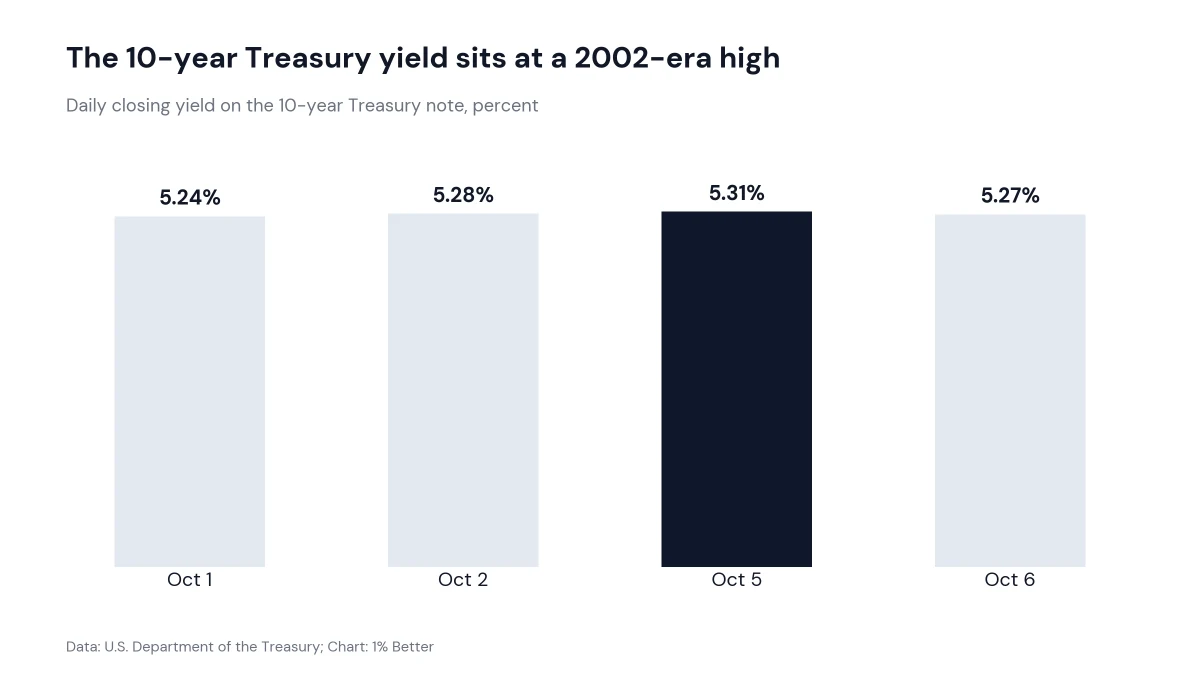
The 10-year Treasury yield closed at 5.31% on Monday and briefly touched 5.349%, its highest level since April 3, 2002, before easing to 5.27% on Tuesday, according to Treasury Department data.
By the numbers: The 10-year closed at 5.24% on October 1, 5.28% on October 2 and 5.31% on October 5 before slipping to 5.27% on Tuesday. The 30-year bond closed at 5.66% on Monday and traded as high as 5.703% intraday, a level CNBC says has not been seen since late May 2002.
- "It's a momentum selloff," Jay Hatfield, CEO of Infrastructure Capital Advisors, told CNBC. "Usually the 10-year trades 100 over terminal Fed funds. So we could, on that basis, we could go higher."
Zoom in: Monday's move came after the ISM services index for September printed 54.9, roughly in line with expectations, while its prices-paid gauge rose 1.4 points to 74, putting the 12-month average at its highest since March 2023.
Yes, but: A weak September jobs report on Friday pulled yields down and eased fears of another Fed rate hike. Traders now price about an 82% chance the Fed holds rates at its October meeting, per CME FedWatch, and minutes from the September meeting arrive Wednesday.
The big picture: Investors have been grappling with a bond market selloff for roughly six weeks. The 10-year yield is the benchmark that lenders use to set 30-year mortgage rates and many auto and business loans, so a 24-year high on the benchmark feeds straight into monthly payments.
The bottom line: If you are shopping for a mortgage or carrying variable-rate debt, the relevant number is the 10-year, and it is sitting where it was when the first iPod was new. Locking a rate sooner rather than later costs little if yields keep climbing.
Why it matters: Long rates this high slow housing, raise the cost of government borrowing and squeeze any company that needs to refinance, which is why the Fed can stand still and borrowers still feel tighter policy.