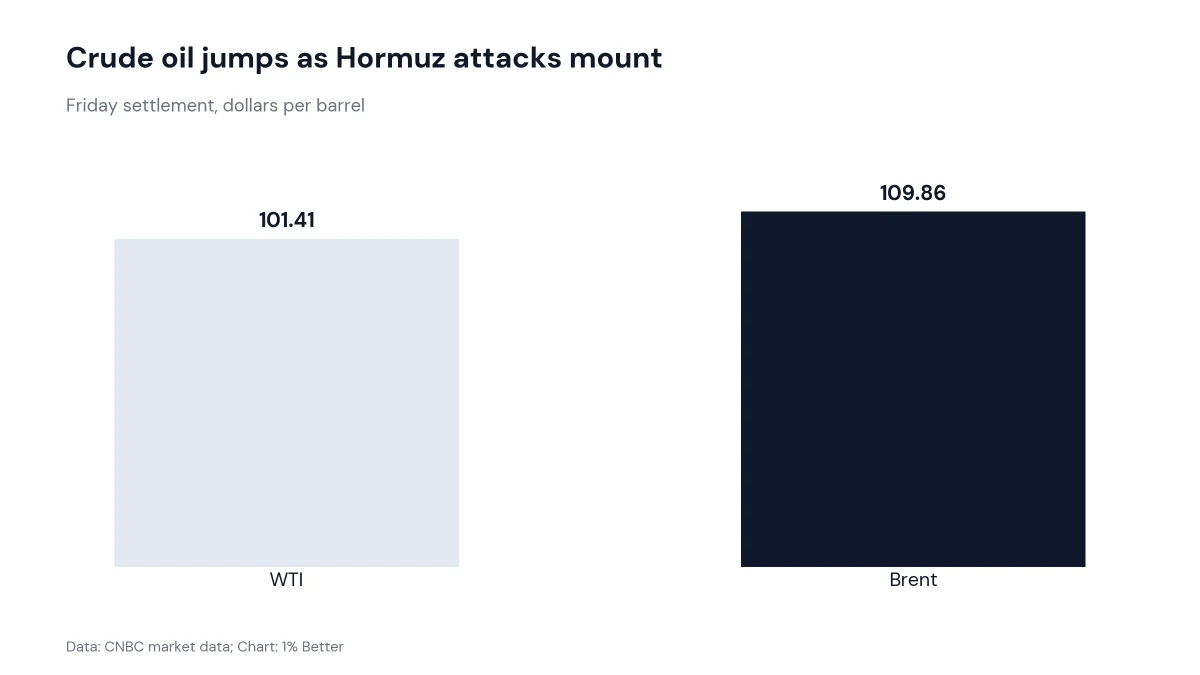
Brent crude hit a session high of $110 a barrel on Friday for the first time since May before easing to close at $109.86, a gain of 3.7%.
By the numbers: West Texas Intermediate settled at $101.41 a barrel, up 3.5%. WTI added more than 10% on the week and Brent advanced nearly 5%.
The backstory: At least nine tankers and cargo ships have come under attack in the Strait of Hormuz since Sunday as Iran tries to choke off oil exports through the waterway. US Central Command said Iran sank the container ship GFS Pride on Wednesday, and Singapore's maritime authority said the crew was safely evacuated.
- The International Maritime Organization counts three seafarers injured and two missing this week.
Zoom in: Crude leaving Hormuz fell to 9.4 million barrels a day for the week ended Wednesday, about 70% of the average before the Iran war, per energy researcher Kpler. Shipments had touched prewar levels in September.
- Saudi Arabia intercepted several missiles over the Red Sea on Friday, including one heading toward the Yanbu oil export terminal, a military spokesman said, and destroyed three drones in the Riyadh and southern regions.
Yes, but: Supply is tight at home for a second reason: commercial US crude inventories fell by more than 8 million barrels in the week ended Oct. 9 after Hurricane Isaias shut in Gulf Coast production, per the Energy Information Administration.
Why it matters: Diesel sets the price of moving almost everything, and at $6.33 a gallon it runs more than 70% above last year, which feeds grocery and delivery costs for months. Zelenskyy has said Kyiv will resume strikes on Russian refineries, so the pressure on fuel has room to build.