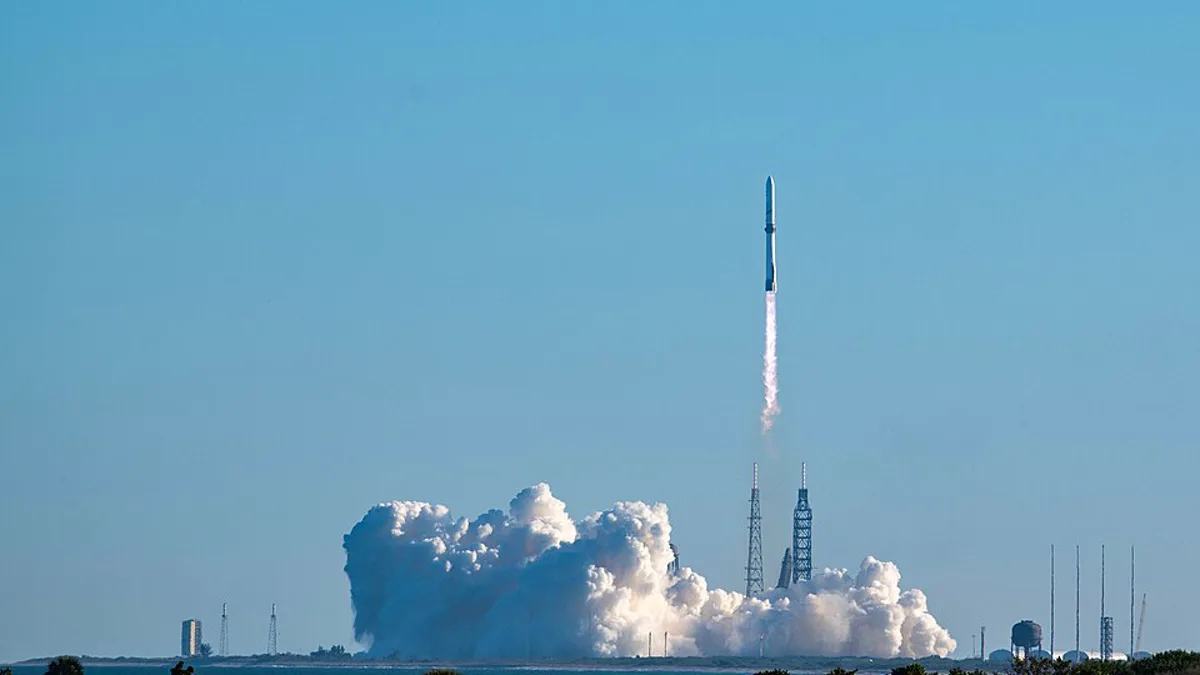
Jeff Bezos's Blue Origin said Friday it will add two launch and landing pads in Florida and expand its Cape Canaveral campus to support multiple flights a week by the end of the decade.
By the numbers: The $330 million Rocket Park expansion is expected to finish in summer 2027 and would lift output to as many as 150 New Glenn upper stages a year.
- "These investments are centered on one goal: building the capacity to support more missions, more reliably, and more efficiently," wrote Ian Richardson, Blue Origin's senior vice president of operations.
The backstory: Blue Origin has put more than $3 billion into Florida infrastructure across more than 20 sites in Brevard and Orange counties, with more than 5,000 employees. It is also recovering from a New Glenn rocket that exploded on the launchpad in May, and aims to return the vehicle to flight by the end of 2026.
Zoom in: A new customer integration facility, built with the US Space Force at Cape Canaveral Space Force Station, is designed to let the company prepare several missions at once.
Between the lines: Money is pouring in: $92.5 billion went into the commercial space sector in the first three quarters of 2026, per Space Capital. CEO Dave Limp said last month that Blue Origin's first outside funding round is oversubscribed, after the company raised $10 billion at a $140 billion valuation, per the Wall Street Journal.
- SpaceX's Starlink has more than 11,000 satellites in orbit, and SpaceX has stopped offering commercial rides on Falcon 9 to prioritise Starship.
Why it matters: Launch capacity is the bottleneck for everything built in orbit, from satellite internet to defence sensing, so a second heavy-lift provider flying weekly changes what companies and governments can afford to put up there.