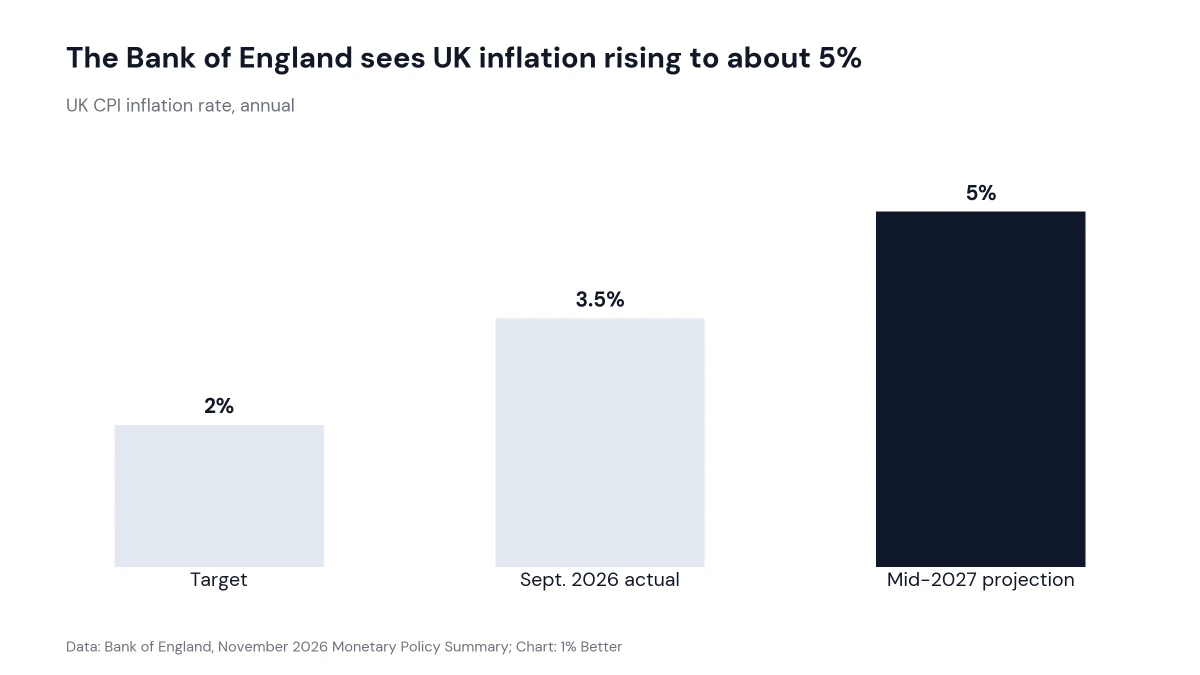
The Bank of England raised its benchmark rate to 4% from 3.75% on Thursday, the first increase in more than three years, as energy costs push UK inflation toward 5%.
By the numbers: UK CPI inflation reached 3.5% in September and the Bank now expects it to climb to around 5% by the middle of next year before falling back toward the 2% target.
- Brent crude futures averaged $108 a barrel over the 15 UK working days ending October 27, up 38% from the July report, while UK natural gas futures ran 81% higher.
What they're saying: Governor Andrew Bailey said the decision "shouldn’t be seen as the first in an inevitable long sequence of hikes," while warning that "unless the conflict in the Middle East is resolved, neither does it seem likely to be the last increase."
Between the lines: All nine committee members backed a rise and one wanted a larger move to 4.25%, while Alan Taylor called the increase "a risk-management one-for-now insurance hike."
Zoom in: Patrick Bryson, a guitar teacher in Brighton, sees his 3.51% five-year fix end soon and says the best deal he can find is 5.17% with HSBC, pushing his payment from £1,420 to £1,680 a month in February.
Why it matters: Higher policy rates raise the cost of mortgages, loans and credit cards while lifting returns on savings, and the committee’s next decision lands on December 17.