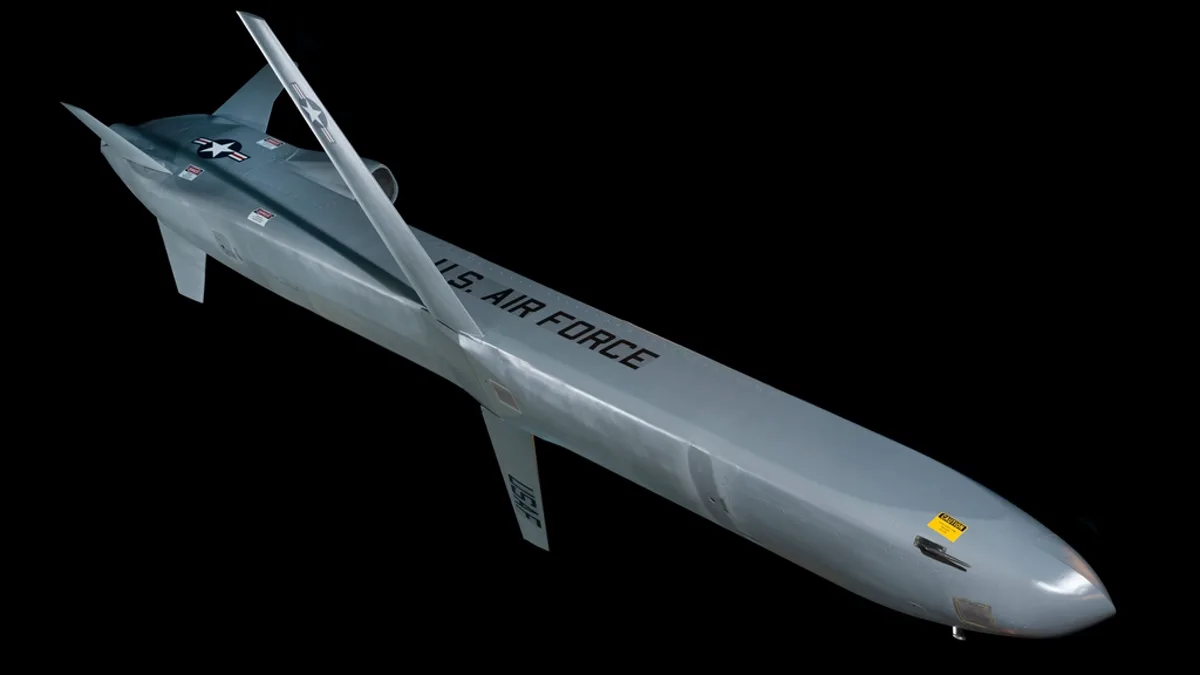
Anduril unveiled Steelfin, a family of surface-to-air interceptors built around one configurable two-stage architecture.
The big picture: Anduril says Steelfin can be configured for missions ranging from intercepting low-cost drones to countering theater ballistic missiles and maneuvering hypersonic weapons.
- The family uses a common two-stage architecture, allowing engineers to adjust interceptor performance while reusing components, production processes and core design elements.
- Anduril says it has developed and refined Steelfin for years alongside multiple customers. The company has not disclosed a unit price, production target or named launch customer in the announcement.
The backstory: Traditional interceptors are commonly optimized for a narrow threat set. Anduril argues that changing those fixed architectures can require years of redesign and a separate production setup.
Between the lines: A shared hardware base is an attempt to bring software-style iteration to missile manufacturing. Reusing tooling and parts could make it easier to change a variant as battlefield threats evolve, though the company has yet to publish test results in this release.
What's next: The measure of Steelfin will be customer testing, production speed and whether one architecture can cover sharply different targets without sacrificing cost or performance.
Why it matters: Cheap drones have forced militaries to spend costly interceptors on inexpensive targets. A modular family could widen the price and performance options available for layered air defense.