Daily Brief: September 29, 2026
Brain health research points to practical gains, AI reshapes work for employees and owners, and rising yields keep pressure on household and business finances.
1% Better EditorialToday’s brief pairs three practical health findings with a close look at the AI adoption gap and the market forces raising the cost of money.
Health & Science
Brief brain activities helped reverse cognitive impairment
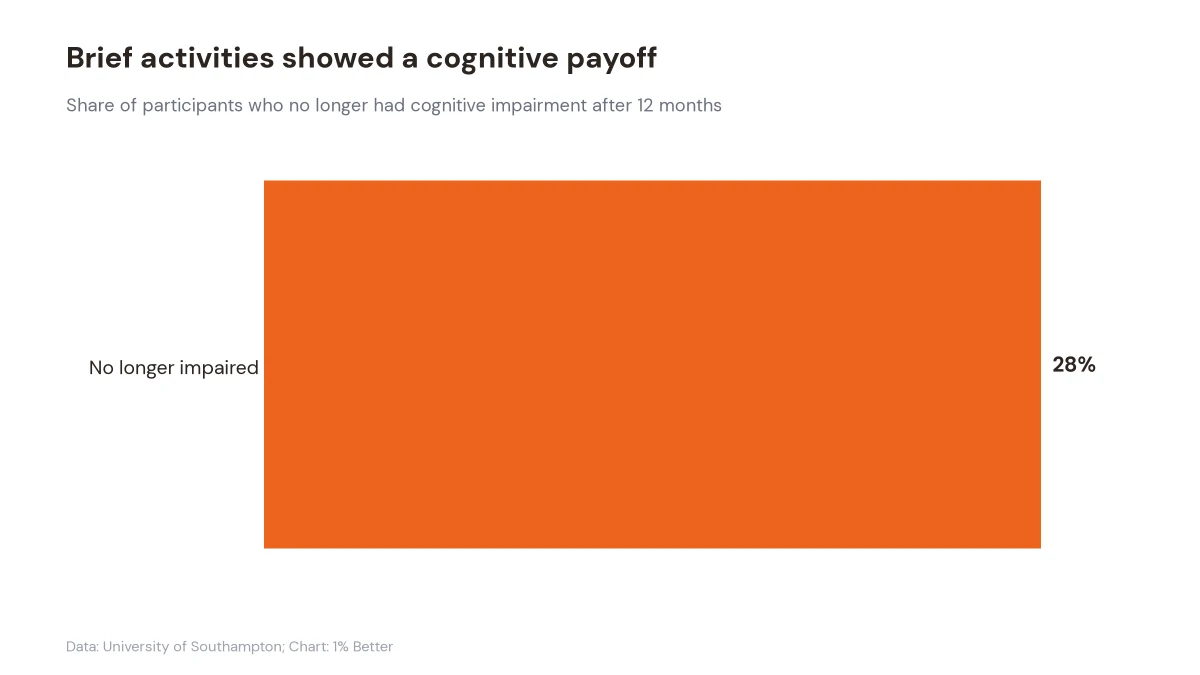
A trial of more than 11,500 adults found that 28% no longer had cognitive impairment after 12 months of brief brain stimulating activities.
Why it matters: The result gives older adults a practical menu: puzzles, new skills, social connection, physical activity and a healthy diet. Small, repeatable actions may support cognitive function at a scale that clinical programs struggle to match.
Self-Improvement
A 15-minute awe walk lifted emotional well-being
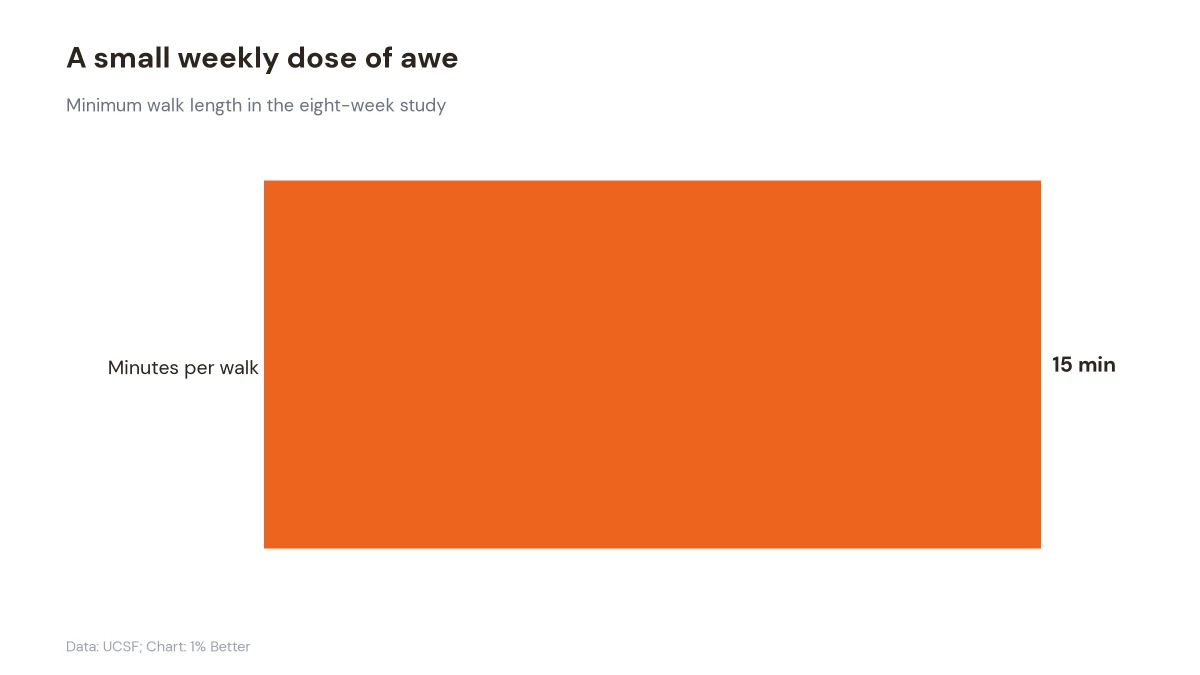
Older adults who took weekly 15-minute awe walks for eight weeks reported more positive emotions and less daily distress in a UCSF study.
Why it matters: Attention appears to be the active ingredient, since the comparison group walked more frequently without the same emotional shift. A short walk can become a stronger reset when you deliberately look for something vast, surprising or beautiful.
Health & Science
Researchers will track depression through phones and wearables
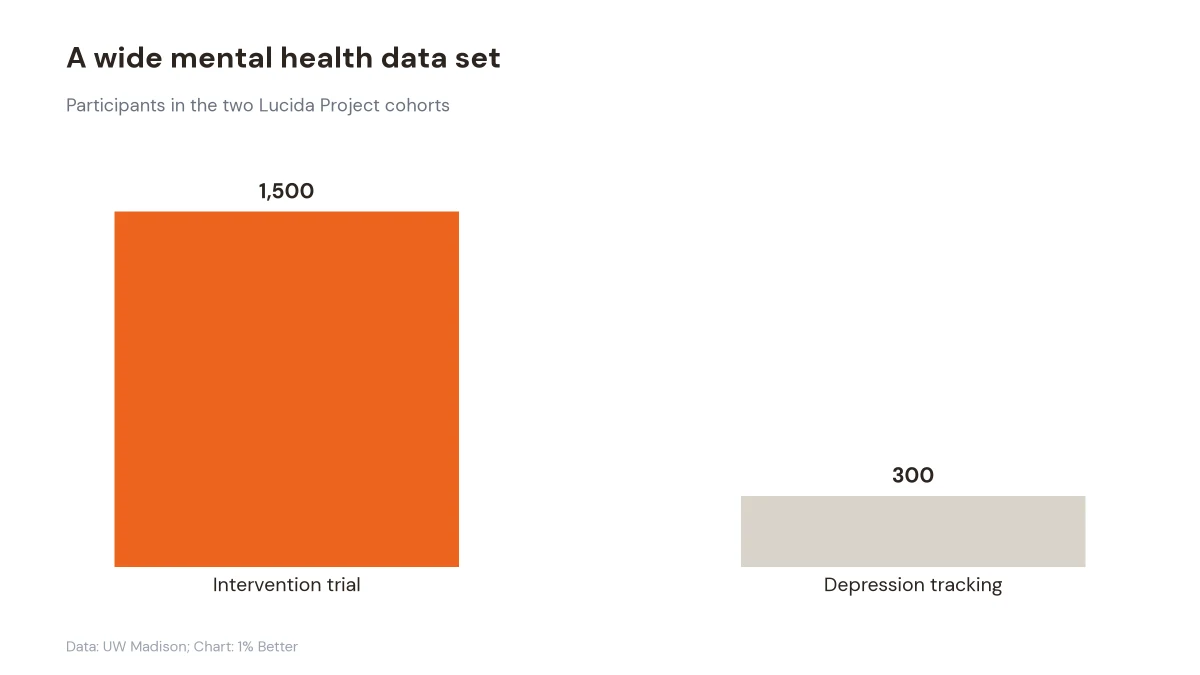
UW Madison researchers are expanding a 1,800-person project that combines phone, wearable and biological signals to detect mental health changes faster.
Why it matters: Questionnaires capture snapshots, while continuous signals may reveal improvement or deterioration within hours or days. The study could make mental health care more responsive by showing which interventions work for each person sooner.
Productivity
Meta brings its Muse AI agent to small businesses
Meta launched Muse for Small Business as a digital operations layer that can analyze sales, campaigns and social activity and build growth plans.
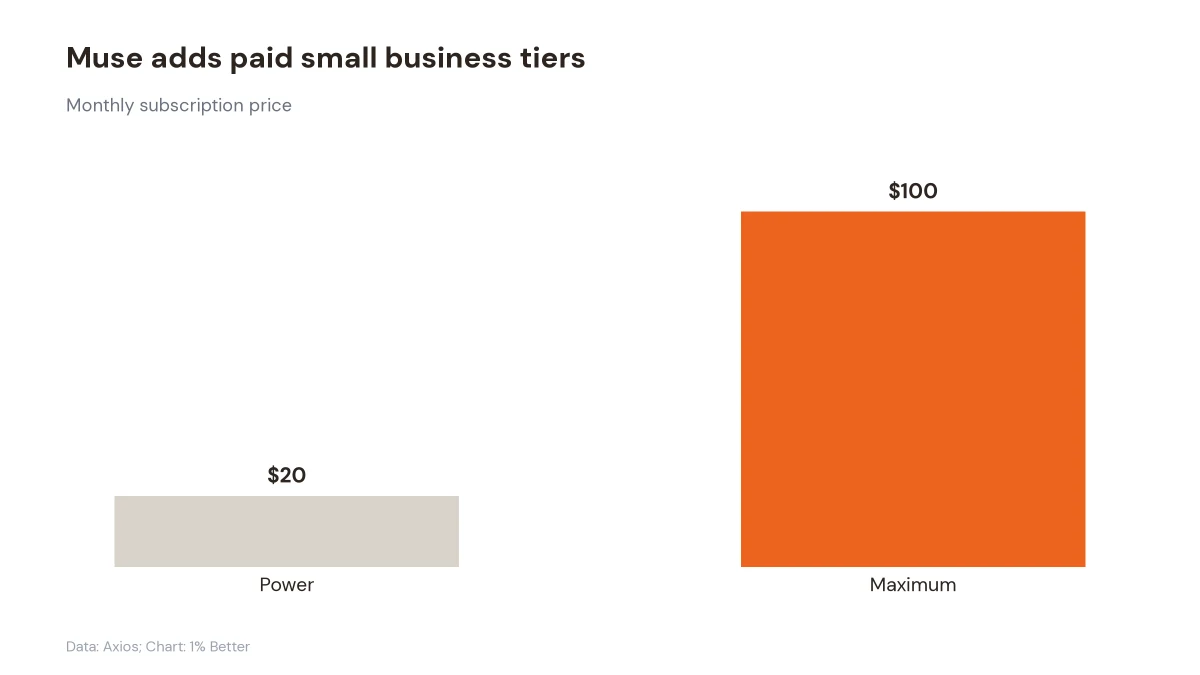
Why it matters: Owners can connect AI directly to the systems where work happens, giving small teams access to analysis and execution capacity once reserved for larger companies. Most uses are free, with $20 and $100 monthly tiers for heavier workloads.
Productivity
Workplace AI use shows a sharp leadership gap
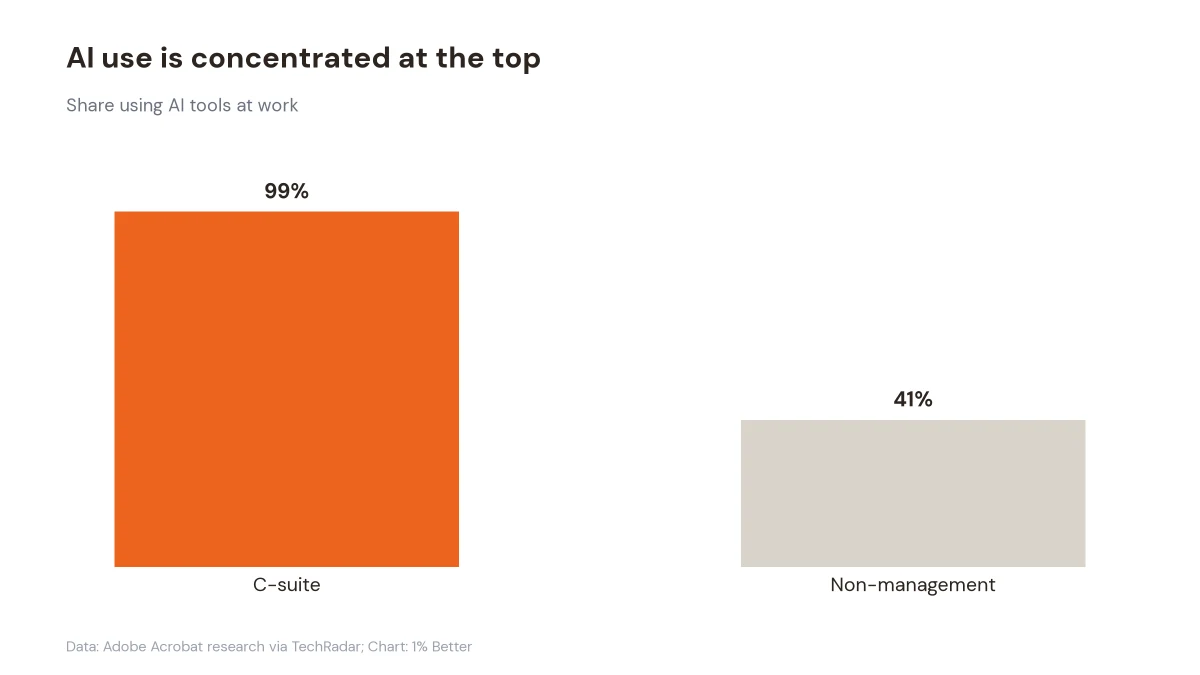
Adobe Acrobat research found 99% of C-suite leaders use AI tools at work, compared with 41% of employees outside management.
Why it matters: The 58-point divide can concentrate efficiency gains and practical AI knowledge among leaders. Wider access, training and shared workflows give frontline employees a better chance to remove administrative work and build useful skills.
Productivity
AI could remake jobs up to four times faster
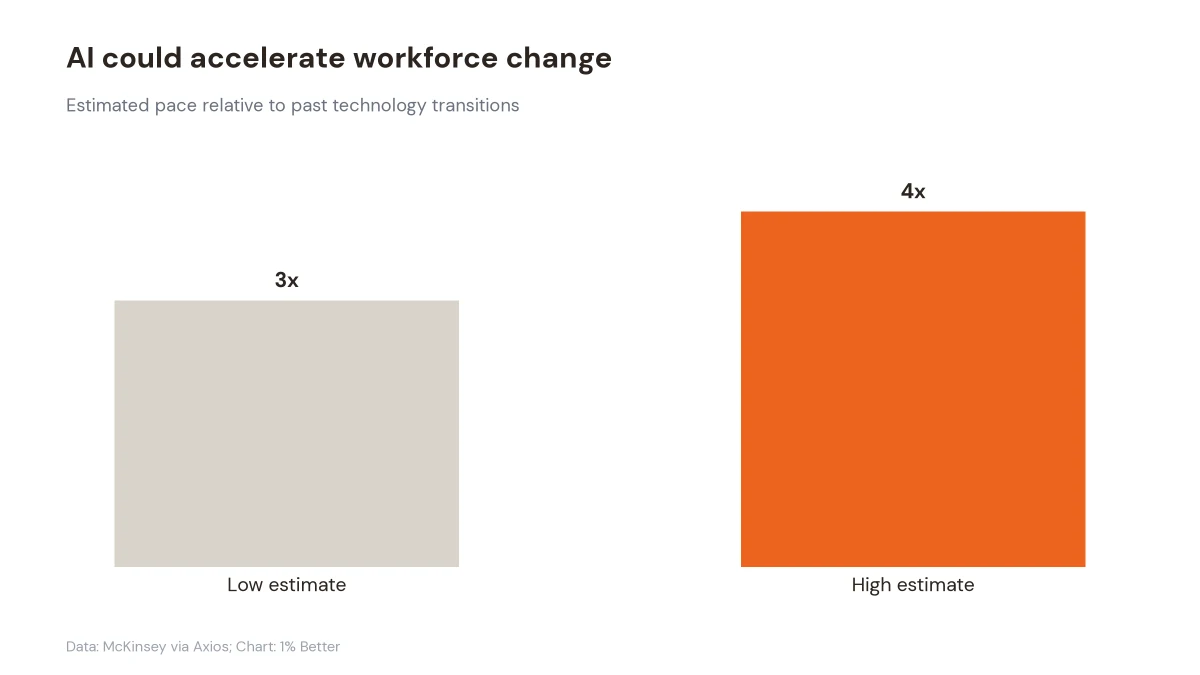
McKinsey researchers estimate that the AI workforce transition could unfold at three to four times the pace of past technology shifts.
Why it matters: A faster transition compresses the time available for workers and companies to adapt roles, training and career paths. The practical edge goes to people who build AI fluency while deepening judgment, communication and domain expertise.
Business & Money
Treasury yields reach levels unseen in nearly two decades
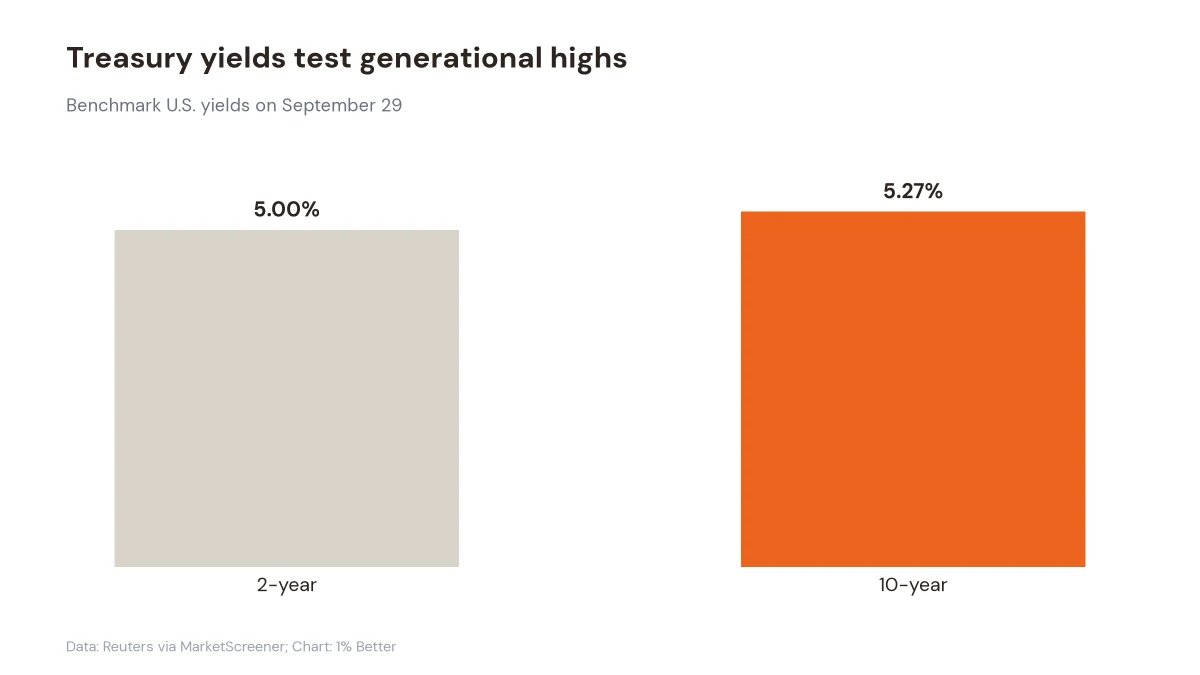
The 10-year US Treasury yield climbed above 5.27%, a 19-year high, while the two-year yield approached 5% after a steep September selloff.
Why it matters: Treasury yields set the baseline for mortgages, business loans and many investment valuations. Higher rates reward savers, raise borrowing costs and increase the hurdle that stocks and business projects must clear.
Business & Money
Oil eases while remaining well above prewar levels
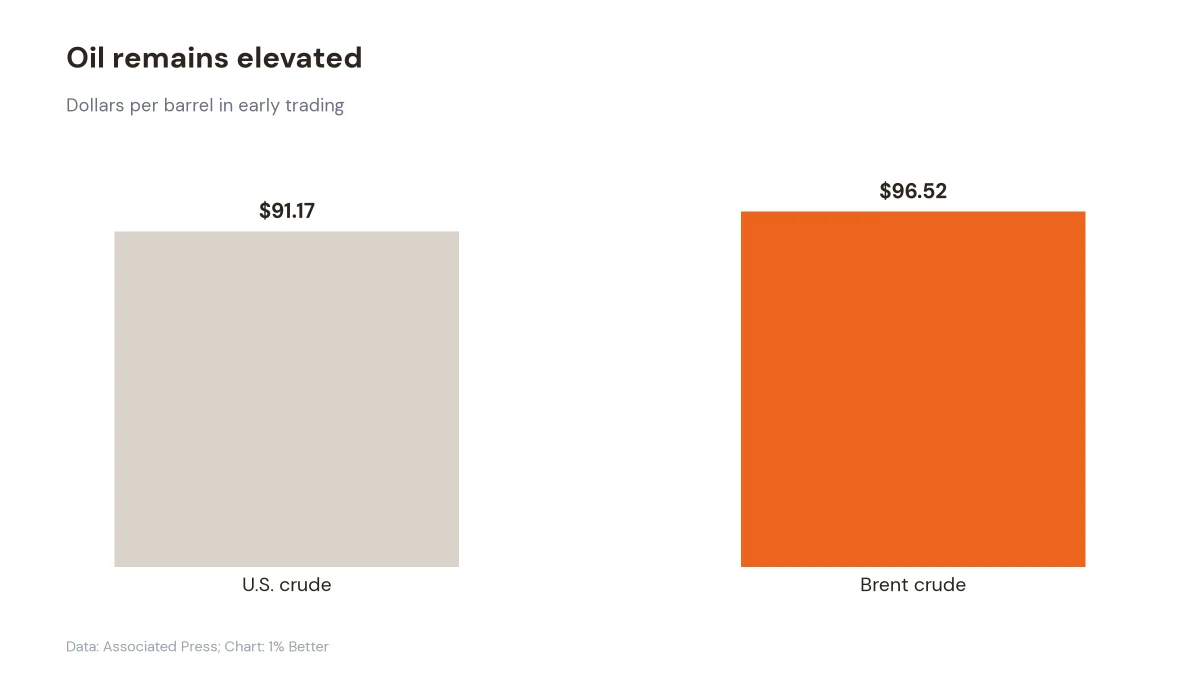
US crude fell 1.5% to $91.17 a barrel and Brent slipped to $96.52 as markets watched negotiations over the Strait of Hormuz.
Why it matters: Energy prices flow into transportation, manufacturing and household budgets, keeping inflation pressure in view. Even after a pullback, expensive oil can reinforce high interest rates and squeeze margins for fuel-dependent businesses.