Daily Brief: September 9, 2026
Today: a supplement ingredient tied to shorter lifespans in men, an Ozempic-class drug that nearly doubles lifespan in aging mice, why AI is raising workloads faster than paychecks, and why Gen Z still leans on family for money.
1% Better EditorialHealth & Science
Common Focus Supplement Ingredient Tied to Shorter Lifespan in Men
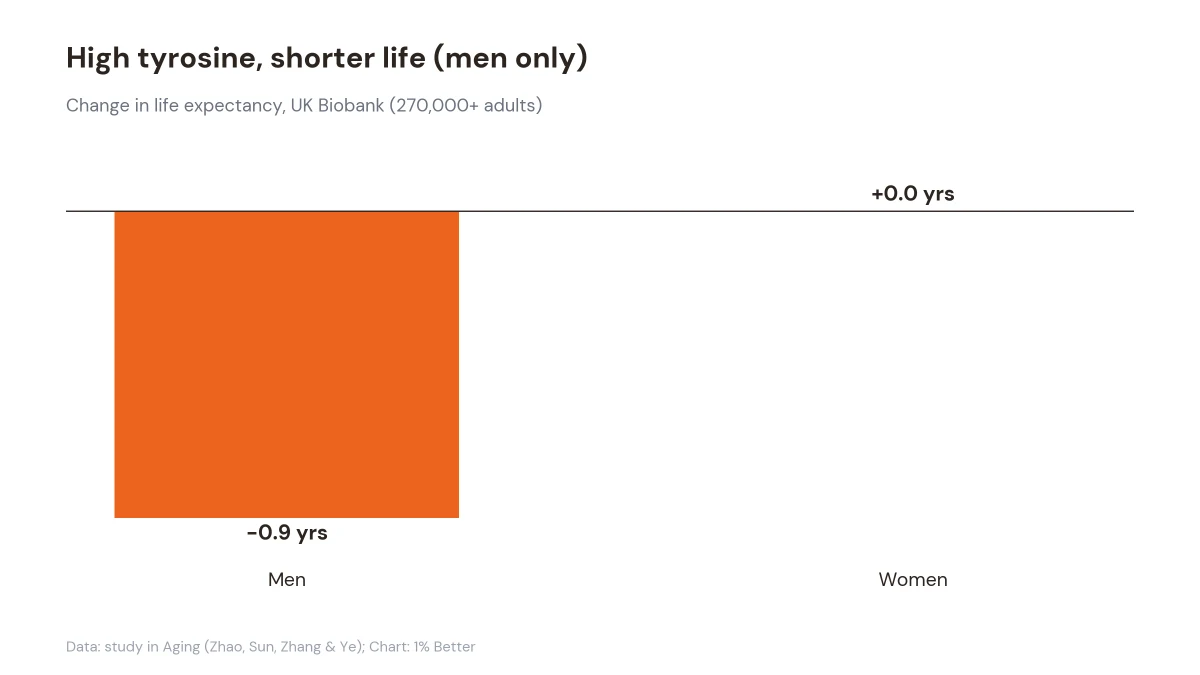
A UK Biobank study of more than 270,000 adults links high blood tyrosine to nearly a year of lost life expectancy in men, but not in women.
Why it matters: Tyrosine is a common ingredient in energy drinks and nootropic supplements marketed for focus and alertness. Researchers used genetic analysis to confirm the effect appears specific to men, and think it may help explain why men tend to live shorter lives than women.
Health & Science
Ozempic-Class Drug Nearly Doubles Lifespan in Aging Mice, Berkeley Study Finds
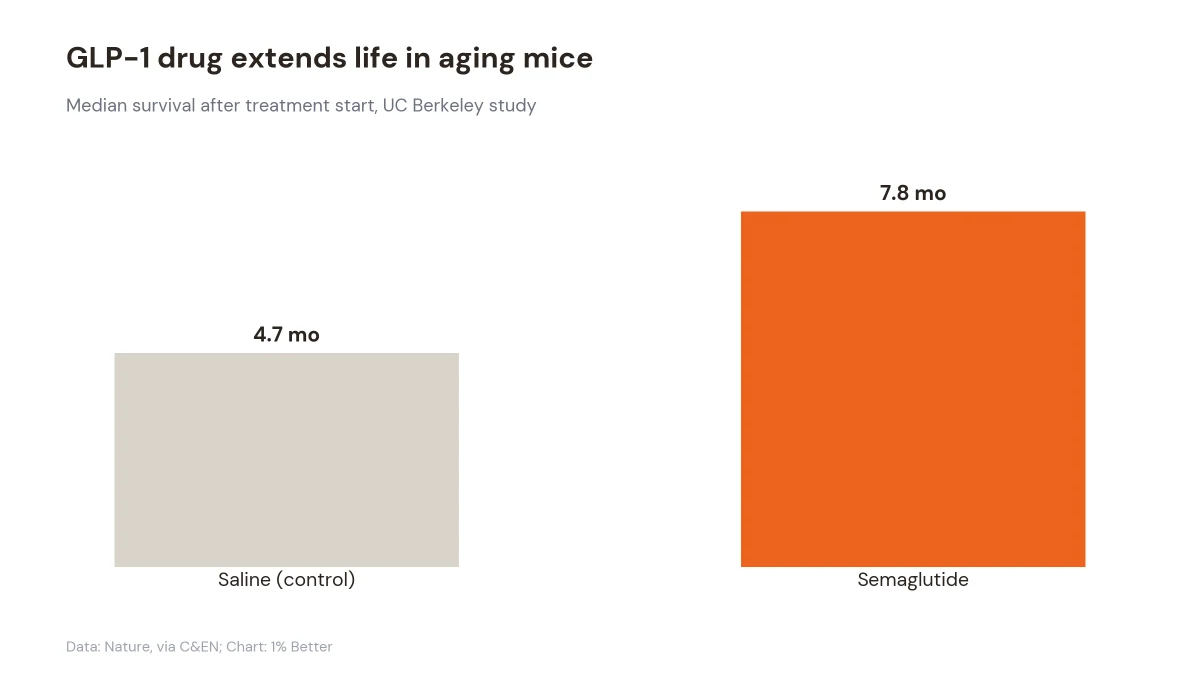
UC Berkeley researchers found aging mice treated daily with semaglutide lived a median of 7.8 months after treatment began, compared with 4.7 months for untreated mice.
Why it matters: The Nature-published study found treated mice also had better memory, blood sugar control, and stem cell regeneration, making semaglutide a leading candidate as an anti-aging therapy. Human trials are already underway at UT Medical Branch to test whether the effect translates to people.
Self-Improvement
Scientists Identify 1,260 Genetic Variants Tied to Personality
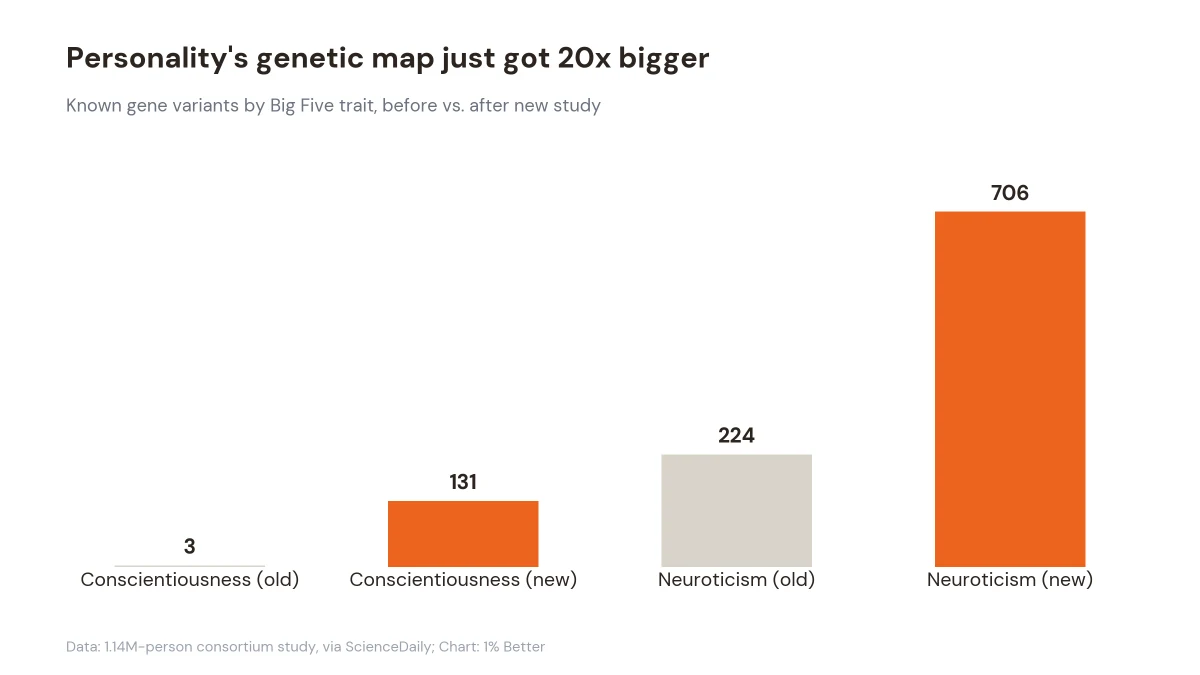
A consortium spanning 46 studies and 1.14 million people found 1,260 gene variants linked to the Big Five personality traits, a massive jump from prior counts.
Why it matters: Known variants for conscientiousness jumped from 3 to 131, and for neuroticism from 224 to 706, giving researchers a much sharper genetic map of personality. The same signals overlap with health, career, and income outcomes, though environment still plays just as large a role.
Self-Improvement
Happiness May Come Before Discipline, New Study Suggests
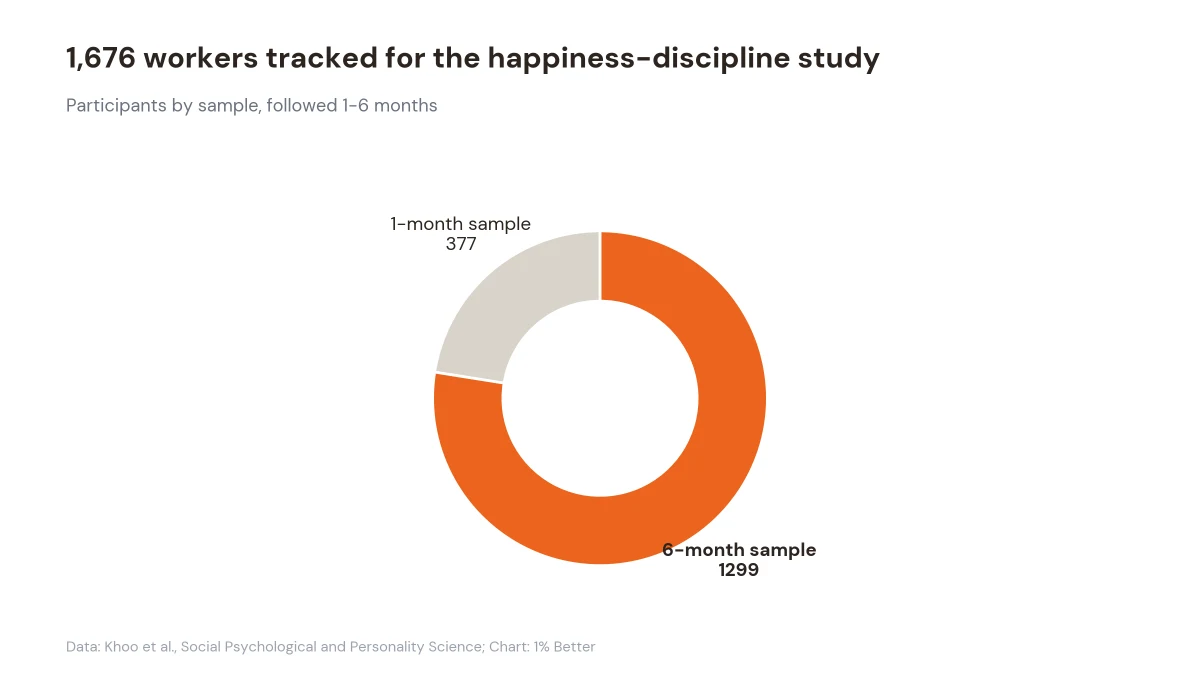
A study tracking 1,676 working adults found that higher wellbeing predicted stronger self-control one to six months later, but the reverse pattern did not hold.
Why it matters: The finding challenges the popular idea that discipline comes first and happiness follows as a reward. It suggests people struggling to build habits might get more traction by addressing their emotional state directly, ahead of forcing willpower.
Productivity
Survey of 4,300 Workers Finds AI Boosts Workload More Than Pay
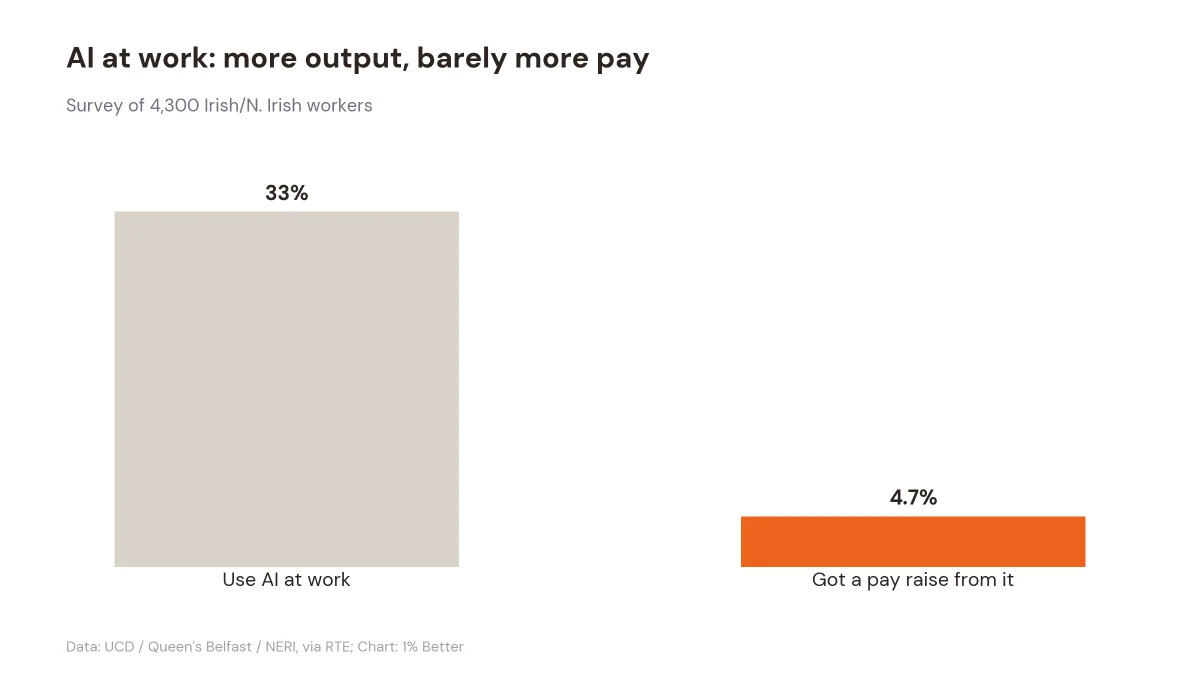
A survey of 4,300 workers in Ireland and Northern Ireland found a third now use AI on the job, but only 4.7 percent saw any pay increase from it.
Why it matters: Most workers who adopted AI reported bigger workloads without bigger paychecks, a familiar pattern as companies experiment with automation. Postgraduates were up to 15 times more likely to use AI than workers with basic qualifications, opening a fresh skills divide.
Productivity
AI Assistants Boost Novice Workers 34%, Barely Move Experts
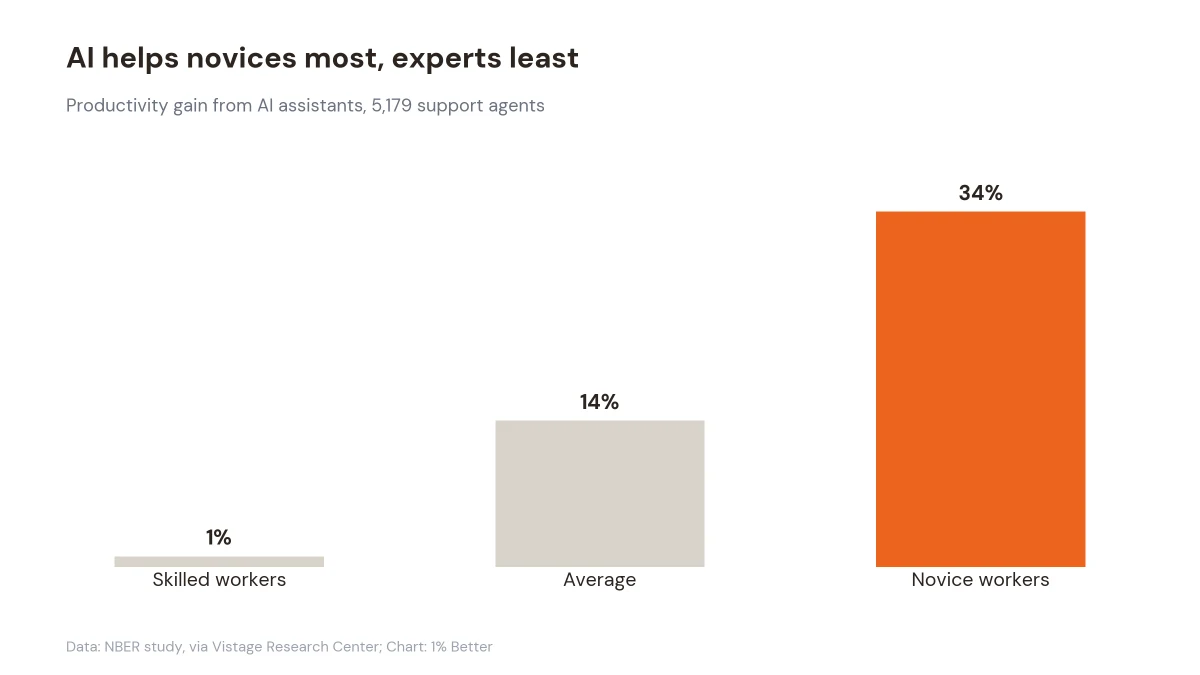
An NBER study of 5,179 customer support agents found AI assistants raised productivity by 14 percent on average, with gains reaching 34 percent for novice workers.
Why it matters: Highly skilled agents saw almost no benefit, suggesting AI acts more like a leveler that closes skill gaps than a tool that makes top performers even better. The findings point companies toward using AI as a training aid for newer staff rather than a productivity multiplier for veterans.
Business & Money
Dow Falls 600 Points as Oil Rises, but Chipmakers Rally
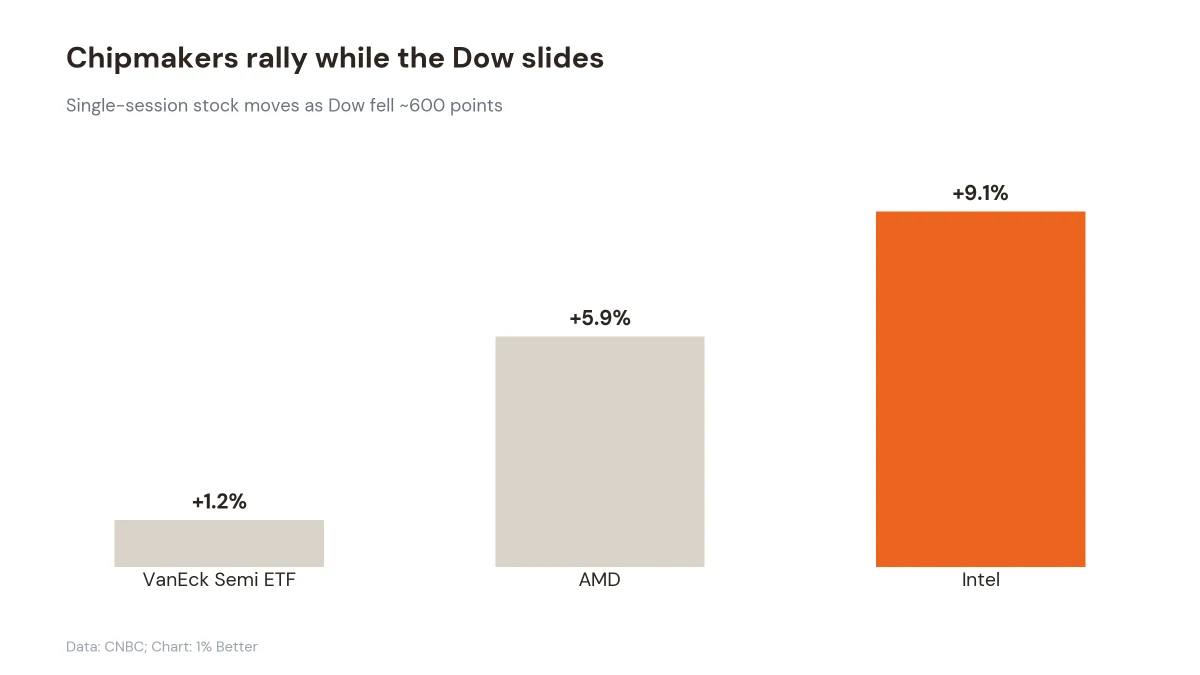
The Dow closed about 600 points lower as rising oil prices weighed on stocks, even as semiconductor names surged, with Intel up 9.1 percent and AMD up 5.9 percent.
Why it matters: The split shows investors rotating away from energy-sensitive sectors while staying confident in AI-driven chip demand. It is a live signal for anyone watching tech and AI-adjacent portfolios navigate a choppier broader market this week.
Business & Money
Gen Z's New Money Trend Emerges as Credit Card Debt Hits $1.26 Trillion
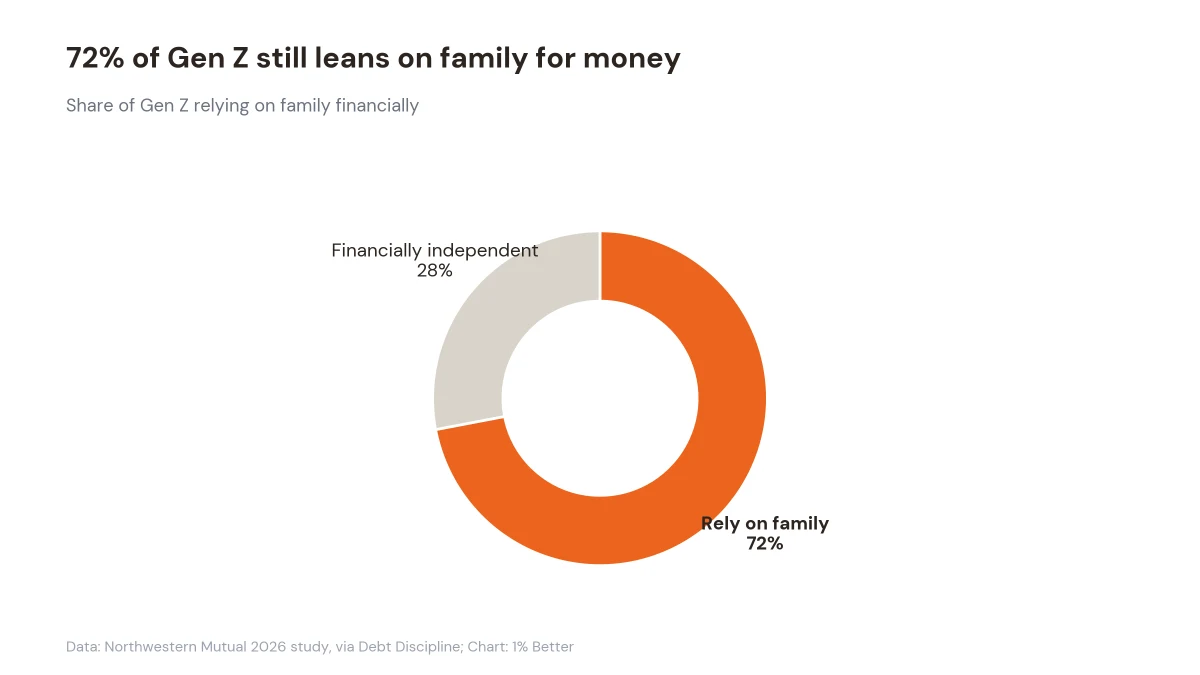
A viral trend called moneymaxxing, focused on optimizing existing accounts and rewards over cutting spending, is gaining traction among Gen Z as US credit card debt hits a record $1.26 trillion.
Why it matters: Northwestern Mutual's 2026 study found 72 percent of Gen Z still relies on family for money, and inflation is running at 3.4 percent year over year. On average, Americans do not expect real financial independence until age 37, nearly two decades after high school.