Daily Brief: September 7, 2026
Today: a new breast cancer mechanism, the health cost of long sitting, AI's productivity tradeoffs, smarter learning, a strong jobs report, and record Labor Day gas prices.
1% Better EditorialHealth & Science
Breast cancer's Rb protein reveals a second job

Scientists uncovered a new role for the tumor-suppressor protein Rb: it can promote gene expression and shape how breast cancer cells respond to therapy.
Why it matters: The finding helps explain why drugs that slow cell division can strengthen estrogen-receptor signaling in some tumors. A fuller map of Rb's behavior could guide treatment combinations and resistance research.
Health & Science
Breaking up long sitting tracks with lower cancer mortality
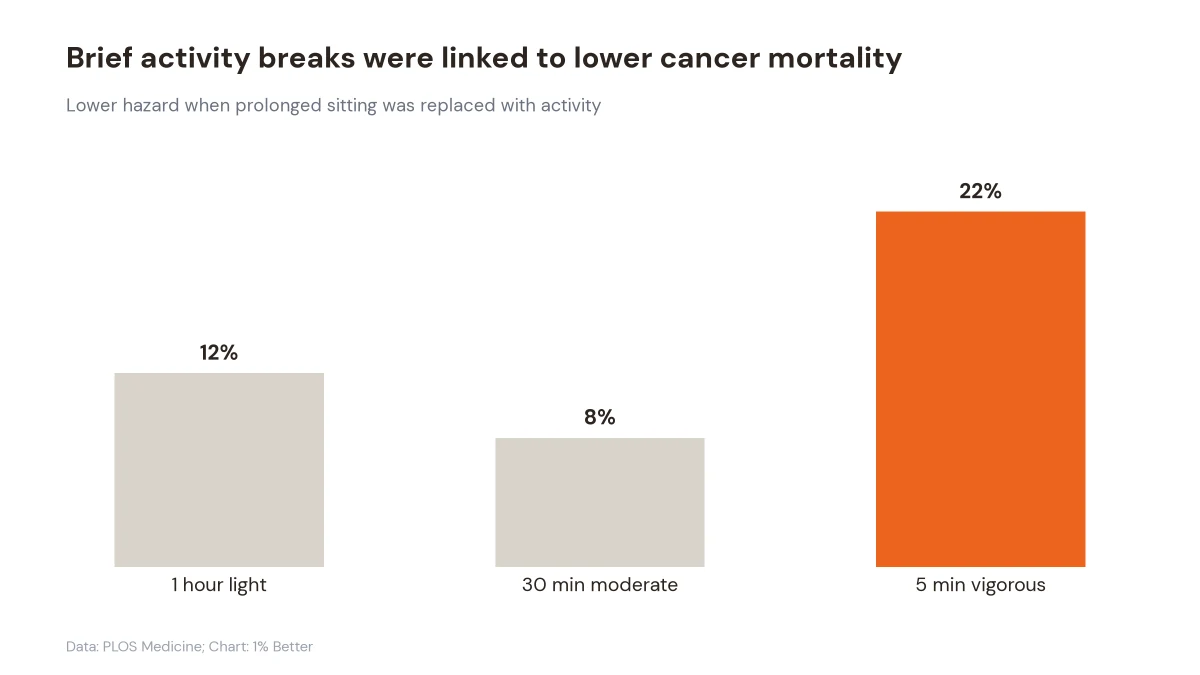
In 91,292 adults, replacing prolonged sitting with activity was associated with an 8% to 22% lower hazard of death from cancer.
Why it matters: Even five minutes of vigorous activity carried the largest association in the study, while light and moderate movement also helped. The observational design leaves causality unresolved, but the practical signal is clear: movement breaks may matter.
Productivity
Heavy AI users did more focused work and more communication
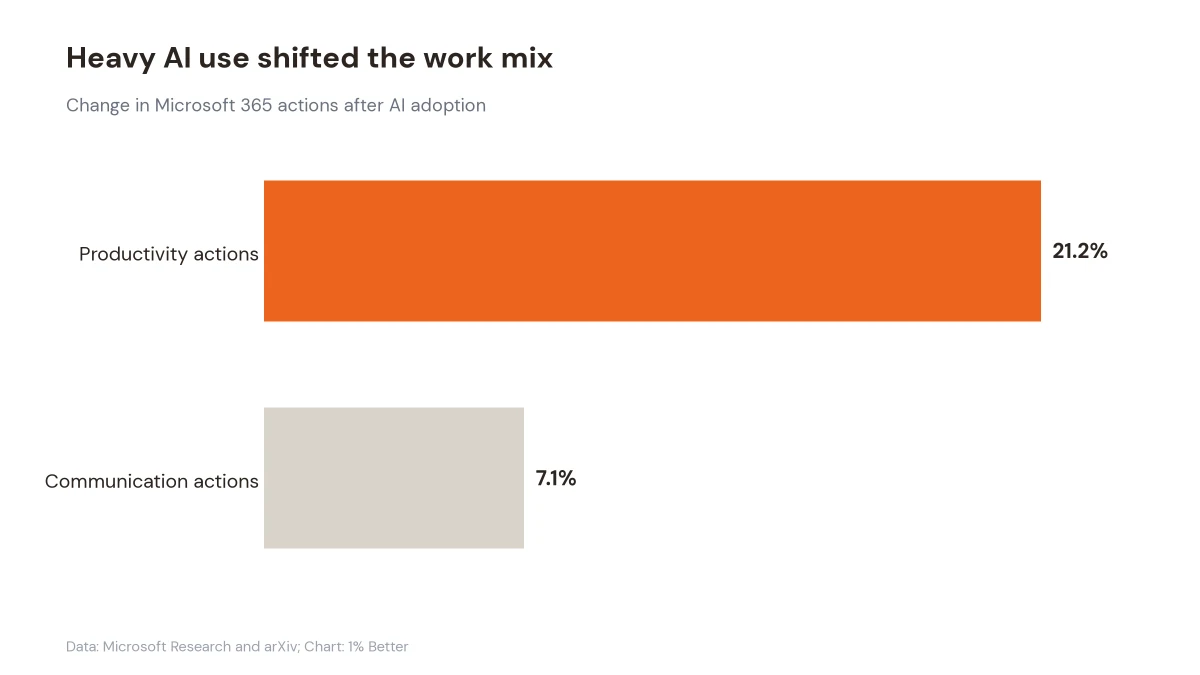
Microsoft 365 data linked heavy generative AI use with 21.2% more productivity actions and 7.1% more communication actions over 20 weeks.
Why it matters: The larger lift in document-focused work suggests AI may shift time toward individual output and away from email handling. Leaders should track team knowledge flow alongside raw activity gains.
Productivity
AI's hidden tax: 20 workdays spent troubleshooting
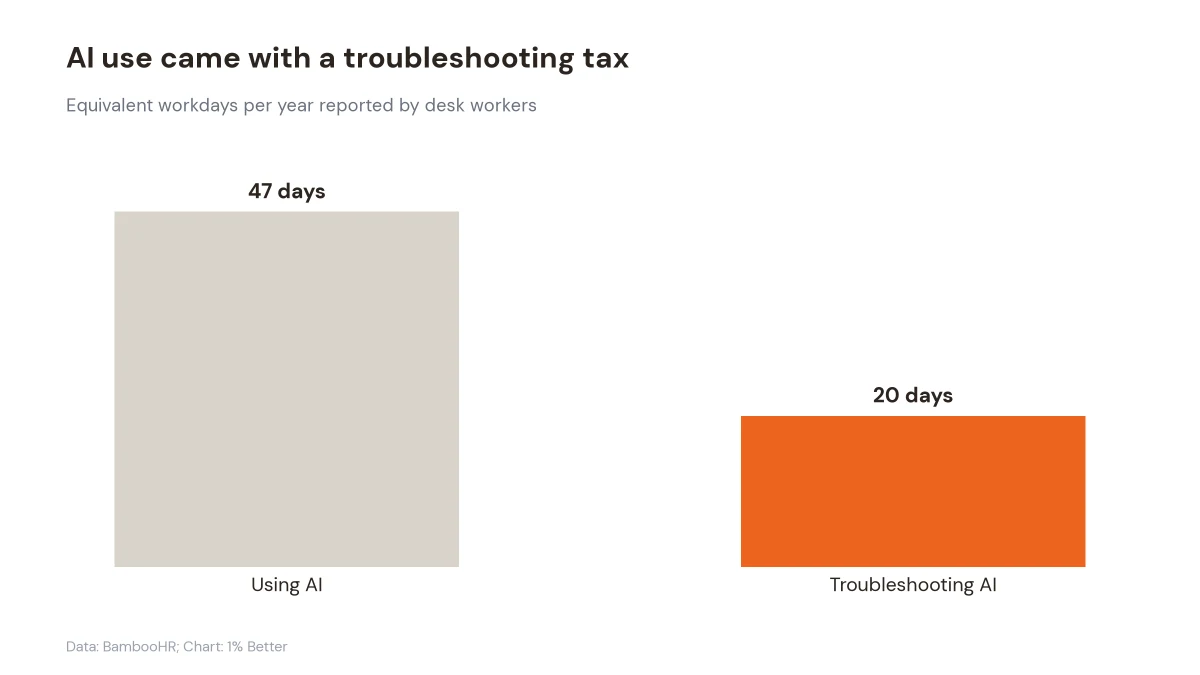
A BambooHR survey says desk workers spend the equivalent of 47 workdays a year using AI, with about 20 consumed by errors and prompt iteration.
Why it matters: Adoption alone is a weak productivity metric when nearly half of reported AI time goes to repair work. Better training, task selection, and quality controls could determine whether usage converts into useful output.
Self-Improvement
Educational technology engagement can disguise shallow learning

An American Psychological Association report warns that clicks, screen time, and polished AI-assisted work can look like learning without building durable skills.
Why it matters: Schools and families need to judge tools by whether students can apply knowledge away from the app. The report favors adult guidance, evidence-backed products, and active evaluation of AI answers.
Self-Improvement
Healthy habits start with belief and perceived control

A meta-analysis of 174 studies tied self-control to healthier behavior through beliefs, perceived control, and the intention to act.
Why it matters: Willpower may work partly by shaping how valuable and achievable a behavior feels before action begins. That points toward a practical sequence for habit change: strengthen the reason, lower friction, and set a clear intention.
Self-Improvement
Stricter misinformation controls also reduced trusted information
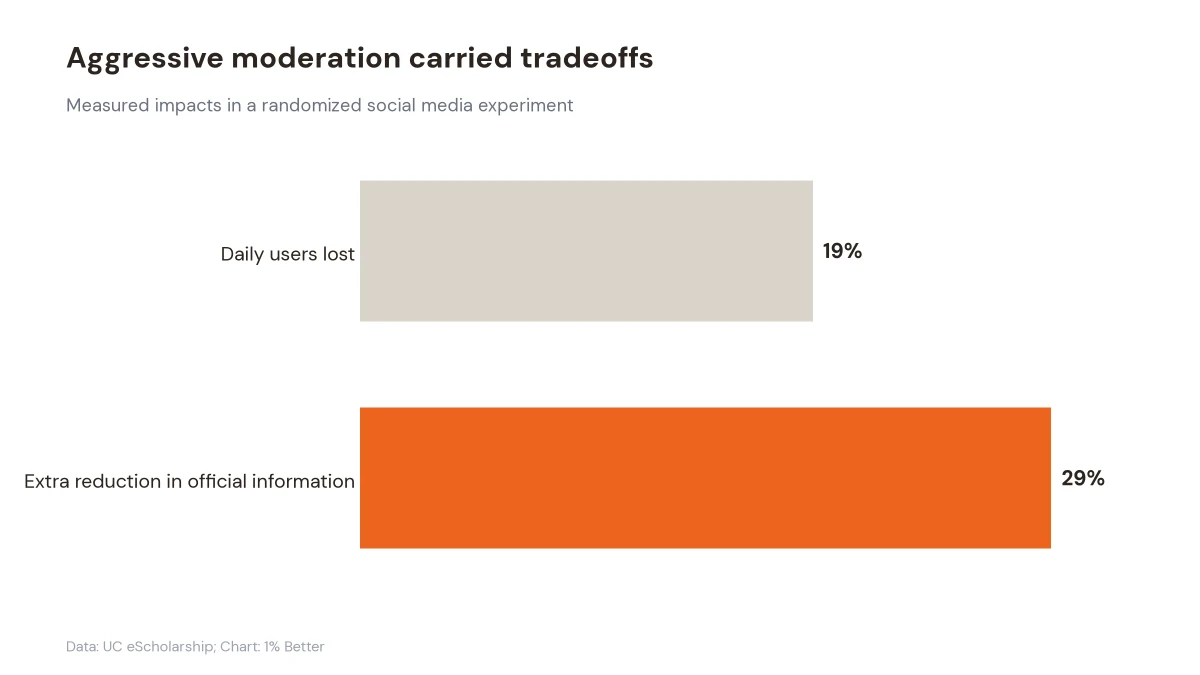
A randomized social media experiment in Pakistan cut daily users by 19% and reduced official information 29% more than misinformation.
Why it matters: Heavy moderation can shrink the audience and weaken the spread of credible material along with false claims. Platform designers need interventions that preserve trusted distribution while limiting harmful content.
Business & Money
August payroll growth breaks from the year's slow pace
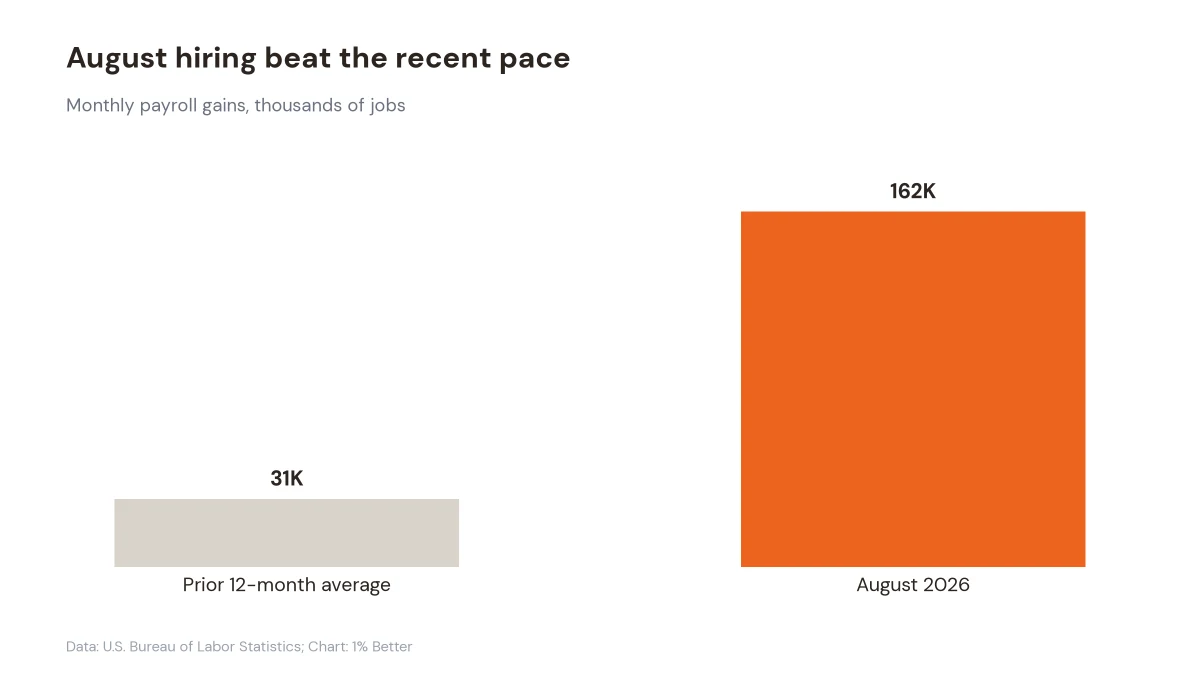
US employers added 162,000 jobs in August, well above the prior 12-month average of 31,000, while unemployment held at 4.1%.
Why it matters: The labor market delivered a clear upside surprise after a weak stretch. Wage growth of 3.1% over the year adds pressure to the Federal Reserve's inflation and rate calculus.
Business & Money
Labor Day gas prices hit a record $4.14 a gallon
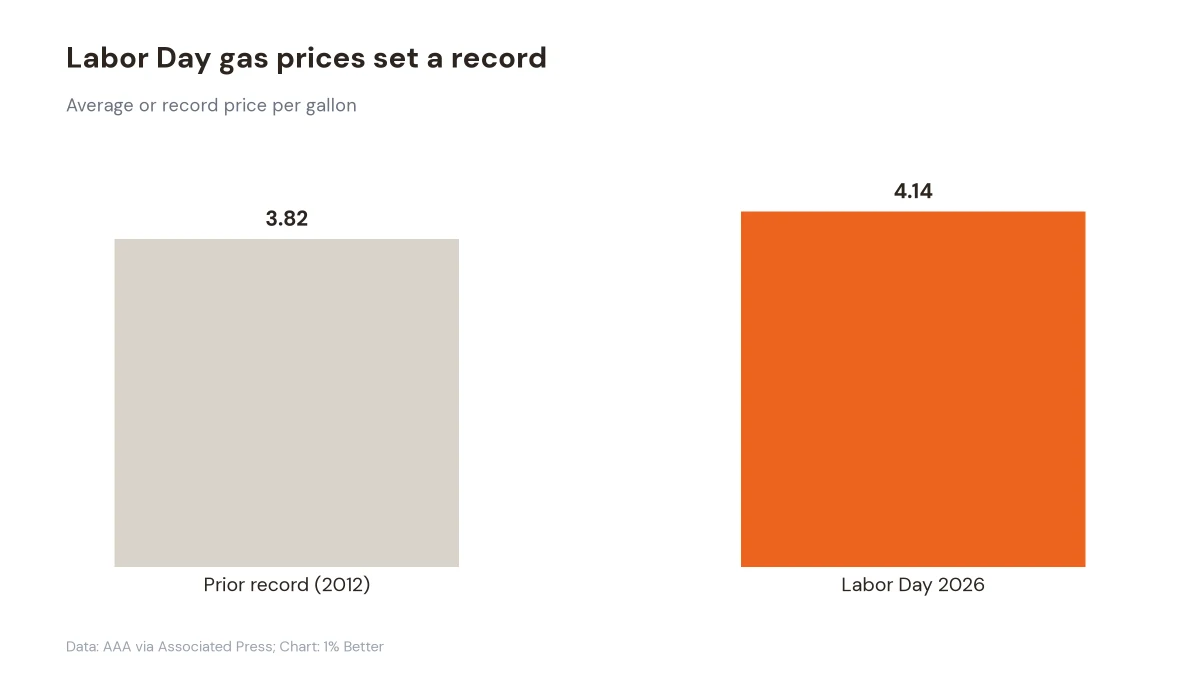
Regular gasoline averaged $4.14 a gallon heading into Labor Day, topping the previous holiday record of $3.82 from 2012.
Why it matters: The extra fuel cost lands directly on household travel and commuting budgets. Disrupted crude flows through the Strait of Hormuz and refinery issues keep energy inflation in focus.