Daily Brief: September 5, 2026
A strong jobs report rattles markets, Oura prepares for Wall Street, workplace AI shows both reach and friction, and new research links breath, self-control, and brain biology to better decisions and health.
1% Better EditorialToday’s brief tracks a sharp tension: powerful tools and promising science are moving fast, while the systems around them still need resilience, discipline, and proof.
Business & Money
A jobs surprise raises the odds of a September rate hike
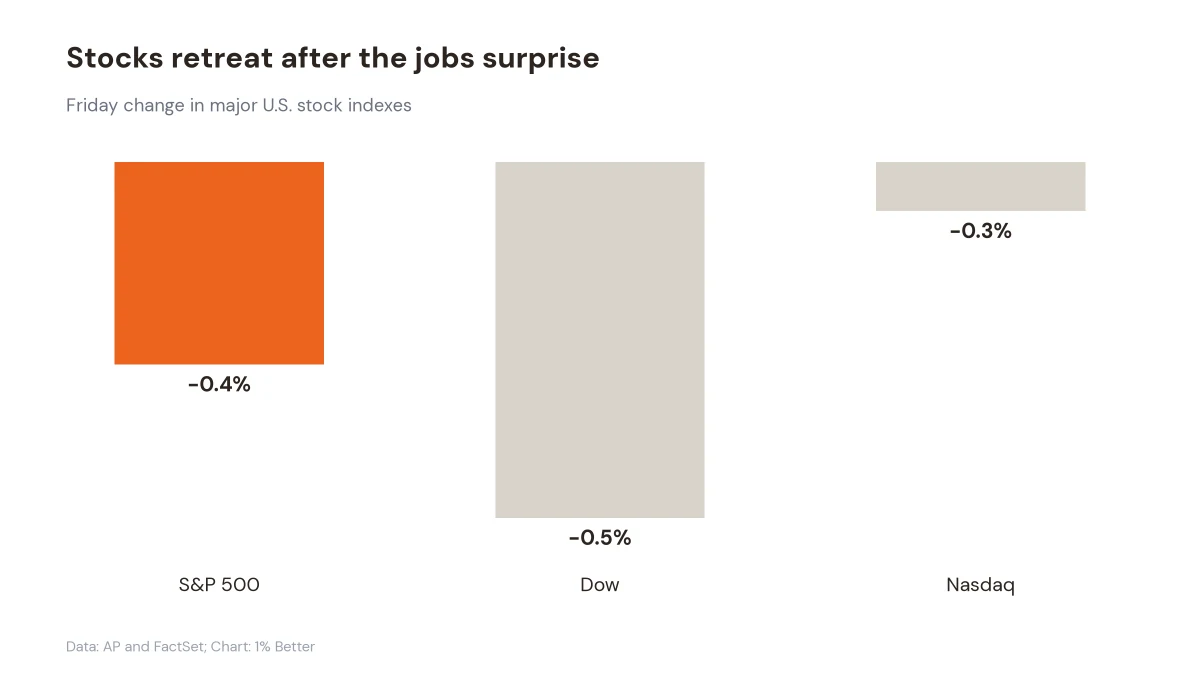
Employers added 162,000 jobs in August, nearly triple forecasts, sending major stock indexes lower and Treasury yields higher Friday.
Why it matters: A resilient labor market gives the Federal Reserve more room to raise borrowing costs as inflation stays above 3%. Rate hike expectations climbed to 60.4%, putting mortgages, business loans, and market valuations back under pressure.
Business & Money
Oura files for an IPO after membership revenue jumps 121%
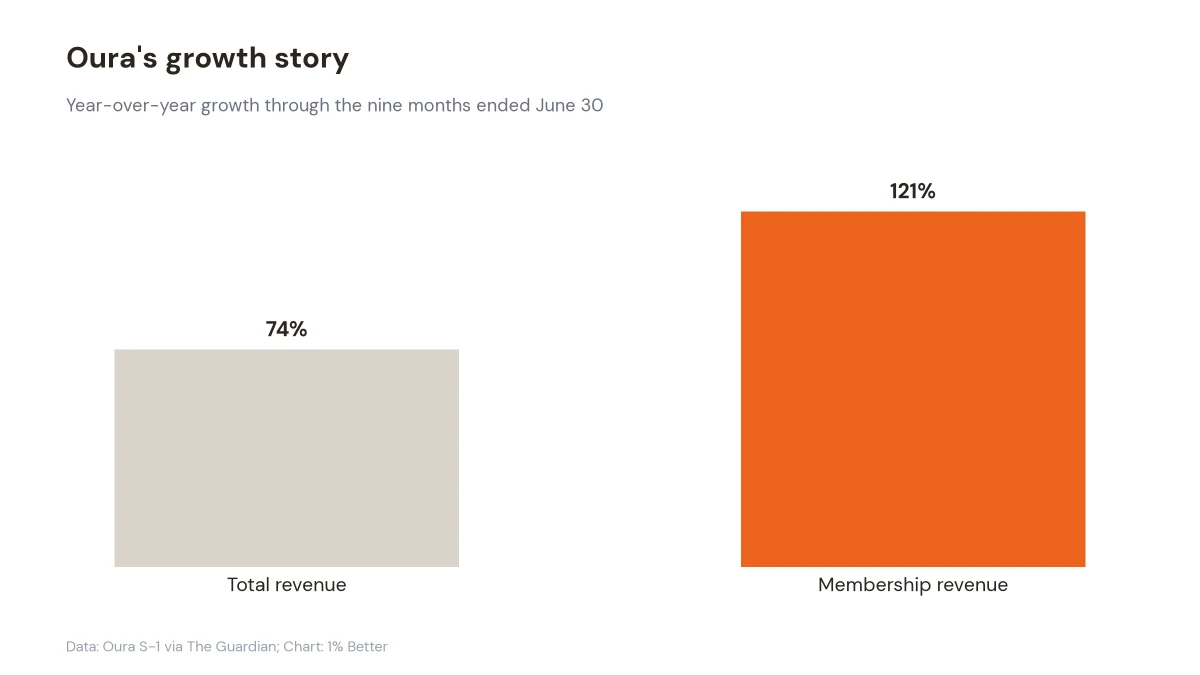
Smart ring maker Oura plans to list on Nasdaq as soon as this month after posting $1.21 billion in nine-month revenue and its first profits.
Why it matters: Oura is turning health tracking into a high-margin subscription business with 5 million paying members. Its filing offers investors a rare consumer technology growth story, with a valuation expected above $11 billion.
Productivity
Generative AI reaches 62% of working-age adults
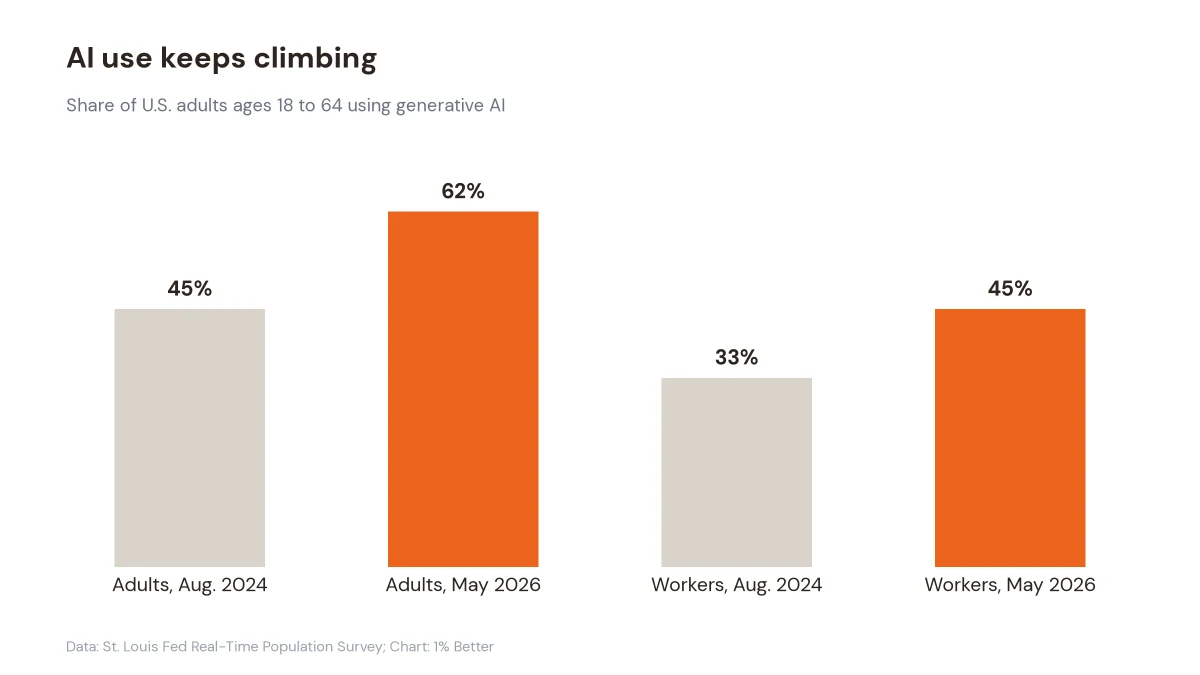
Generative AI use among adults ages 18 to 64 rose from 45% in August 2024 to 62% in May 2026, according to the Federal Reserve Bank of St Louis.
Why it matters: Adoption is broad but shallow: at least 20% of workers use AI in more than 80% of occupations, while half use it in only 40% of occupations and for less than 3% of tasks. The next productivity gains depend on deeper workflow integration.
Productivity
Workers lose 20 days a year troubleshooting AI
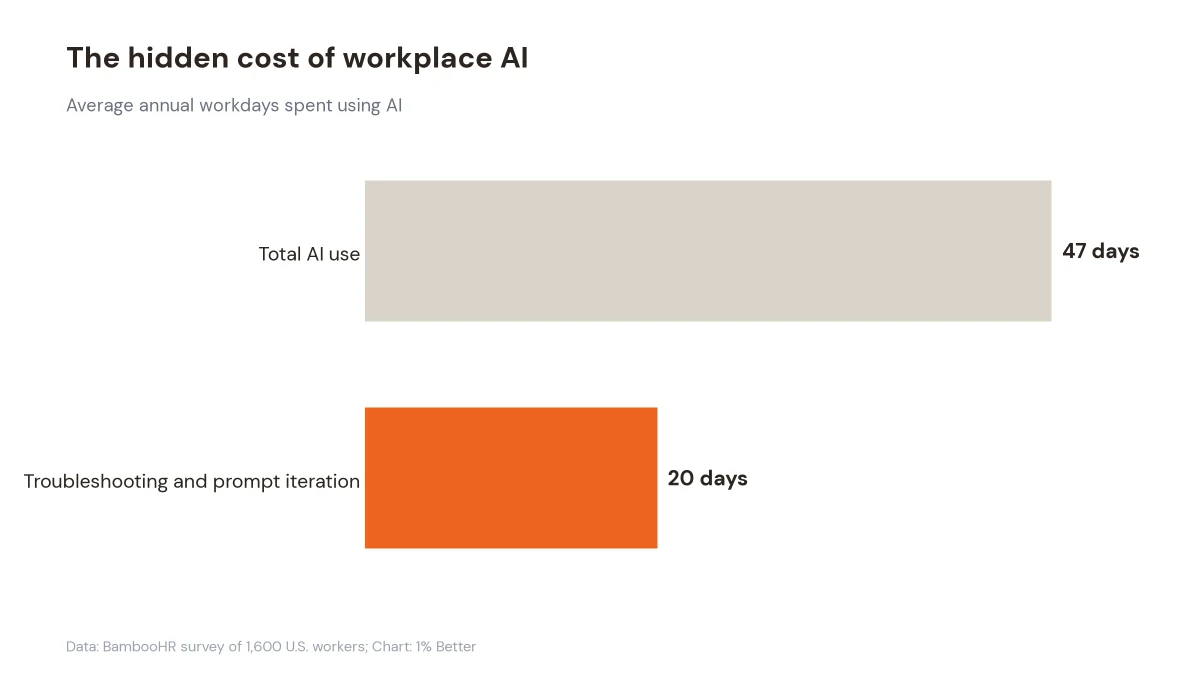
Workers spend the equivalent of 47 workdays a year using AI, yet 20 of those days go to fixing errors and iterating on prompts, a survey found.
Why it matters: AI access alone does little for output when teams lack clear use cases, training, and quality controls. Employers can reclaim time by standardizing prompts, reviewing tool fit, and measuring completed work instead of usage volume.
Productivity
Three major AI providers go down at the same time

OpenAI, Anthropic, and xAI suffered overlapping outages Thursday morning, disrupting ChatGPT, Claude, Grok, and related services for hours.
Why it matters: AI has become operational infrastructure for customer service, coding, research, and decisions. Multi-model fallbacks, continuity plans, and clear service expectations now belong in the same resilience playbook as cloud and network redundancy.
Health & Science
Brain stem cells take instructions from food and touch

Two UCLA studies found that nutrient processing and physical contact from the thalamus help human brain stem cells decide which neurons to make.
Why it matters: The findings recast metabolism and neighboring brain signals as active architects of the developing cortex. That insight could sharpen research into neurodevelopmental disorders, psychiatric conditions, and brain cancers.
Health & Science
Psilocybin shields nerves from chemotherapy damage in mice

Two doses of psilocybin protected mice from painful nerve damage through as many as six rounds of chemotherapy in a new study.
Why it matters: Chemotherapy-induced peripheral neuropathy can leave cancer survivors with lasting burning, numbness, and pain. The mouse results open a potential preventive route that now needs careful testing for safety, dosing, and effectiveness in people.
Self-Improvement
A longer exhale may nudge people toward bolder choices

Slow breathing with a prolonged exhale increased heart rate variability and made participants more receptive to rewards and risk in a new study.
Why it matters: Breathing can change more than stress levels: it may also shift how the brain values possible outcomes. A slower exhale could become a simple tool for regulating decision state before a negotiation, investment choice, or difficult conversation.
Self-Improvement
Self-control works through beliefs, plans, and perceived control
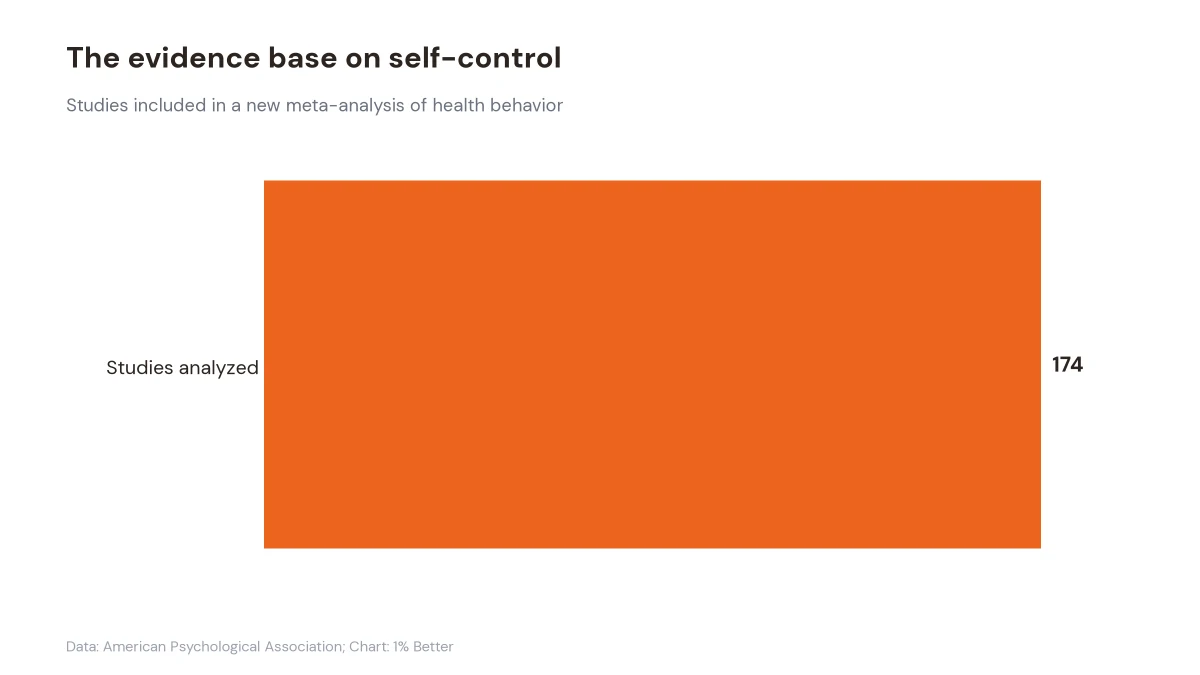
A meta-analysis of 174 studies linked stronger self-control with healthier behavior partly through beliefs, perceived control, and clear intentions.
Why it matters: Willpower becomes more actionable when it is translated into confidence, a reason to act, and a specific plan. Habit change may improve when people design those supports around the behavior they want to repeat.