Daily Brief: September 2, 2026
Meal timing, smartwatch accuracy, stroke recovery, AI productivity, mindfulness, childhood resilience and rising borrowing costs shape today's smarter read.
1% Better EditorialToday's brief follows the numbers behind healthier routines, sharper work and a tougher financial backdrop.
Health & Science
Eating jet lag is linked to higher heart risk in men
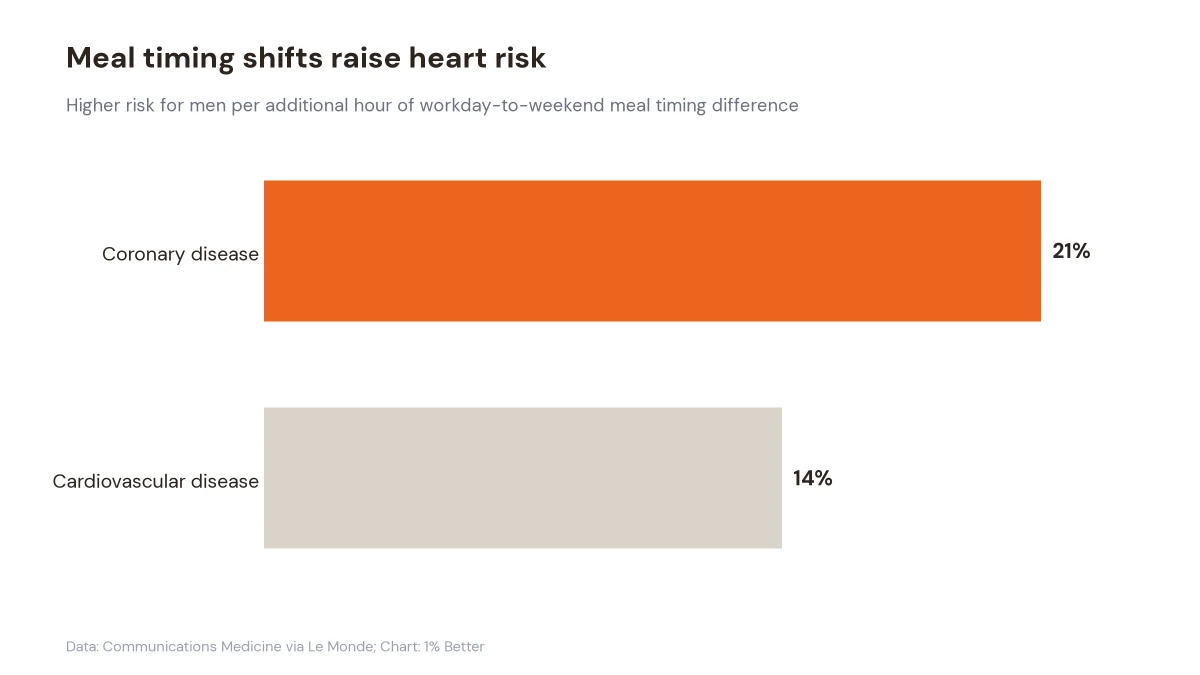
Men faced higher heart risk for every extra hour their meal timing shifted between workdays and days off in a large French cohort.
Why it matters: Regular meal timing may help keep the body's metabolic clocks aligned. Across more than 100,000 participants followed for over 14 years, each added hour of timing difference was associated with 21% higher coronary disease risk and 14% higher cardiovascular disease risk in men.
Health & Science
Smartwatches can overstate calories burned during exercise
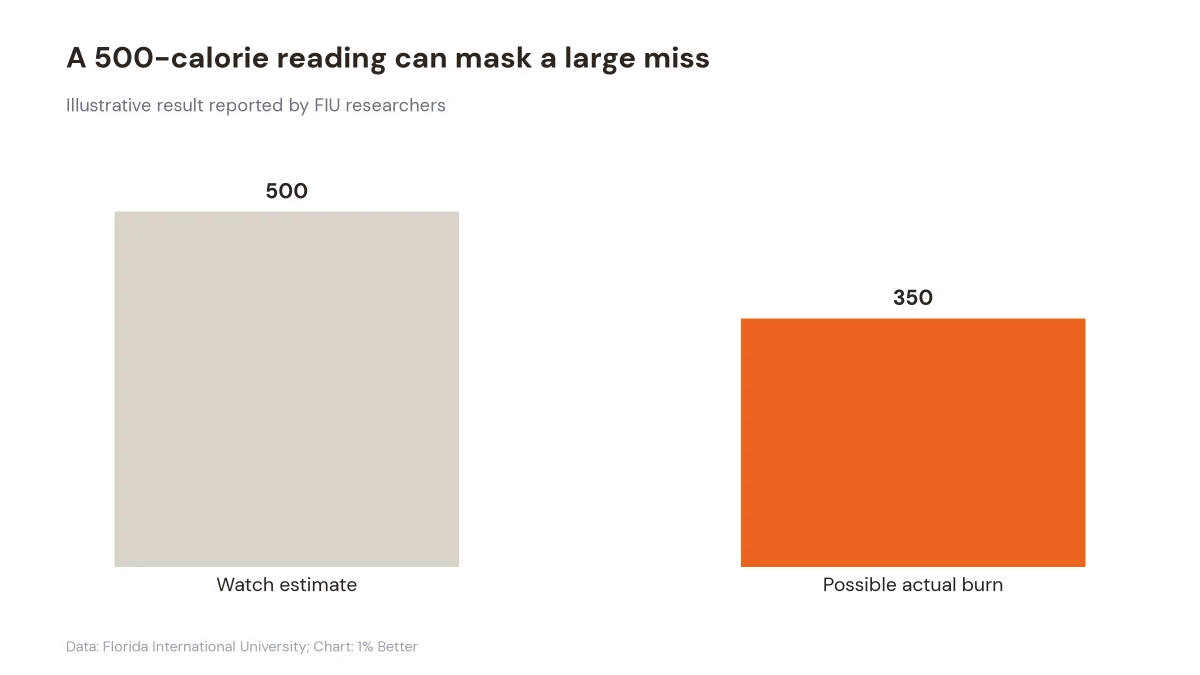
Four popular smartwatches showed typical calorie estimate errors of 15% to 25% in a controlled Florida International University study.
Why it matters: Calorie readings work better as a ceiling and trend signal than an exact accounting tool. Researchers said a displayed 500-calorie burn could be closer to 350, with accuracy worsening as body fat increased.
Health & Science
Tiny follow-on clots may explain stalled stroke recovery
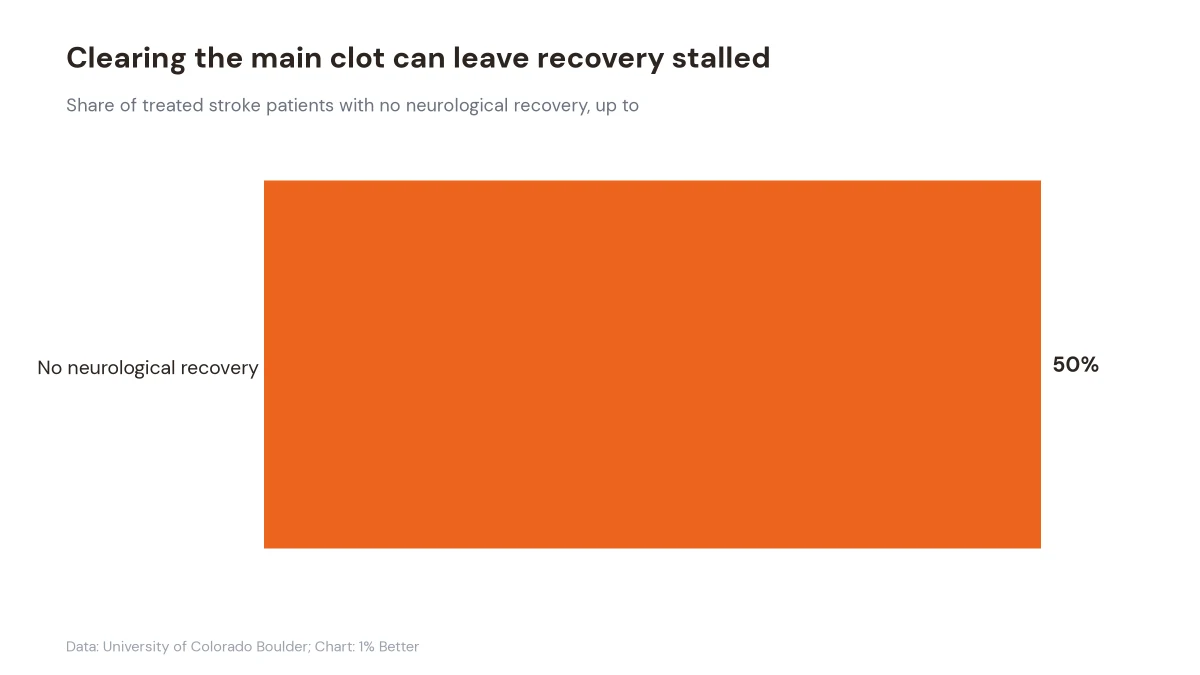
Brain blood flow can trigger new microclots after doctors remove a stroke's main blockage, new animal and patient research suggests.
Why it matters: Up to half of treated patients show no neurological recovery even after the main vessel is reopened. The findings point to von Willebrand Factor and inflammation as possible treatment targets, while researchers say further human studies are needed.
Productivity
Frequent generative AI use shifts work toward production
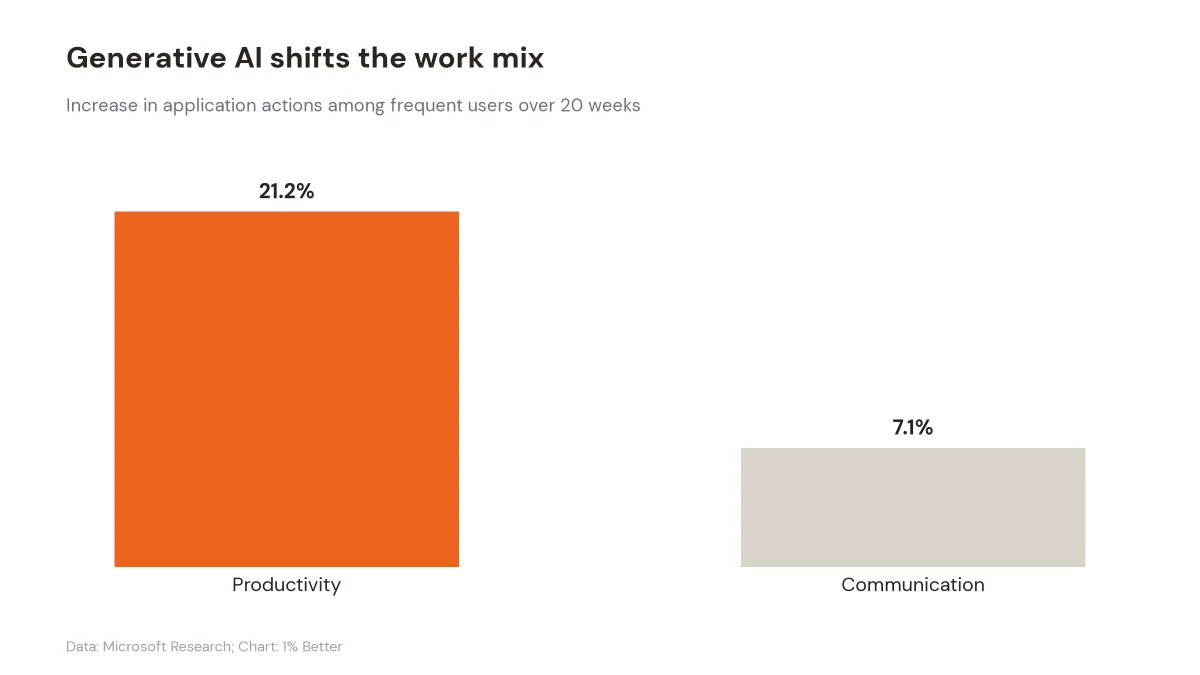
Frequent AI users logged 21.2% more productivity actions and 7.1% more communication actions across a 20-week Microsoft study.
Why it matters: The digital trace data suggests AI can tilt information work toward documents and individual output while reducing some email handling. Leaders should pair efficiency tracking with deliberate knowledge sharing so stronger solo production also supports team learning.
Productivity
AI troubleshooting consumes 20 workdays a year
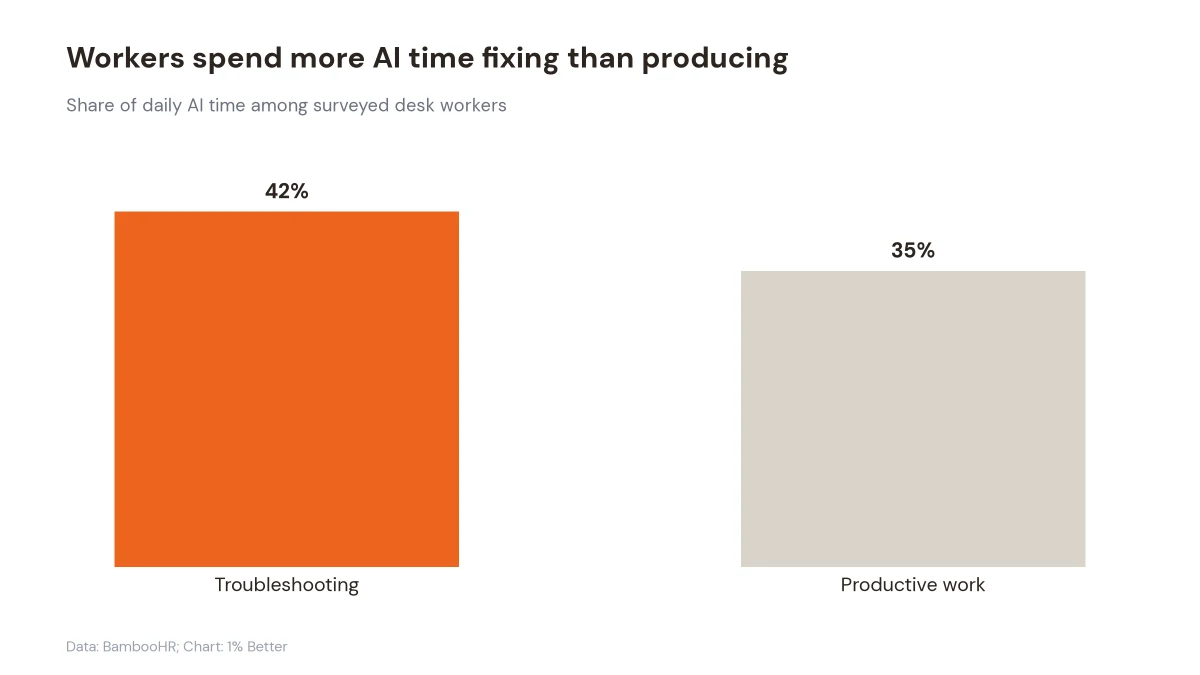
Desk workers said 42% of their AI time goes to fixing errors and refining prompts, versus 35% spent on productive work.
Why it matters: BambooHR's survey of 1,608 U.S. salaried desk workers turns the AI productivity debate into a workflow problem. Better tools, training and usage policies can reclaim part of the 20-day annual troubleshooting burden reported by respondents.
Self-Improvement
Mindfulness and gratitude programs may help heart health
A review of 18 randomized trials found positive psychology programs improved blood pressure and other heart markers within weeks.
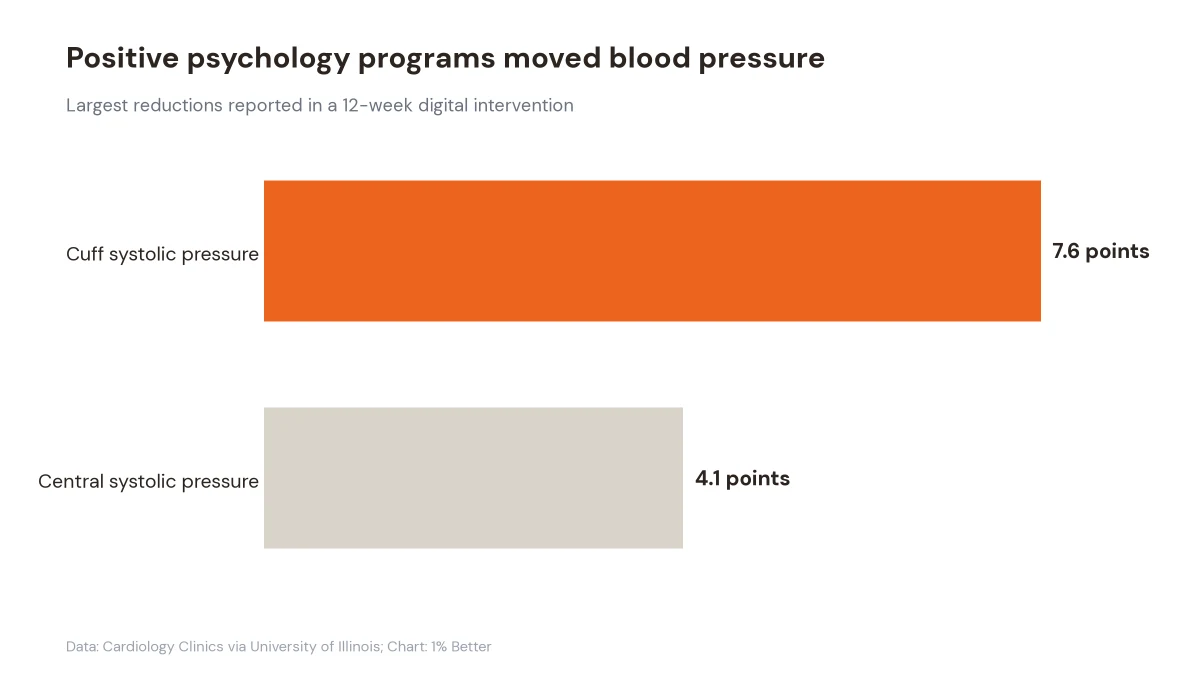
Why it matters: Daily practice reinforced by weekly sessions for eight to 12 weeks produced the most consistent benefits. One digital program reduced cuff-measured systolic pressure by 7.6 points and central systolic pressure by 4.1 points.
Self-Improvement
Long-term studies find broad resilience among children after COVID
A Child Development special section found that most children's health, learning and wellbeing recovered substantially after pandemic disruptions.
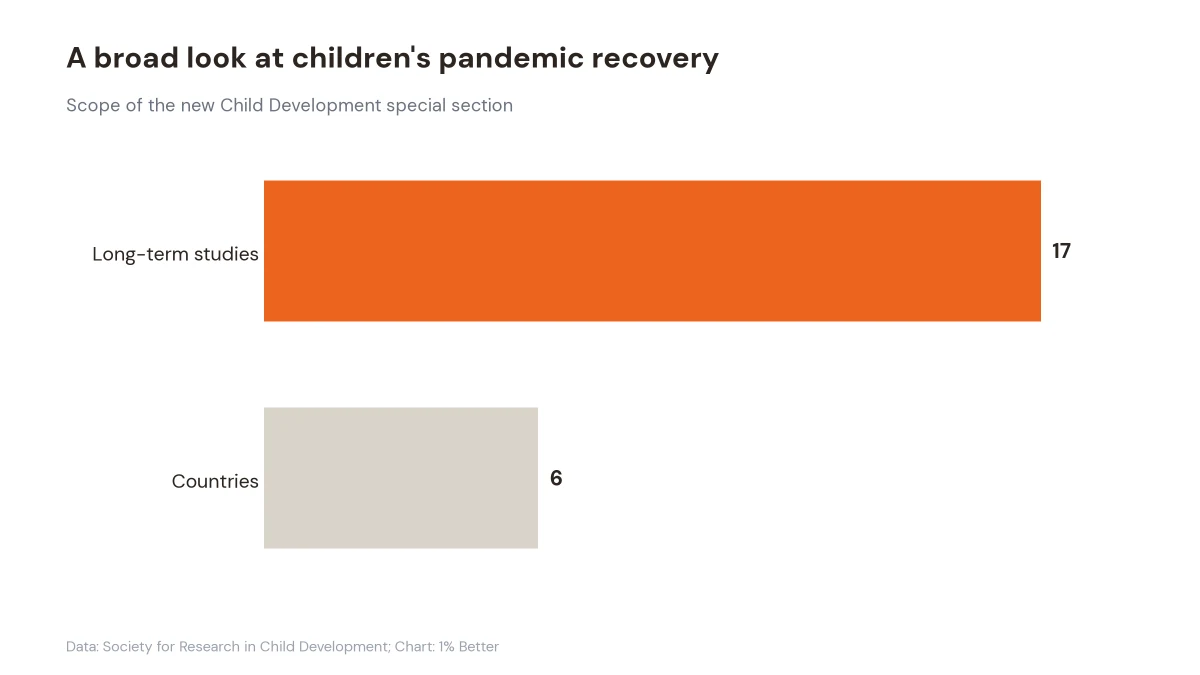
Why it matters: The synthesis of 17 long-term studies across six countries challenges a one-size-fits-all story of lasting damage. Persistent setbacks clustered among children who already faced other risks, sharpening the case for targeted support.
Business & Money
Rising Treasury yields raise the price of borrowing
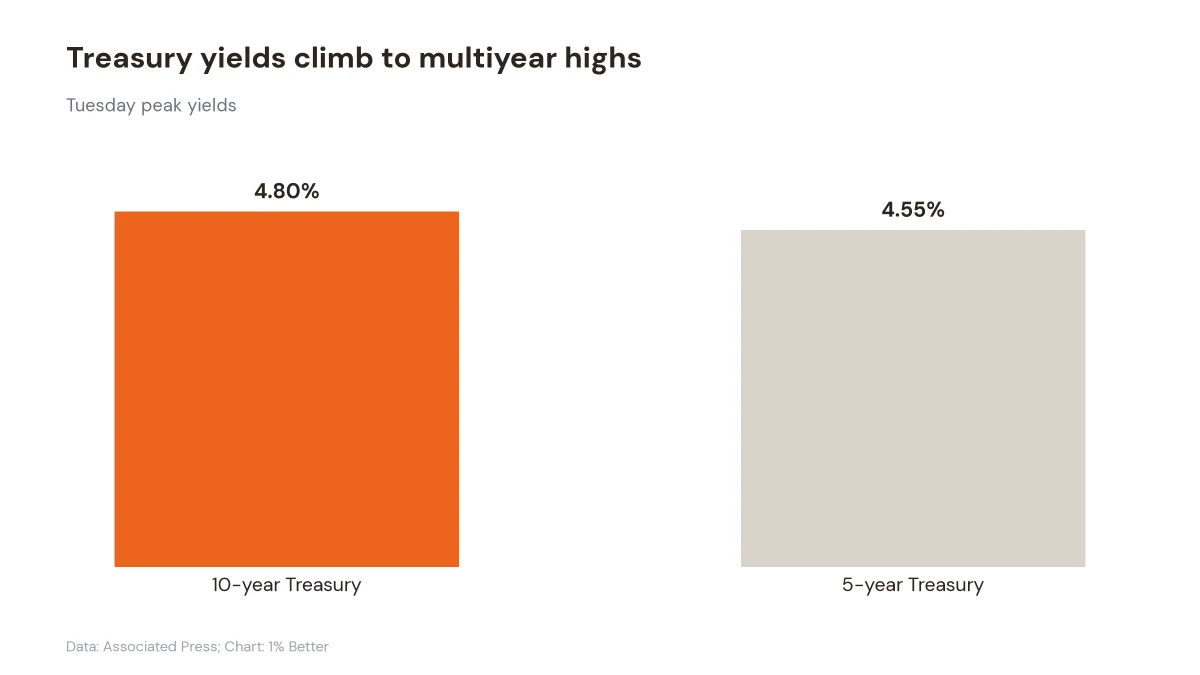
The 10-year Treasury yield reached 4.80% and the 5-year yield touched 4.55% as oil and inflation worries rattled global bonds.
Why it matters: Those benchmarks flow into mortgage rates, auto loans, corporate financing and returns on savings. Higher yields can tighten household and business budgets even before the Federal Reserve changes its policy rate.