Daily Brief: September 1, 2026
Oil and bond pressure hit markets, AI troubleshooting eats into work time, and new research spans menopause brain fog, genetics, heart health, nutrition and ESG emissions.
1% Better EditorialToday's brief tracks the gap between promising tools and real-world outcomes, from AI at work to health research and sustainable investing.
Business & Money
Oil and bond pressure pull Wall Street lower
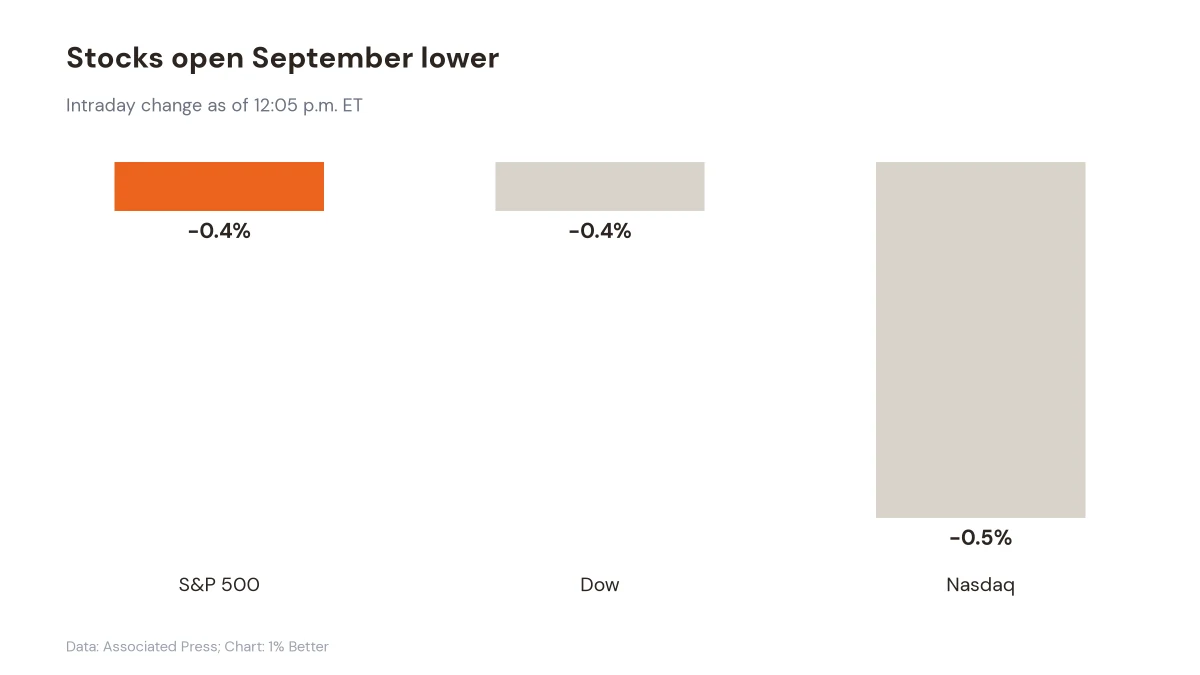
Wall Street opened September lower as climbing oil prices and a bond sell-off pushed the S&P 500 down 0.4% and the Nasdaq down 0.5%.
Why it matters: Rising Treasury yields raise borrowing costs across mortgages, corporate loans and expansion plans. Brent crude at $92.61 also keeps inflation pressure elevated ahead of the Federal Reserve's September meeting.
Productivity
AI troubleshooting consumes more time than productive use
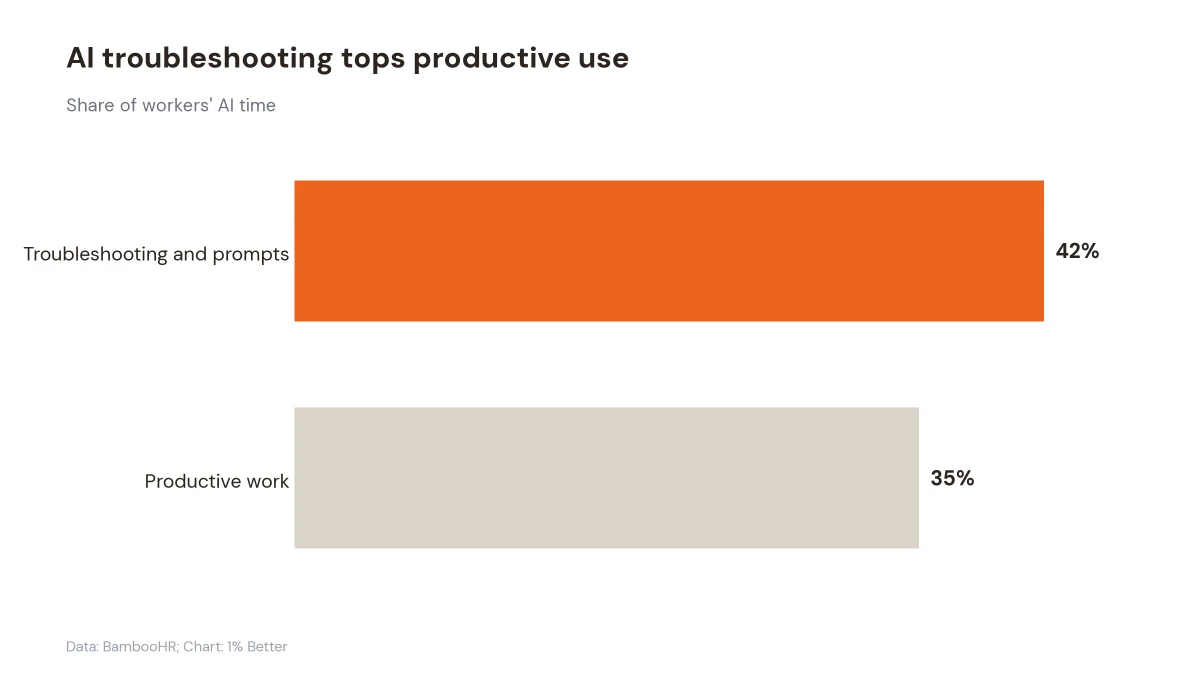
Workers spend 42% of their AI time fixing errors and refining prompts, compared with 35% on productive work, a BambooHR survey found.
Why it matters: The gap adds up to roughly 20 workdays a year, while 63% of organizations have increased AI tool budgets. Leaders need workflow design, training and clear usage policies to turn adoption into measurable output.
Health & Science
Early hormone study signals relief for menopause brain fog

A small UCLA case series found that tailored estriol and progesterone therapy coincided with improvements in menopause-related brain fog.
Why it matters: Participants reported better concentration, working memory, processing speed and problem-solving after treatment. The study is preliminary and supports larger randomized trials before broad clinical conclusions.
Health & Science
Genetic study maps new risk pathways for OCD and tic disorders

An international Rutgers-led analysis identified dozens of large-effect genes tied to obsessive-compulsive disorder and chronic tic disorders.
Why it matters: The findings sharpen the biological map of two conditions that often overlap and could guide future treatment research. The work also shows the value of combining genetic data across many international teams.
Self-Improvement
Positive psychology programs show measurable heart benefits
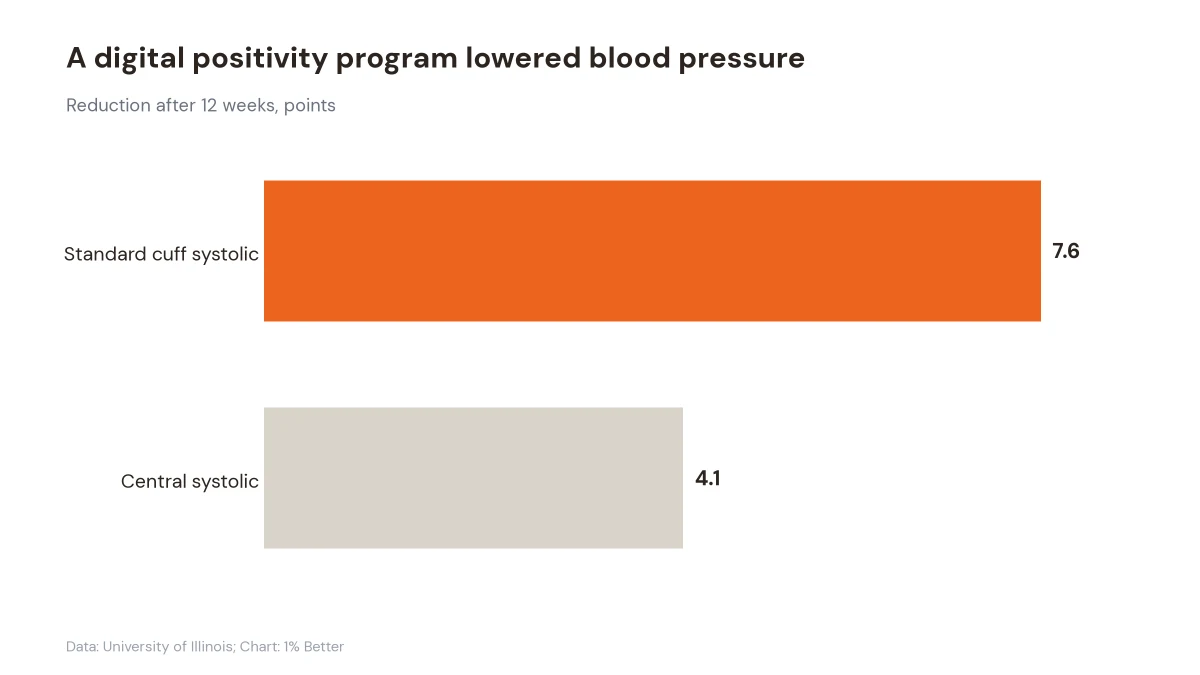
Mindfulness, gratitude and optimism programs improved cardiovascular markers within weeks across a review of positive psychology interventions.
Why it matters: The strongest programs paired daily practice with repeated reinforcement. One digital intervention lowered standard cuff systolic pressure by 7.6 points and central systolic pressure by 4.1 points over 12 weeks.
Business & Money
ESG pressure can shift corporate pollution into supply chains

Companies facing strong ESG investor pressure can cut their direct emissions while shifting pollution-intensive work to suppliers, researchers found.
Why it matters: That transfer can leave combined emissions unchanged, so portfolio-level claims may miss supply-chain pollution. Better value-chain disclosure, supplier oversight and access to green technology can make investor pressure more effective.
Self-Improvement
September offers a psychological reset for new habits

September's psychological fresh start effect can create a useful reset for launching a habit, project or renewed commitment to a goal.
Why it matters: Temporal landmarks help people separate a new identity from older patterns and renew motivation. Back-to-school associations, cooler weather and the end of vacation season can make September feel especially actionable.
Health & Science
Parental vitamin B12 levels track with birth-defect risk
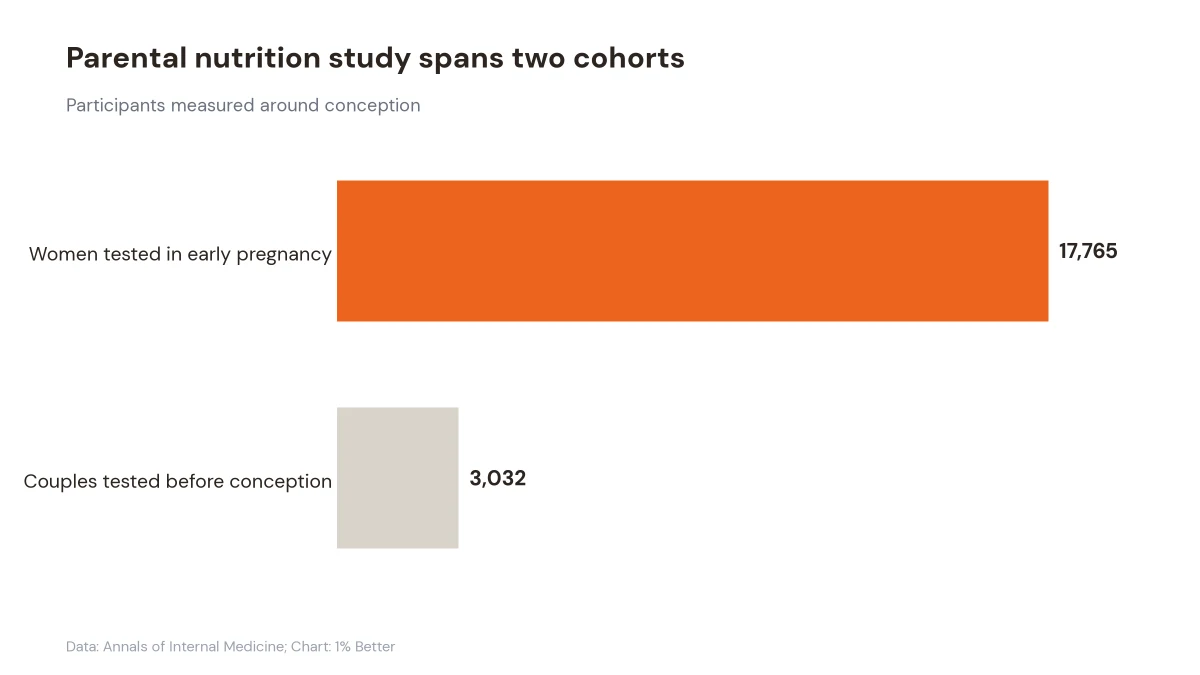
Higher vitamin B12 levels in both parents before conception were associated with lower birth-defect risk in a large prospective cohort.
Why it matters: The study also linked adequate maternal red blood cell folate early in pregnancy with lower predicted prevalence. The findings broaden preconception nutrition from a maternal focus to both parents while leaving causation for future trials.