Daily Brief: August 28, 2026
Today: a 20-minute workout matches a nap for a tired brain, an at-home test cuts colon cancer deaths 43%, remote workers report the highest well-being, sleep tops the wellness charts, and US growth cools to 1.5%.
1% Better EditorialEight things worth knowing this Friday, spanning health, work, money, and the science of a good night's sleep.
Health & Science
A 20-minute workout rivals a 90-minute nap for a tired brain
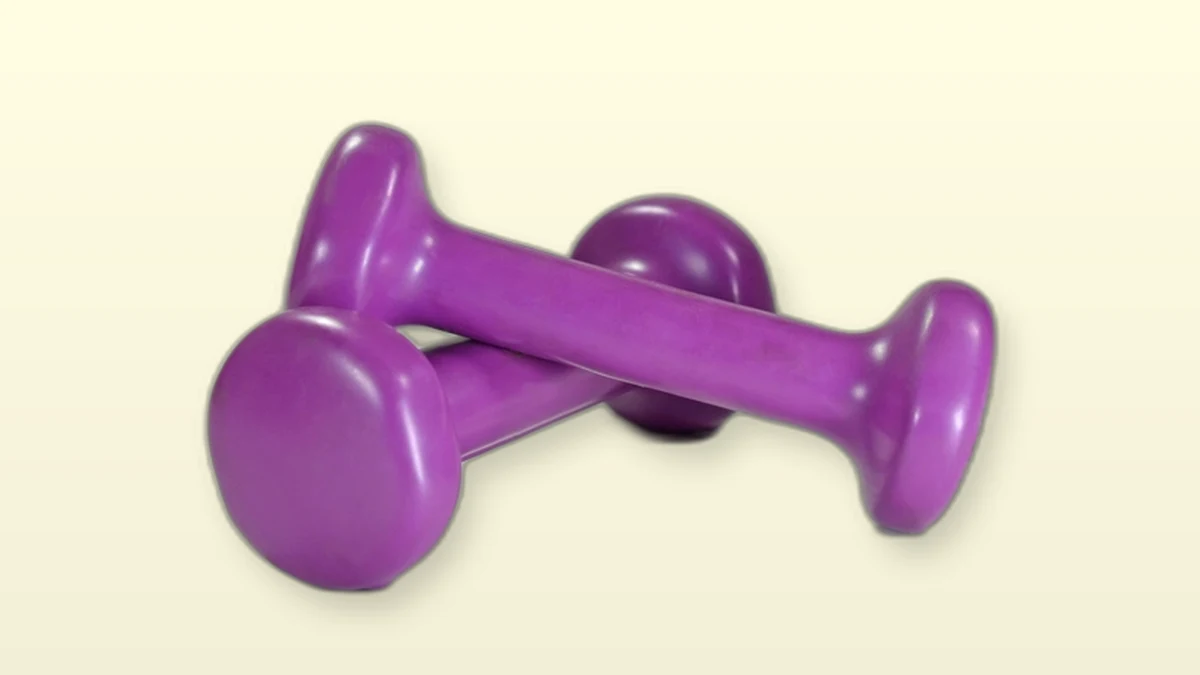
People who exercised for 20 minutes or napped for 90 scored about 22% better on memory tests after 30 hours without sleep, a McGill-led study found.
Why it matters: Sleep loss dulls memory, focus, and judgment, yet many workers cannot pause for rest. A brief bout of cycling preserved recall as well as a nap did, giving shift workers in health care and transport a cheap, portable way to stay sharp.
Health & Science
A simple at-home test cut colorectal cancer deaths by 43%
Swedes who took part in colorectal cancer screening were 43% less likely to die from the disease, according to data on 376,511 people published in JAMA Network Open.
Why it matters: Colorectal cancer is one of the most common and deadly cancers, and this is among the strongest real-world evidence that a stool test mailed to your door saves lives. It strengthens the case for showing up when a screening kit arrives.
Self-Improvement
Sleep now outranks diet and exercise as the top health priority
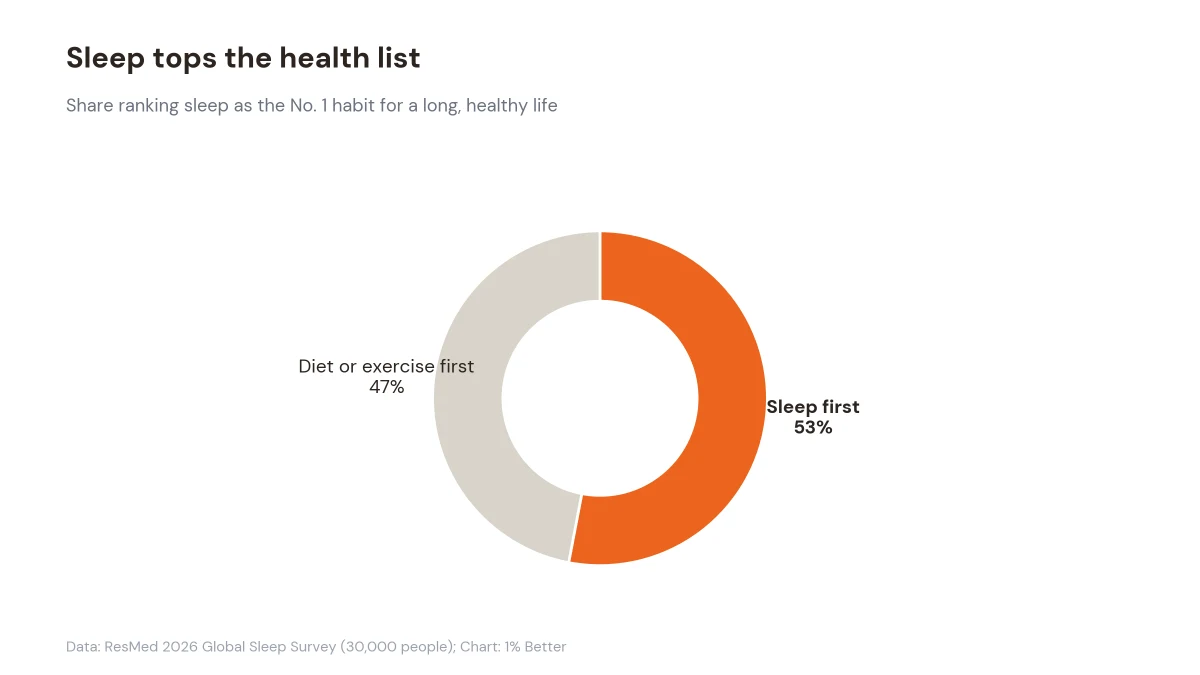
In a 2026 global survey of 30,000 people, 53% ranked sleep above diet and exercise as the most important habit for a long, healthy life.
Why it matters: The hustle-era badge of skimping on sleep is fading fast. With rings and watches scoring every night, rest has become a measurable habit you can improve, and the payoff shows up in next-day mood, focus, and health.
Self-Improvement
Two-thirds track their health daily, and it is stressing them out
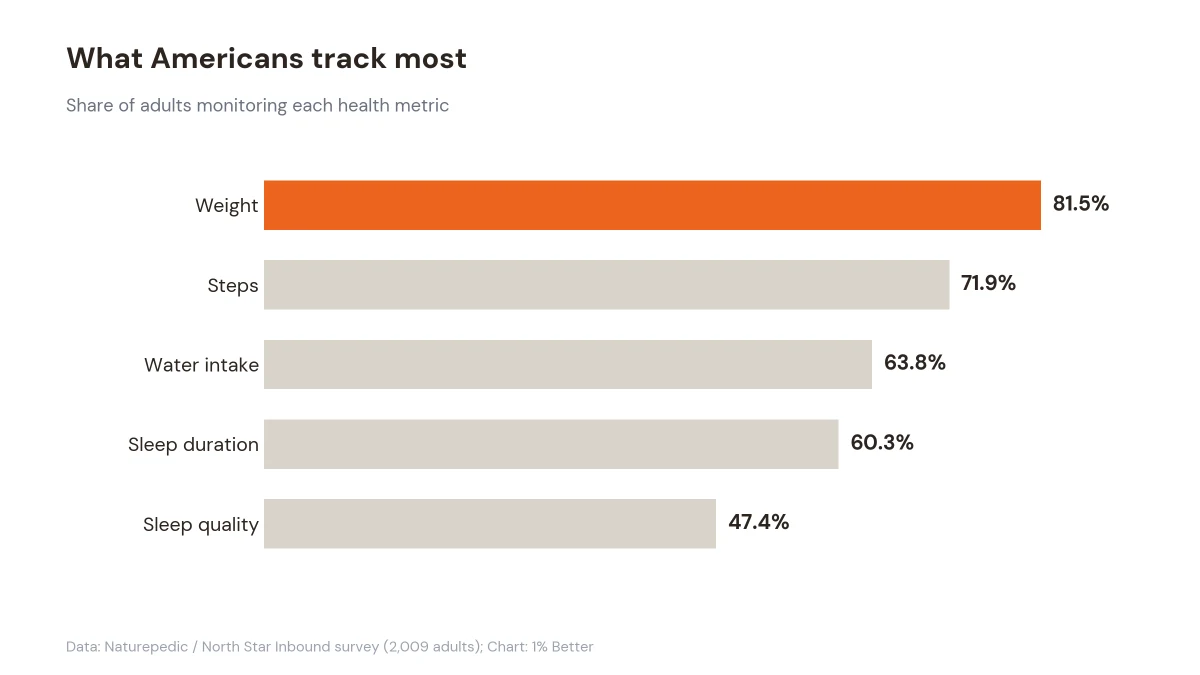
A survey of 2,009 US adults found 64% track at least one health metric daily, and more than 1 in 3 have quit a metric because it hurt their mental health.
Why it matters: The study calls it optimization anxiety: the moment a number meant to help starts to harm. The fix is choosing a few metrics that drive real habits and letting the rest go.
Productivity
Fully remote workers report the highest well-being, big study finds
Among 7,704 employees tracked at MD Anderson Cancer Center, those working fully remotely reported the highest well-being and the lowest intent to quit.
Why it matters: As executives push return-to-office mandates, the data points the other way: remote staff felt best and were the most likely to stay. For managers, flexibility looks like a retention tool as much as a perk.
Productivity
The AI dividend could be shorter workweeks, researcher argues
Four-day-week researcher Joe O'Connor argues that AI speed gains should buy workers time back, warning that firms will otherwise just pile on more tasks.
Why it matters: AI is automating the routine, high-volume parts of knowledge work fastest. O'Connor's point: compete on the value of output, and hand back some hours, or risk burning out the people whose judgment AI cannot replace.
Business & Money
US economy cooled to a 1.5% growth rate last quarter
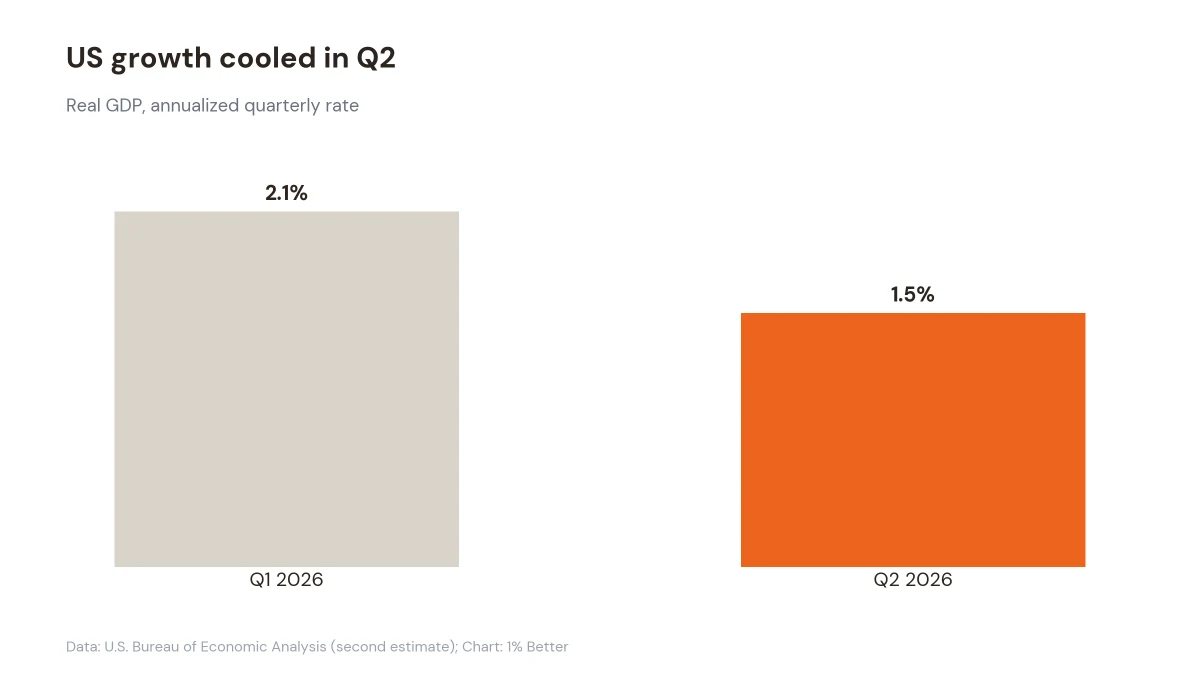
Real GDP grew at a 1.5% annual rate in the second quarter, down from 2.1% in the first, the Bureau of Economic Analysis said in its second estimate.
Why it matters: Growth slowed even as consumer spending was revised up to a strong 3.4%, a mixed signal for the Fed. Cooler output with hot spending complicates the case for rate cuts as officials gather at Jackson Hole.
Business & Money
Fed Chair Warsh takes the Jackson Hole stage as inflation fears mount
Federal Reserve Chair Kevin Warsh headlines the Jackson Hole symposium today, delivering a marquee address as markets brace for clues on rates and inflation.
Why it matters: Jackson Hole is where Fed chiefs have signaled big shifts, and Warsh has said he wants the Fed to stop steering markets with predictions. Traders are watching for how he balances sticky inflation against a slowing economy.