Daily Brief: Nvidia's big test, gold's comeback, and the case for slowing down
Today: Nvidia heads into an earnings report Wall Street expects to nearly double its revenue, gold and bitcoin ride the debasement trade, and fresh science on sleep, vitamin D, and why slowing down makes you sharper.
1% Better EditorialBusiness & Money
Nvidia's earnings could nearly double its year-ago revenue
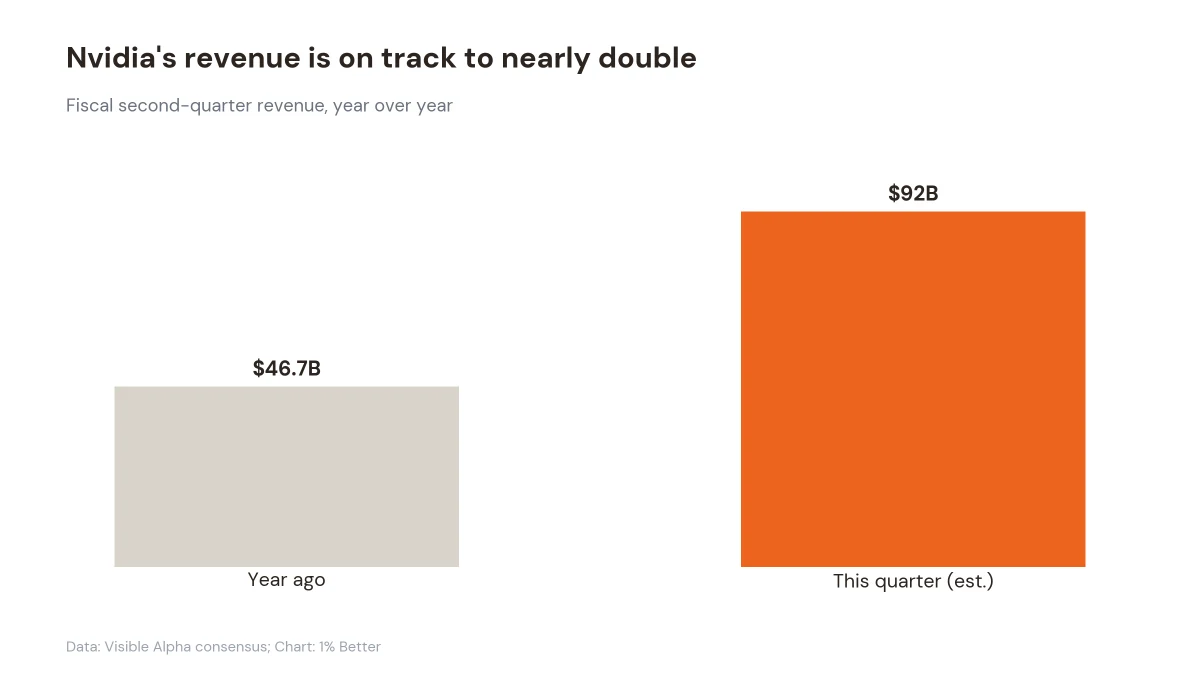
Wall Street expects Nvidia to report roughly $92 billion in fiscal second-quarter revenue after the close today, almost double the $46.7 billion it posted a year ago.
Why it matters: Nvidia now anchors the entire AI trade, so its guidance moves indexes, chip suppliers, and the megacap stocks funding data centers. A clean beat validates the capex boom, while a soft outlook rattles a market priced for perfection.
Business & Money
Gold and bitcoin rally as investors flee the dollar
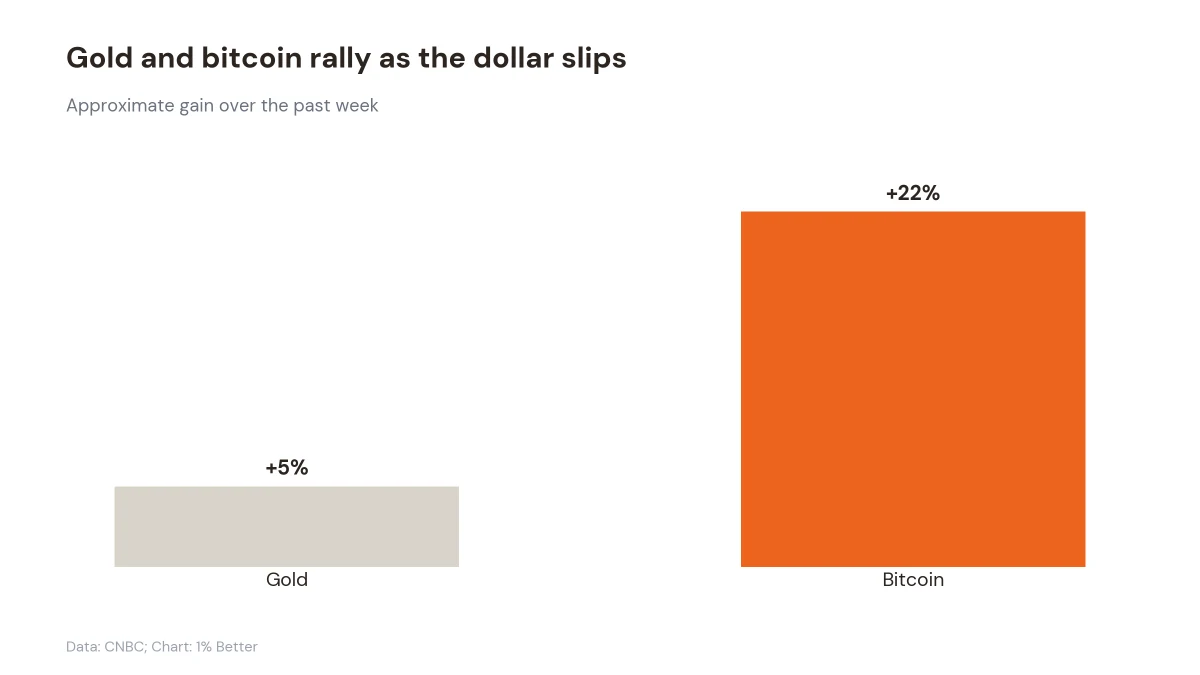
Gold advanced more than 5% last week and bitcoin soared 22% as a Treasury buyback move revived the debasement trade, a bet on hard assets over a weakening dollar.
Why it matters: Deficit anxiety is pushing big money toward stores of value, and bitcoin near $80,000 signals crypto is now trading like a macro hedge. For everyday savers, a softer dollar quietly raises the cost of imports and travel while lifting hard-asset portfolios.
Health & Science
Too little or too much sleep speeds up how your organs age

A Columbia University analysis in Nature found that both short and long sleep track with faster biological aging across the brain, heart, lungs, and immune system.
Why it matters: The team built aging clocks from blood proteins that score each organ separately, revealing that sleep shapes a coordinated brain-body network. It strengthens the case for a steady seven to eight hour window as a cheap, powerful lever on long-term health.
Health & Science
High-dose vitamin D linked to sharper thinking in at-risk adults
In an Emory study of 54 adults with sleep problems and mild cognitive impairment, those taking at least 5,000 IU of vitamin D daily scored over 13% higher on a standard cognition test.
Why it matters: With Alzheimer's cases projected to reach nearly 13 million Americans by 2050, affordable interventions during the early window matter. The study is small and observational, so treat it as a promising signal worth raising with a doctor before changing your routine.
Productivity
Remote workers report the highest wellbeing in a 7,700-person study
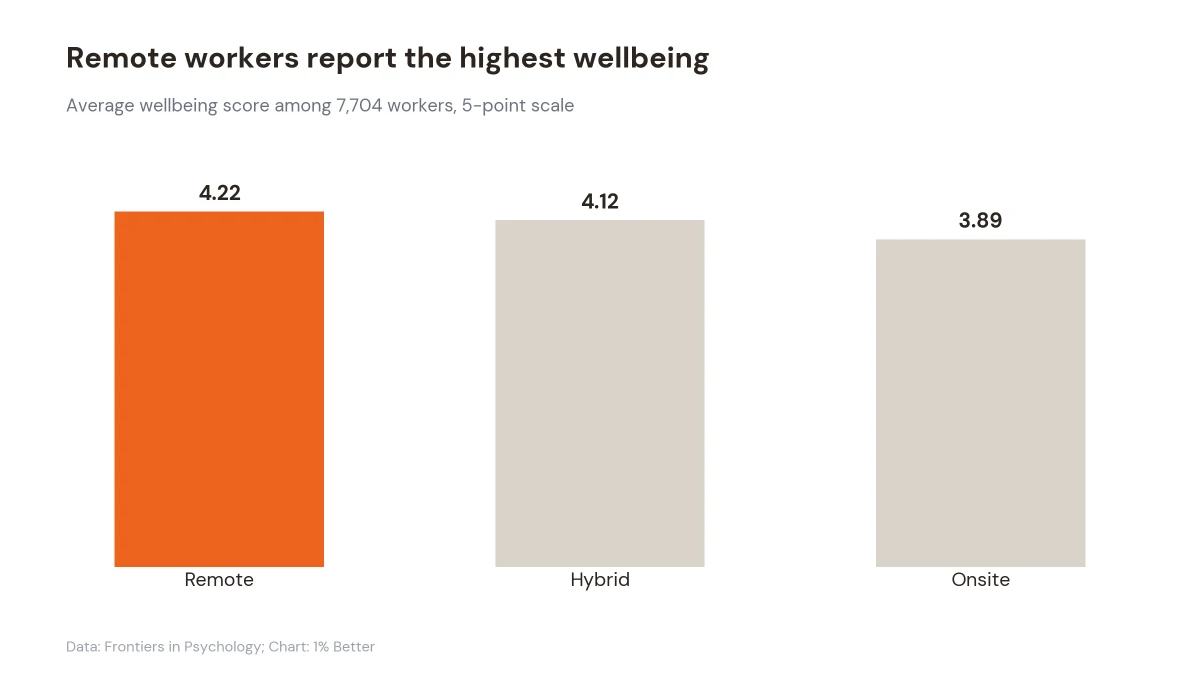
Across 7,704 workers, fully remote employees rated their wellbeing at 4.22 out of 5, edging out hybrid at 4.12 and fully onsite at 3.89.
Why it matters: Published in Frontiers in Psychology, the gap challenges a core argument behind return-to-office mandates. As leaders weigh flexibility against collaboration, this adds hard data suggesting autonomy over location is a real driver of how people feel about work.
Productivity
In the AI age, slowing down is the real productivity edge

A Forbes essay argues that once AI handles speed and volume, human value shifts to the slower work of noticing, reflecting, and choosing well.
Why it matters: Leadership expert Kathryn Page warns that we still reward visible busyness, full calendars, and fast replies over judgment and insight. Protecting time to think becomes a competitive advantage as machines absorb the routine execution.
Self-Improvement
Chasing happiness too hard can drain your self-control

Across four studies, University of Toronto researchers found that actively trying to maximize happiness left people eating more chocolate and quitting hard tasks sooner.
Why it matters: The catch is specific to constant monitoring, treating happiness as a target to measure and correct, which burns the same mental fuel that self-control needs. Simply enjoying a valued activity carries no such cost, so pursue meaning and let the good feelings follow.
Self-Improvement
How you feel today may echo in your wellbeing for decades

New research finds that wellbeing behaves less like a fixed baseline and more like a trajectory, with today's sense of purpose and mood shaping how you feel years later.
Why it matters: Positive wellbeing already links to longer life and lower depression risk, and this longer view suggests small daily investments compound over time. Tending relationships, purpose, and outlook today is essentially planting for a future self.