Daily Brief: August 24, 2026
Today's brief: young hearts already at risk, vitamin D and multilingual brains, AI flooding the workplace, screenshots eating your memory, a fractured Fed, and home prices that keep climbing.
1% Better EditorialFrom your arteries to your alarm clock, here are eight findings worth two minutes this Monday.
Health & Science
Most young adults already carry heart disease risk
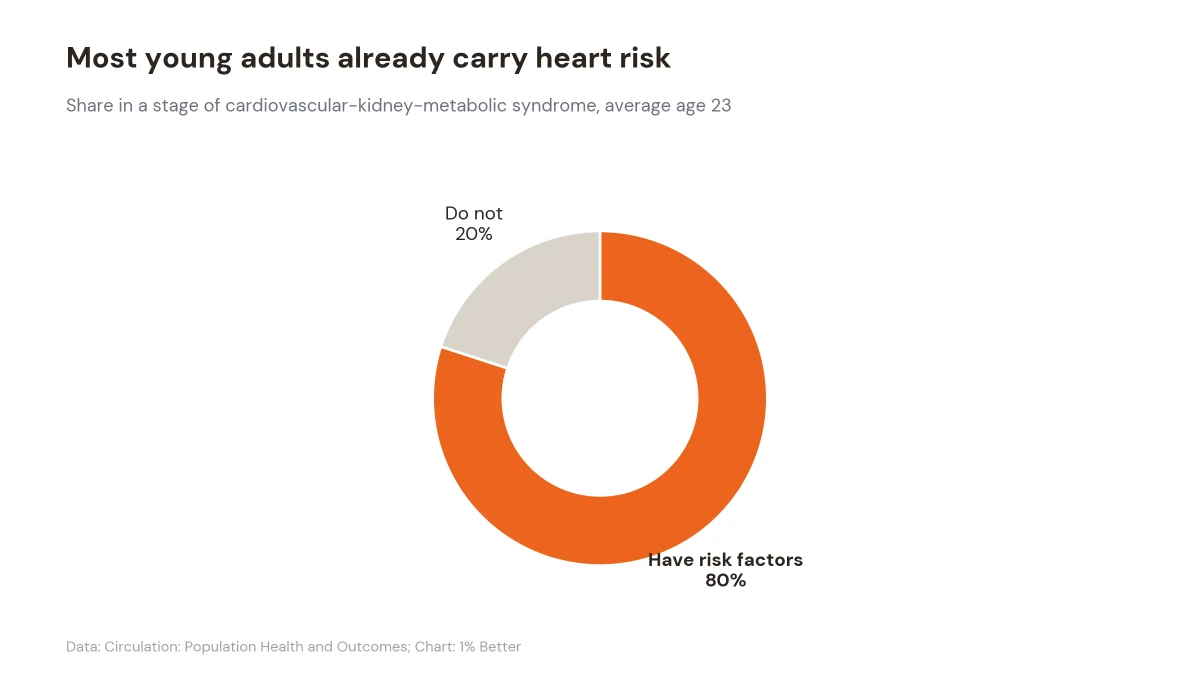
About 80% of adults with an average age of 23 already fall into some stage of cardiovascular-kidney-metabolic syndrome, a new study found.
Why it matters: The 1,283 young adults were studied between 2021 and 2023, and those at more advanced stages already showed thickening artery walls. Heart damage is starting decades earlier than the classic middle-age warning window.
Health & Science
A daily dose of vitamin D linked to sharper thinking

Older adults with sleep problems and mild cognitive impairment who took at least 5,000 IU of vitamin D daily scored 13% higher on a standard cognition test.
Why it matters: The finding, drawn from 54 adults in the journal Sleep Medicine, points to a cheap and widely available supplement as a possible lever for brain health in a group at high risk of decline.
Health & Science
Speaking four languages may keep your brain years younger
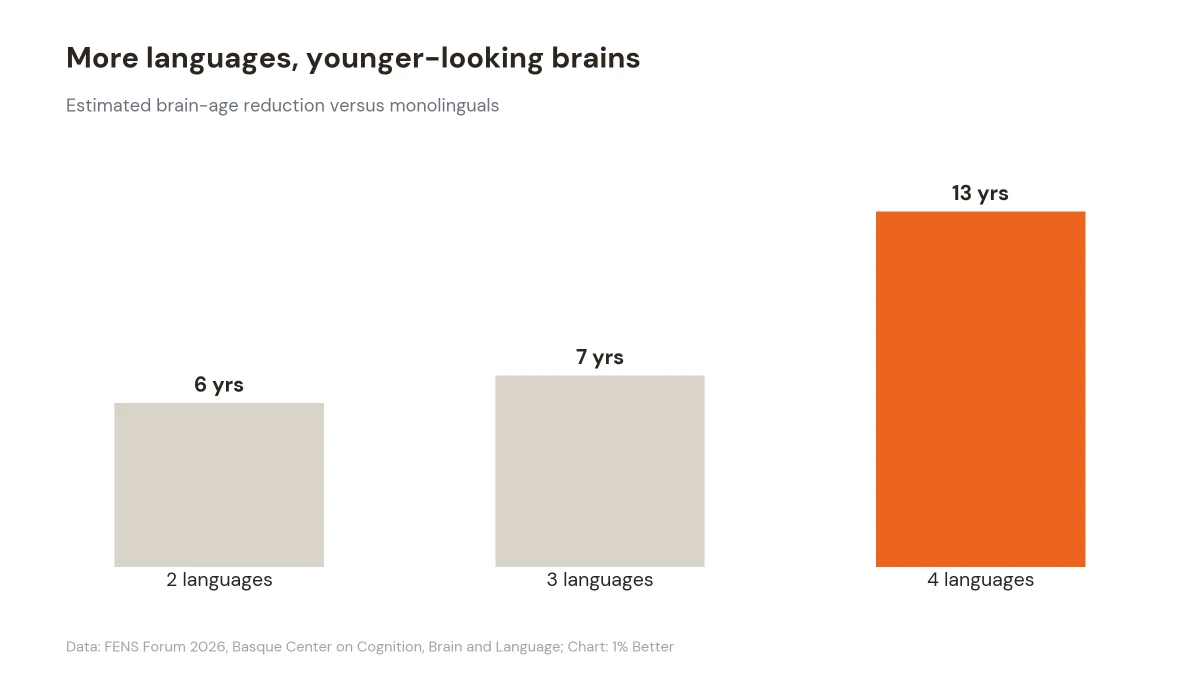
People fluent in four languages had brains that looked about 13 years younger than those of monolingual peers, researchers reported at a European neuroscience forum.
Why it matters: Brain age dropped on a gradient: two languages bought roughly 6 years, three about 7, and four around 13. Earlier learning and higher proficiency deepened the effect, hinting that language practice works like cognitive exercise.
Productivity
AI is now everywhere at work, and workers juggle a pile of tools
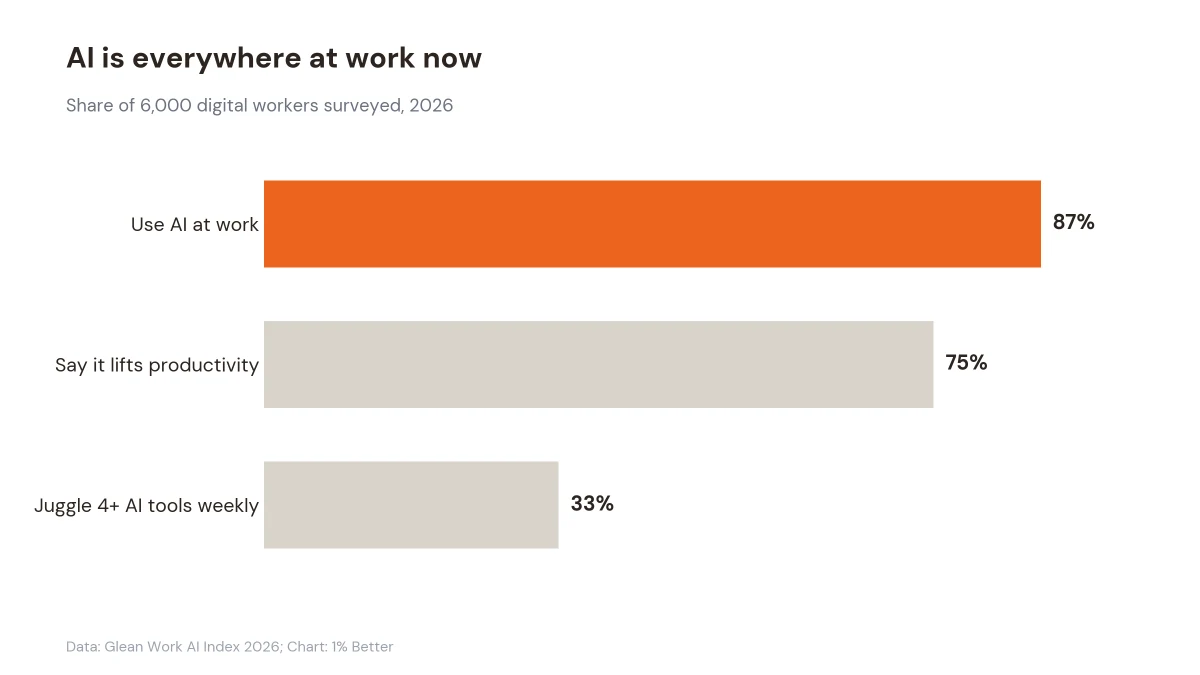
87% of digital workers now use AI on the job and a third juggle four or more AI tools every week, a survey of 6,000 workers found.
Why it matters: Workers say AI saves them 11 hours a week, yet only 13% report their company performs meaningfully better because of it. The productivity payoff is real for individuals but still leaks away before it reaches the bottom line.
Productivity
Screenshotting things could be quietly sabotaging your memory

Across seven experiments with 892 students, people recognized screenshotted images far worse than images they simply looked at.
Why it matters: Recognition for saved images fell to around 60%, suggesting the act of capturing offloads the memory to the device. Saving something to your phone, it turns out, can keep it out of your head.
Self-Improvement
Intermittent fasting may stop paying off in your late 70s

Adults aged 78 and older who fasted 14 to 24 hours between meals piled up chronic diseases faster than those with shorter gaps.
Why it matters: The Swedish study followed 2,981 people for up to 15 years in the Journal of Internal Medicine. It suggests fasting windows that help midlife metabolism may backfire once the body needs steadier fuel in old age.
Business & Money
A divided Fed held rates, but three officials wanted a hike
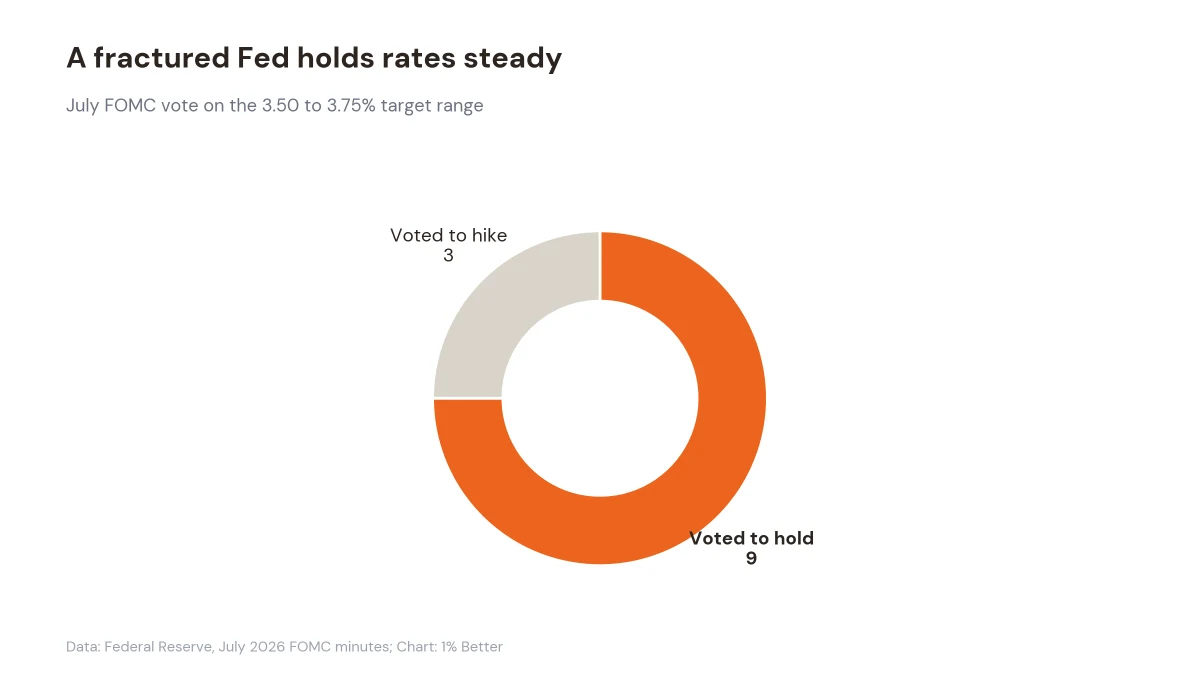
July Fed minutes revealed a 9 to 3 vote to hold rates at 3.50 to 3.75%, the most fractured decision in years.
Why it matters: Three regional presidents (Hammack, Kashkari, and Logan) pushed for an immediate quarter-point increase to fight sticky inflation. Many participants agreed tightening would likely be needed if price growth stayed hot, keeping a 2026 hike on the table.
Business & Money
Home prices keep climbing even as buyers pull back
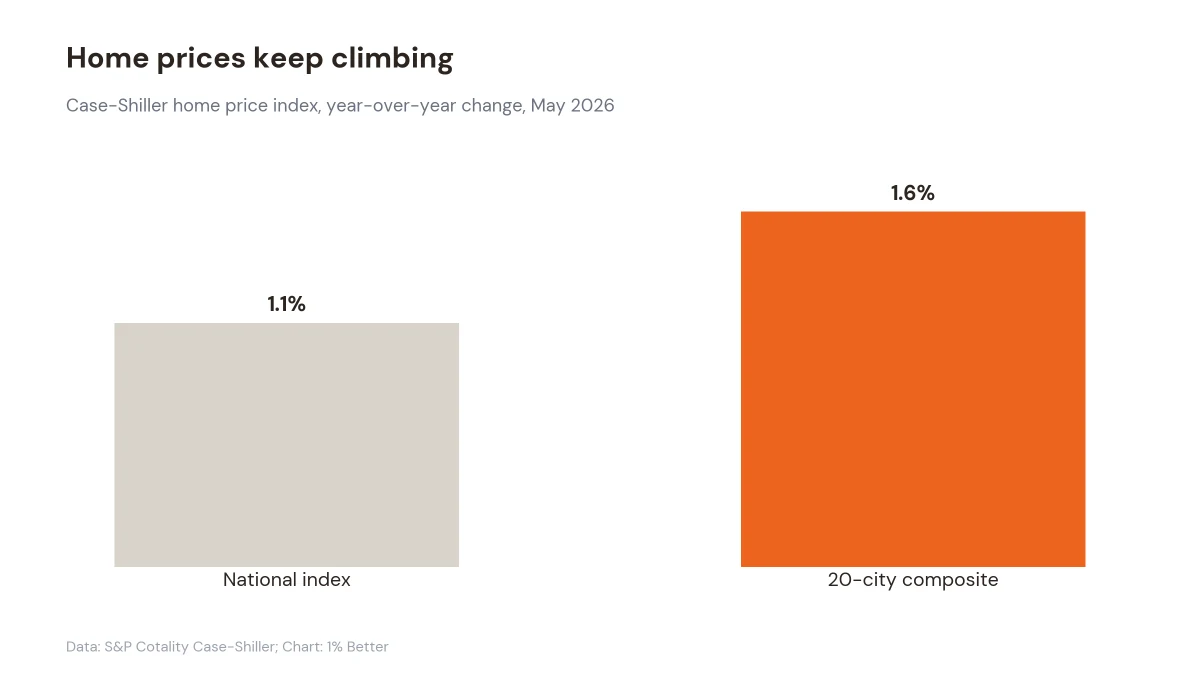
The Case-Shiller national index rose 1.1% year over year in May while its 20-city composite gained 1.6%, the fastest pace in nine months.
Why it matters: Prices are grinding higher even with 30-year mortgage rates near 6.5% and builder confidence stuck at a low 35. Affordability keeps squeezing buyers, and cooling demand has yet to translate into cheaper homes.