Daily Brief: August 23, 2026
Today's 1% Better brief: tooth count and pancreatic cancer survival, estrogen therapy and Alzheimer's, coffee and body fat, remote work and well-being, the real driver of discipline, and a bond-rattled stock market.
1% Better EditorialSix science-backed reads on your health, focus, and money to get you one percent better today.
Health & Science
Your tooth count may predict pancreatic cancer survival
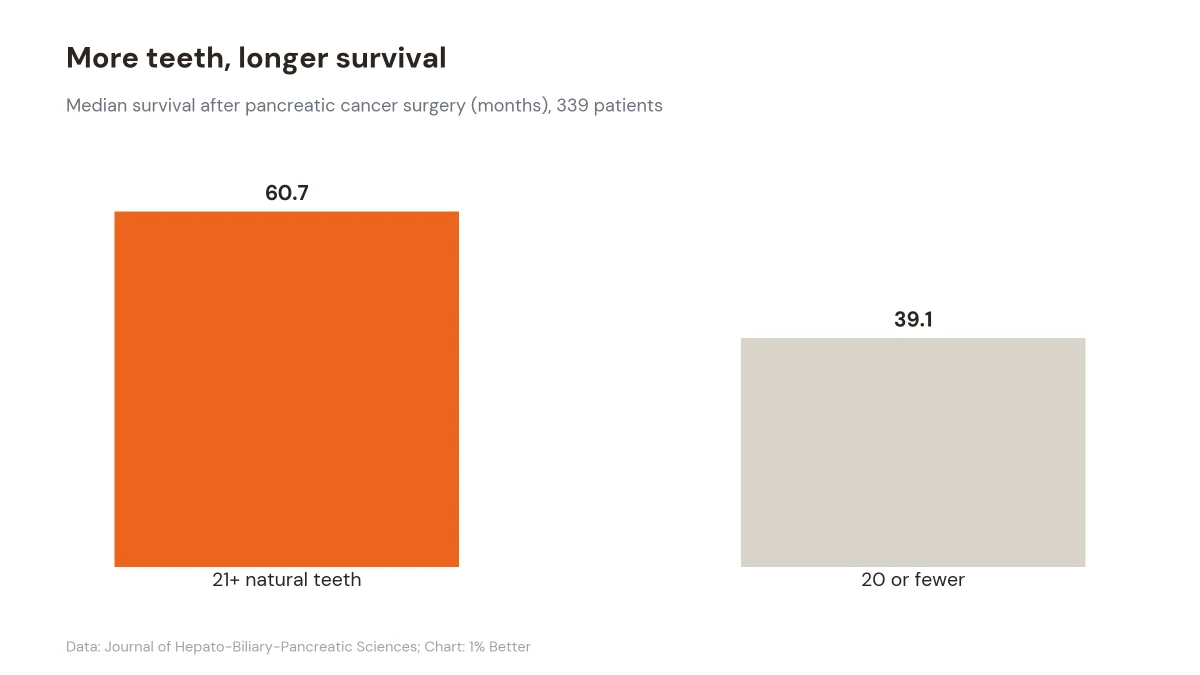
Pancreatic cancer patients with at least 21 natural teeth lived a median 60.7 months after surgery, versus 39.1 months for those with 20 or fewer, a study of 339 people found.
Why it matters: Oral health may be a cheap, visible proxy for the inflammation, frailty, and nutrition that shape cancer outcomes. A dental exam before surgery could help doctors flag higher-risk patients and act early.
Health & Science
Estrogen-only therapy tied to fewer Alzheimer's brain signs
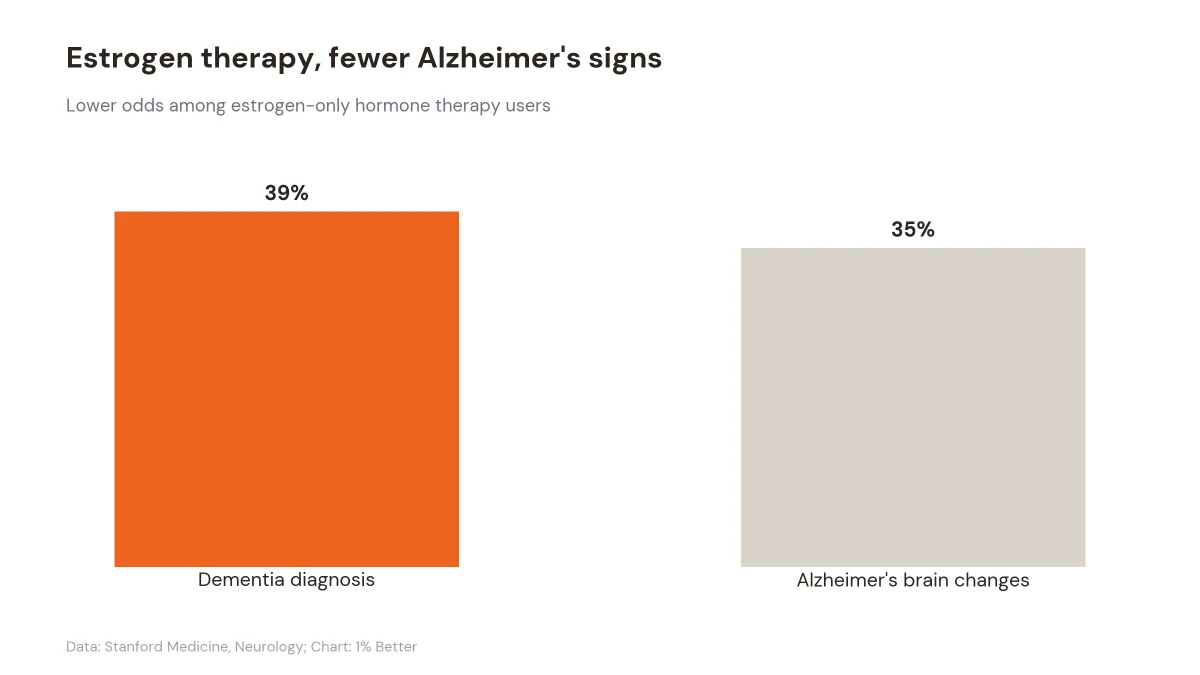
Women who used estrogen-only hormone therapy had 39% lower odds of a dementia diagnosis and 35% lower odds of Alzheimer's brain changes at autopsy, a Stanford study found.
Why it matters: The findings add to evidence that the timing and type of hormone therapy matter for brain aging. For women weighing menopause treatment, estrogen-only regimens may carry a cognitive upside worth discussing with a doctor.
Health & Science
Heavy coffee drinkers carried less fat and more muscle

A Finnish study found that people who drank more coffee tended to have less total and abdominal fat, more muscle, and healthier metabolic markers despite similar BMIs.
Why it matters: The study is observational, so coffee may simply be a marker of other healthy habits. Still, it adds to a growing body of research linking a daily cup to leaner body composition and better metabolic health.
Productivity
Fully remote workers report the highest well-being

A study tracking 7,704 employees found that fully remote workers reported the highest workplace well-being, while fully onsite staff reported the lowest.
Why it matters: Higher well-being predicted lower turnover a year later, so remote flexibility may double as a retention tool. With voluntary turnover costing US firms an estimated $1 trillion a year, the case for return-to-office mandates looks weaker.
Self-Improvement
Well-being may come before self-control, study finds

A longitudinal study of working adults found that higher psychological well-being predicted stronger self-control months later, while earlier self-control did little to predict later well-being.
Why it matters: The finding flips the usual self-improvement script, where grit supposedly produces happiness. It hints that protecting your mental well-being first may make discipline easier to sustain.
Business & Money
Stocks snapped a winning streak as bond jitters spread

The S&P 500 and Nasdaq ended three-week winning streaks and posted weekly losses as a bond selloff pressured tech and AI shares.
Why it matters: Rising Treasury yields raise borrowing costs and pull money away from richly valued growth stocks. All eyes now turn to the Jackson Hole symposium for clues on the Fed's rate path.