Daily Brief: August 20, 2026
The Treasury doubles its long-bond buybacks to steady surging yields, coffee drinkers carry less fat and more muscle, Home Depot's small projects beat Wall Street, and erratic work hours quietly erode health. Your 1% for today.
1% Better EditorialSeven fast reads across money, health, work, and self-improvement to get you 1% better today.
Business & Money
Treasury doubles its long-bond buybacks to calm surging yields

The Treasury will lift the maximum size of its long-dated buyback operations to at least $4 billion from $2 billion, effective September 9 through November 4.
Why it matters: Thirty-year yields had climbed to their highest since 2007, rattling markets and raising the government's borrowing costs. After the surprise move, the 10-year yield fell 6 basis points to 4.647% and the 30-year eased 9 basis points to 5.196%, lifting stocks.
Business & Money
Home Depot's small projects beat a frozen housing market
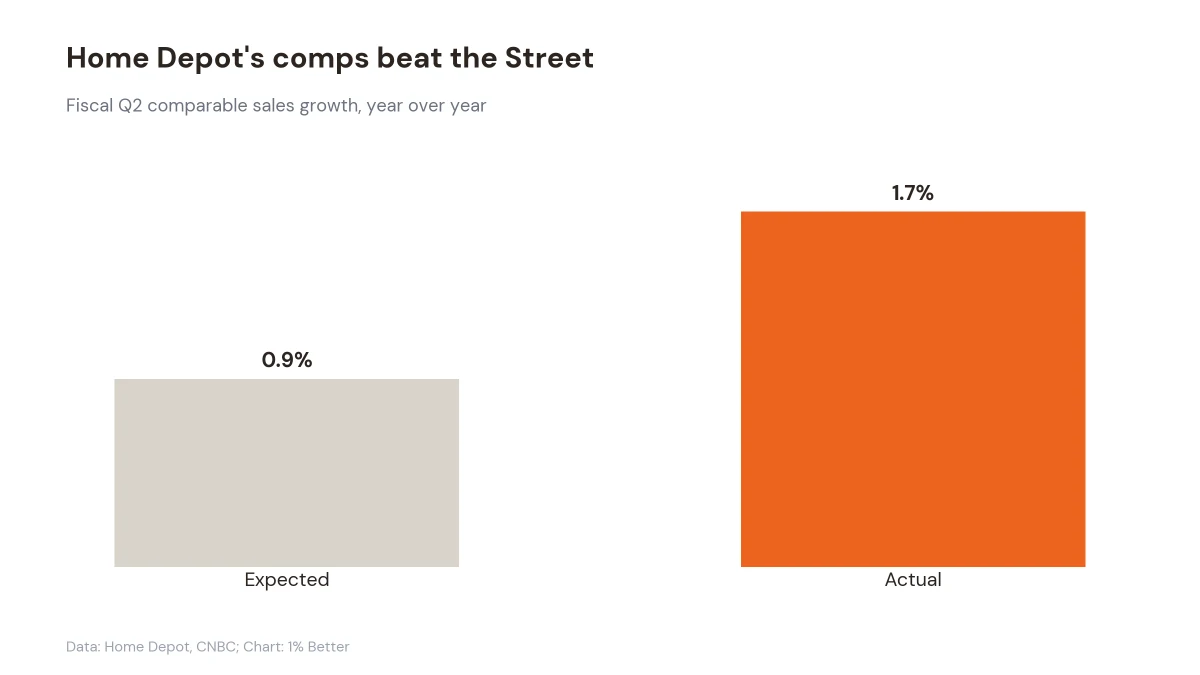
Home Depot posted comparable sales up 1.7% in its fiscal second quarter, topping the 0.9% Wall Street expected and marking its best comp growth since late 2022.
Why it matters: With homeowners frozen out of moving by high mortgage rates, they are pouring money into smaller repairs and pro contractors over big remodels. Total sales rose 5.7% to $47.9 billion, helped by $730 million in tariff refunds, and the company held its full-year guidance steady.
Health & Science
Coffee drinkers carry less fat and more muscle

A study of 2,264 Finnish adults found that higher coffee intake tracked with lower total and visceral fat plus greater skeletal muscle mass, even at the same body mass index.
Why it matters: Researchers at the University of Oulu also saw hormone differences, including higher testosterone and sex hormone-binding globulin in men and lower branched-chain amino acids tied to insulin resistance. The work is observational, so it shows a link rather than proof that coffee causes the changes.
Health & Science
Knee arthritis is far more preventable than most people think
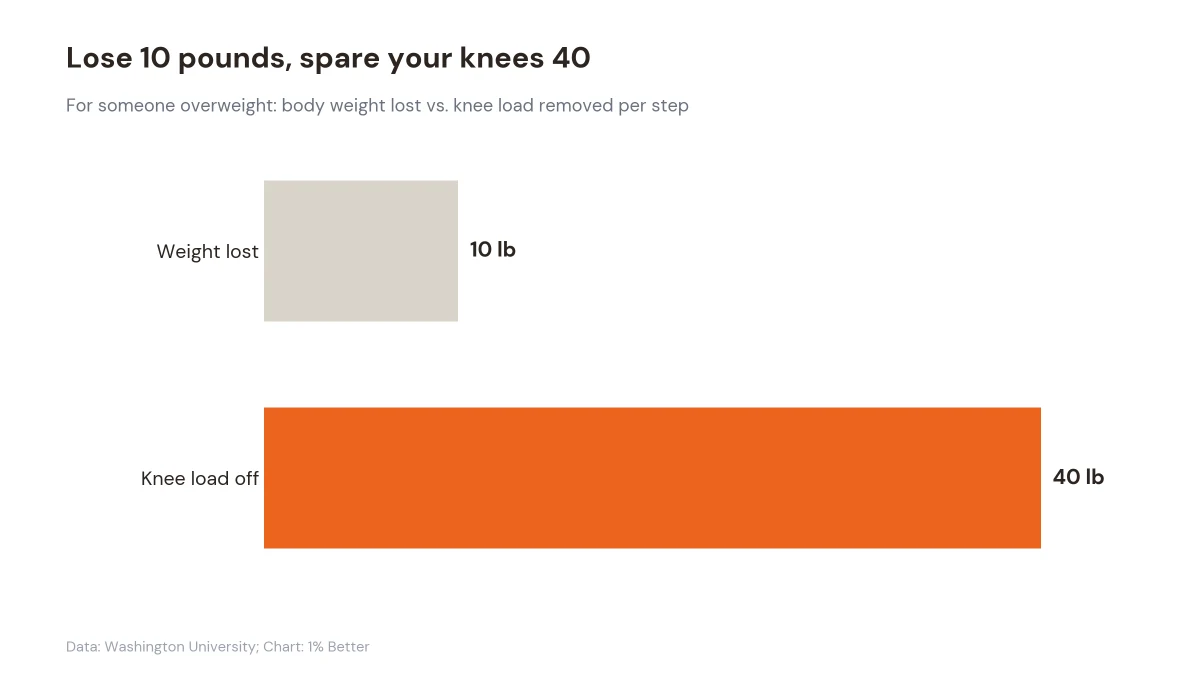
Physicians at Washington University report that staying active, building thigh strength, and losing modest weight can dramatically slow knee osteoarthritis, even with a family history.
Why it matters: The math is motivating: for someone overweight, dropping just 10 pounds cuts the load on the knees by about 40 pounds with every single step. More than 30 million US adults live with osteoarthritis, roughly half of them working age, so early movement habits pay off for decades.
Health & Science
Shift work and late nights may speed muscle loss
A Chinese Medical Journal review found shift workers had a 1.7-fold higher prevalence of sarcopenia, the age-related loss of muscle, than people with no history of shift work.
Why it matters: The authors describe a U-shaped link between sleep and muscle health, where both too little and too much sleep track with worse outcomes. Since sarcopenia climbs from about 5% of people in their 60s to as much as half of those over 80, protecting your circadian rhythm is a long game for strength.
Productivity
Wildly swinging work hours quietly wear down your health
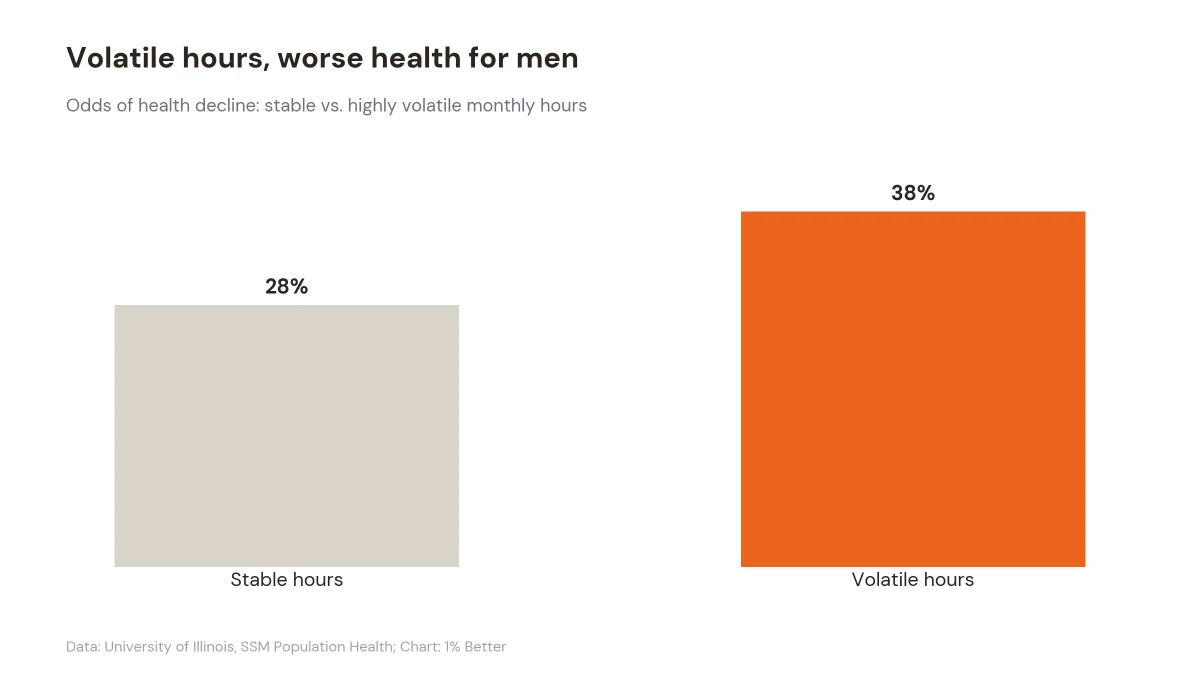
Analyzing more than 55,000 US workers, researchers found that men with the most volatile monthly hours saw their odds of health decline climb from 28% to 38%.
Why it matters: Women showed a different toll: erratic schedules roughly doubled their chance of a health-related work disruption, from 2.5% to 5.2%, a jump comparable to the aftermath of a heart attack. Predictable hours, the University of Illinois team argues, are a health input, so guard a steady weekly rhythm where you can.
Self-Improvement
A five-week class taught students to steady their emotions
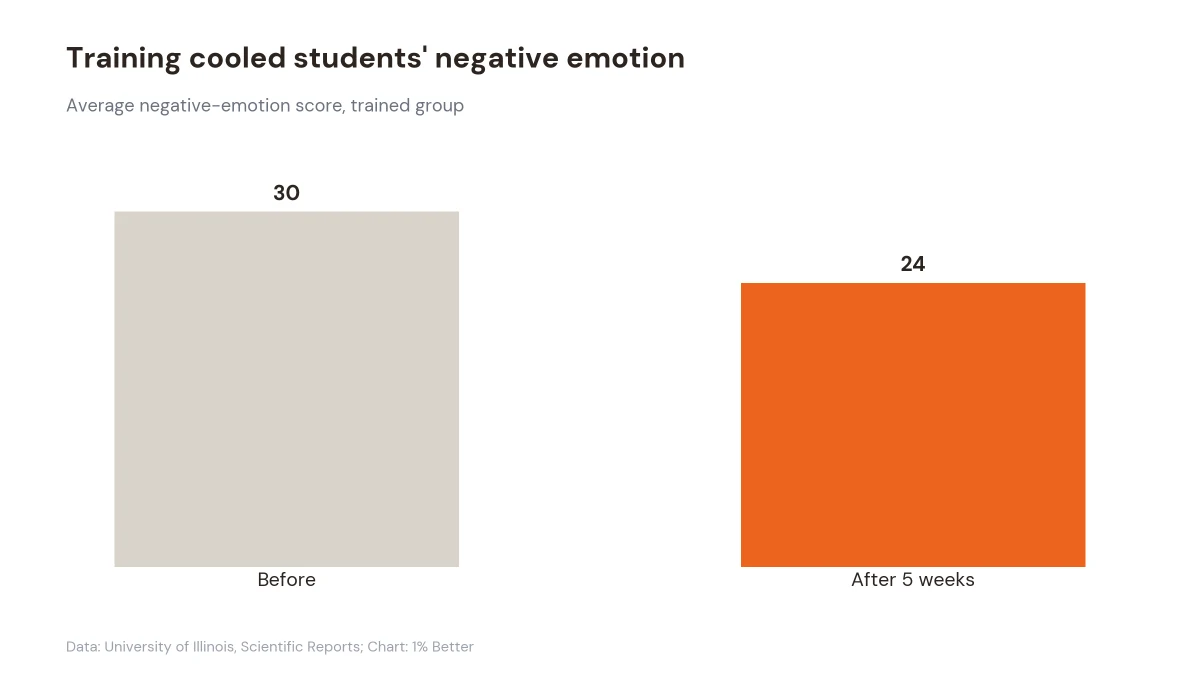
In a University of Illinois trial, ten sessions of attention and reframing practice cut trained students' negative-emotion scores from about 30 to 24 while quieting the amygdala at rest.
Why it matters: Participants learned to shift attention away from distressing images and to reframe hard situations, and eye tracking showed they spontaneously lingered less on negative content afterward. It is early evidence, with 39 students, that emotion regulation is a trainable skill rather than a fixed trait.