Daily Brief: August 19, 2026
Dollar store groceries carry a hidden health cost, a cancer drug reverses post-surgery brain changes in mice, Unitree's robot IPO breaks a Shanghai record, and US retail sales cool. Your 1% for today.
1% Better EditorialSeven fast reads across health, money, work, and self-improvement to get you 1% better today.
Health & Science
Dollar store groceries carry a hidden health cost
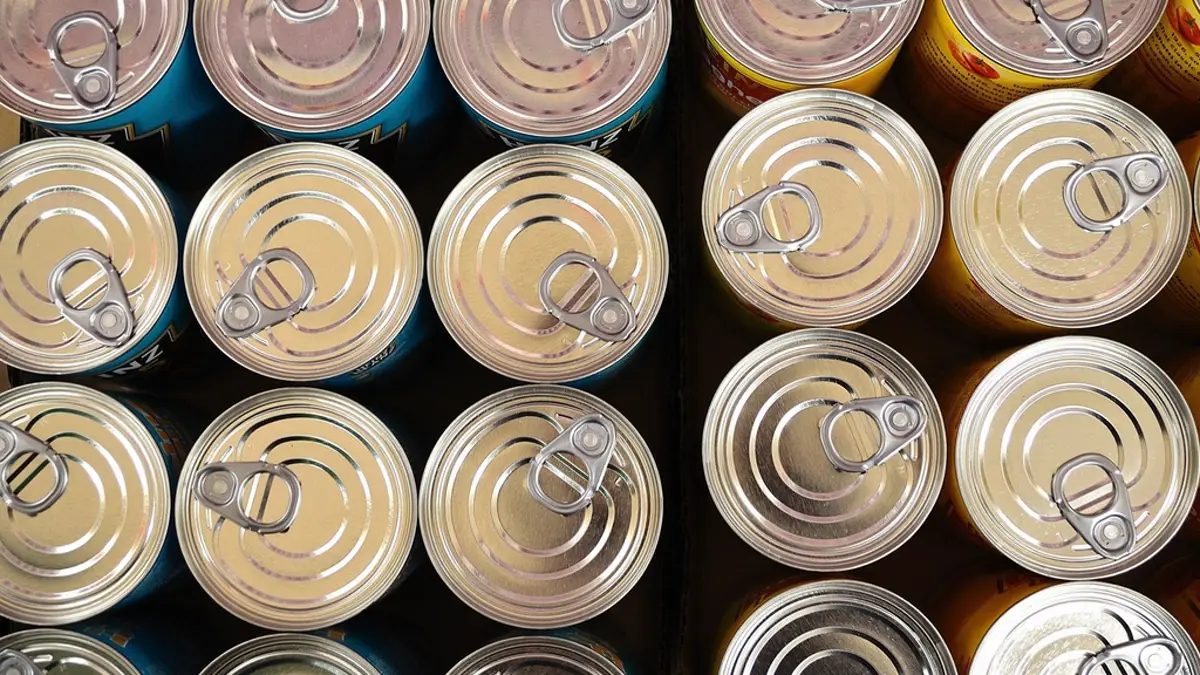
New UC Riverside research links greater access to dollar store food with higher rates of obesity, high blood pressure, high cholesterol, and type 2 diabetes.
Why it matters: Dollar stores now outnumber traditional grocers across much of the US, and rising food prices keep pushing shoppers toward cheaper, highly processed options. The study, published in BMC Public Health, suggests convenience at the register can translate into chronic disease at the doctor.
Health & Science
The bacteria behind great cheese may also help your gut
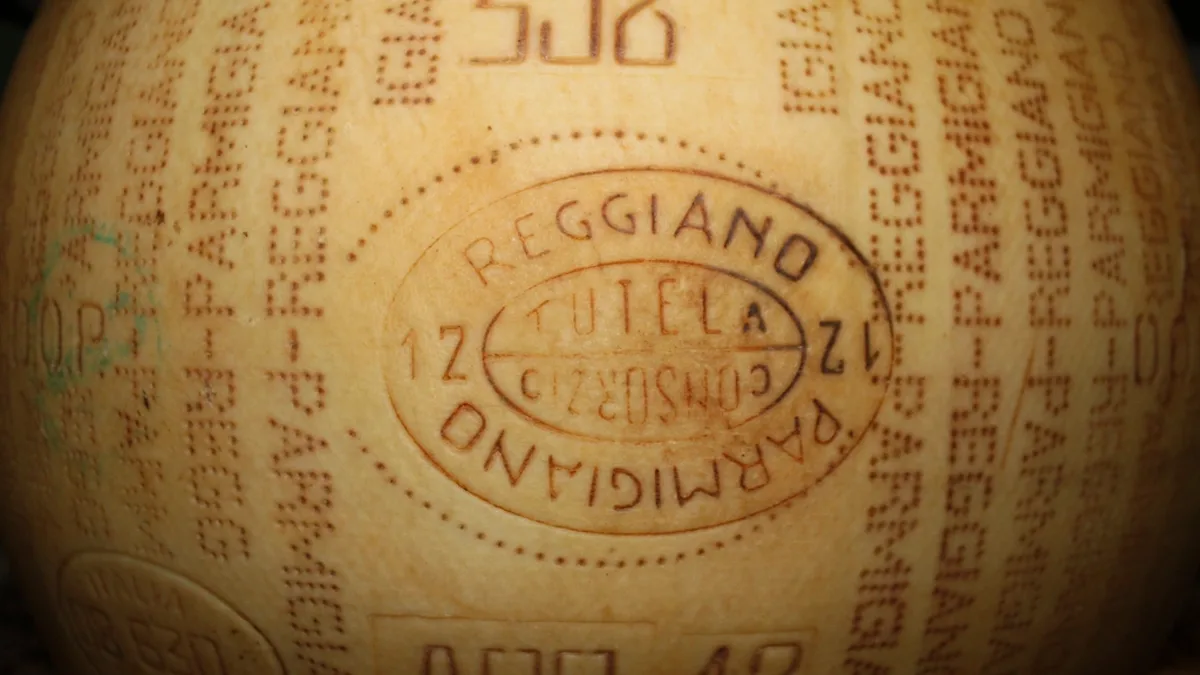
University of Reading scientists found that the microbes ripening three artisan British cheeses may double as probiotics that survive the trip to your gut.
Why it matters: The team tracked bacterial changes as three Oxfordshire cheeses aged and linked some microbes to compounds tied to reduced inflammation, cholesterol regulation, and appetite control. The fat and protein matrix appears to shield those bacteria through digestion, making aged cheese a tasty probiotic vehicle.
Health & Science
A cancer drug reversed post-surgery brain changes in mice
UVA Health researchers mapped how postoperative delirium may set the stage for dementia, then used an approved cancer drug to reverse the underlying brain changes in mice.
Why it matters: Delirium after surgery is common in older patients and has long been tied to later cognitive decline. The drug vorinostat restored memory and body-clock genes and improved sleep when given before anesthesia, pointing to epigenetic pathways as a preventive target for human patients.
Business & Money
Unitree's robot IPO shatters a Shanghai subscription record

Chinese humanoid maker Unitree raised 6.1 billion yuan (about $905 million) in an IPO oversubscribed more than 8,000 times, a record for Shanghai's STAR Market.
Why it matters: The frenzy signals how hungry investors are for humanoid robotics as China pushes to lead the sector. Unitree, famous for its dancing and kung fu androids, is now the world's top humanoid maker by sales and a bellwether for the industry's commercial hopes.
Business & Money
US retail sales dipped in July as consumers pulled back
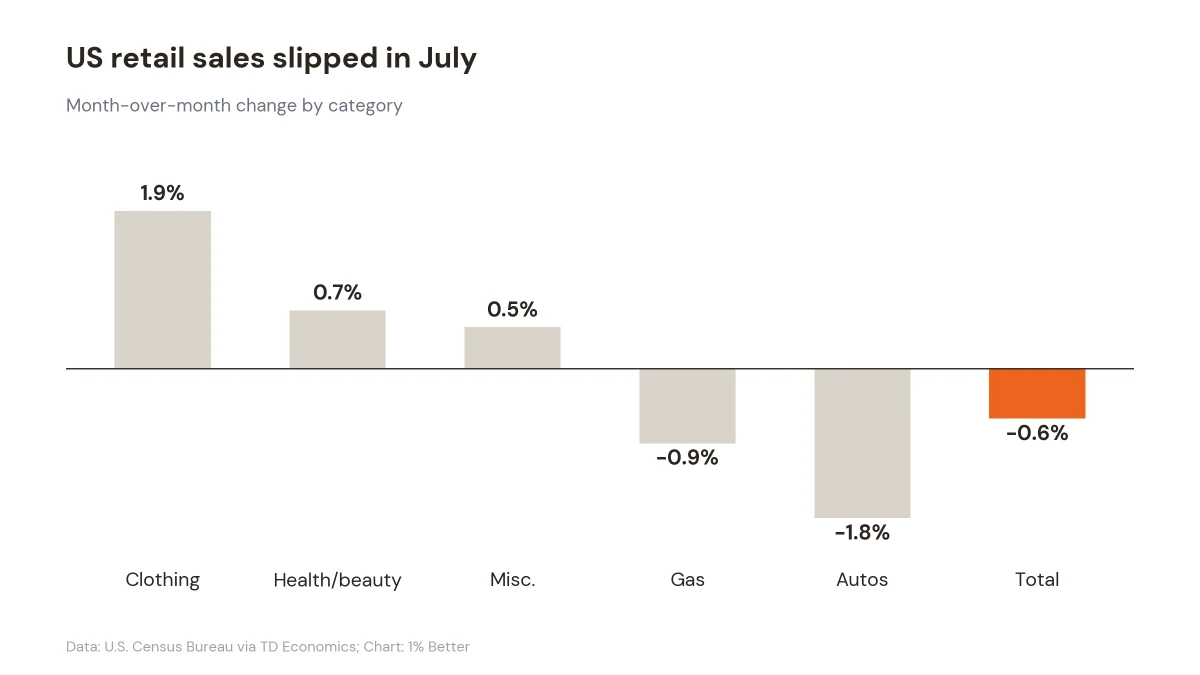
Retail and food services sales fell 0.6% from June, a bigger drop than the 0.1% gain economists expected, as lower gas prices and softer auto sales weighed.
Why it matters: Clothing (+1.9%), health and beauty (+0.7%), and restaurants (+0.5%) still grew, so the pullback looks broad but shallow. Economists read July as a shift from the spring spending rebound toward a slower, roughly 2% pace of consumption for the third quarter.
Productivity
Remote workers spend nearly half their time coordinating
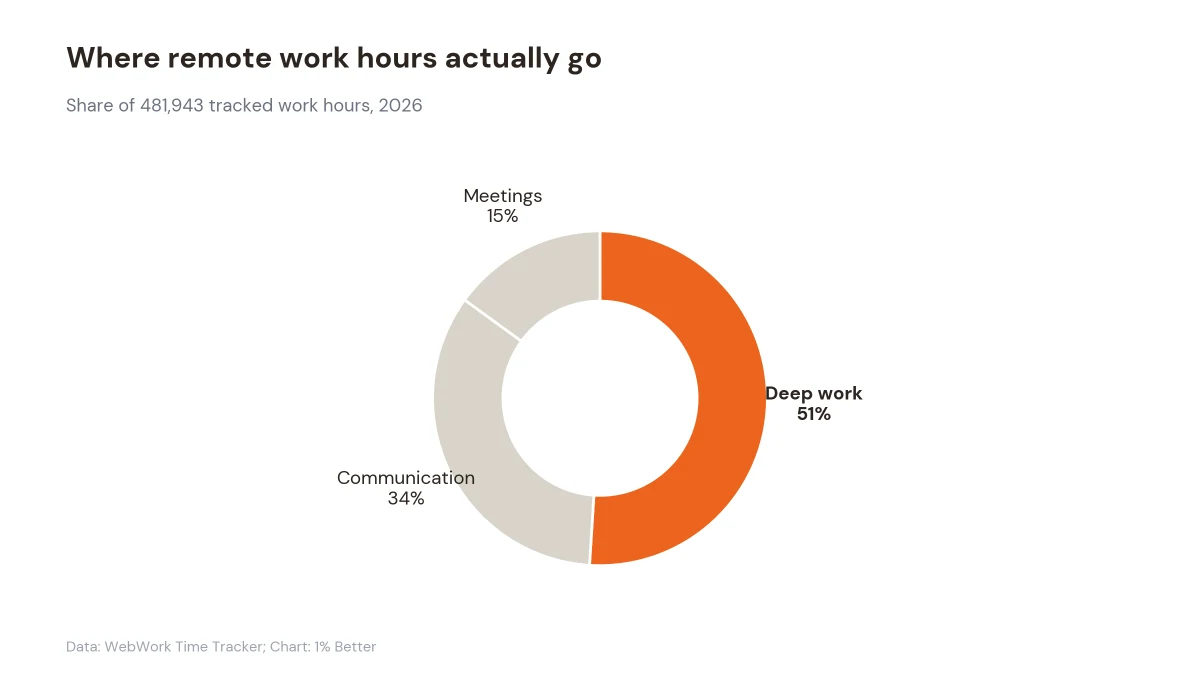
A WebWork analysis of 481,943 tracked hours found remote workers spend 51% of their time in deep work tools and the other 49% coordinating through messages and meetings.
Why it matters: For every hour of real output, the average remote worker burns almost an hour on communication (34%) and meetings (15%). Treat it as a prompt to audit your calendar, because protecting even a few coordination hours a week compounds into serious focus time.
Self-Improvement
Disciplined people plan the decision before the moment

A psychologist argues that naturally disciplined people lean less on willpower and more on deciding early, using if-then plans that fire automatically at a set cue.
Why it matters: A 2024 meta-analysis in the European Review of Social Psychology found people who set if-then plans (if it is 9 pm and the kitchen is clean, then I read) follow through far more often than those holding the same goal loosely. The trick moves the choice out of the weak moment.