Daily Brief: August 17, 2026
Today's 1% Better brief: stair climbing and estrogen therapy show big health payoffs, full-fat dairy earns a second look, Anthropic's revenue soars, US retail cools, workplace AI adoption jumps, and exercise rivals meds for mood.
1% Better EditorialEight things worth your attention today, across health, money, productivity, and personal growth.
Health & Science
Taking the stairs is linked to a longer life
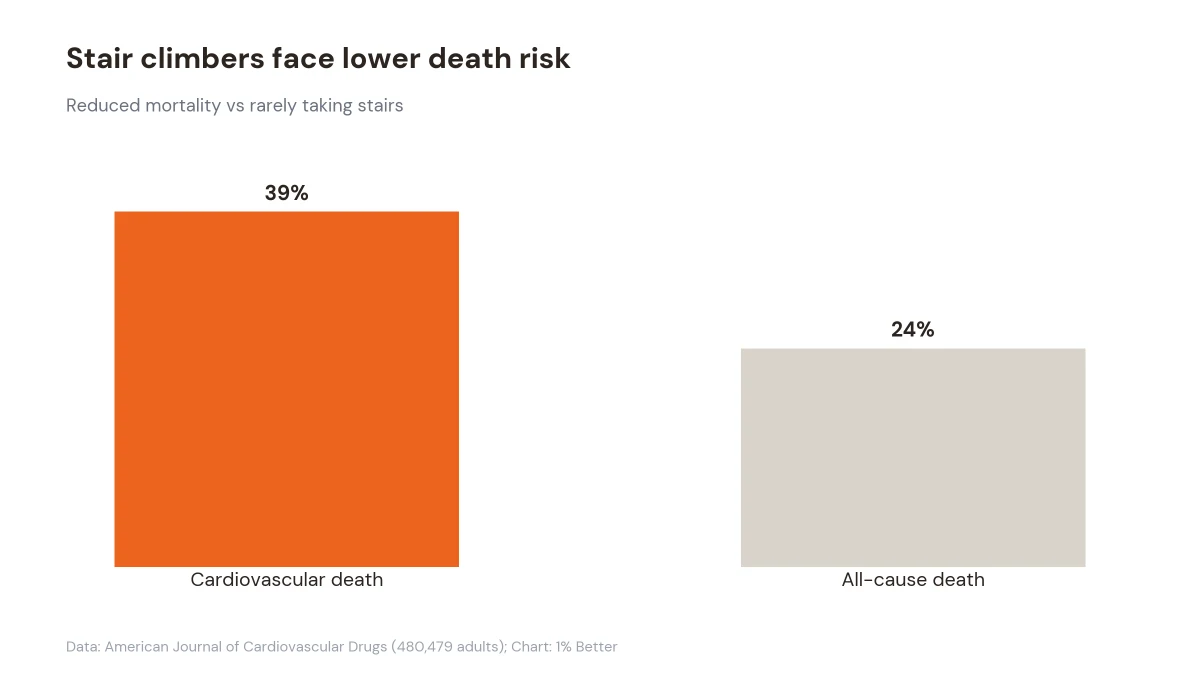
People who regularly climb stairs were 39% less likely to die from heart disease and 24% less likely to die from any cause, a study of 480,479 adults found.
Why it matters: Stair climbing is free, quick, and available to almost everyone. The findings suggest a small daily habit of a few flights can meaningfully lower cardiovascular risk over the years.
Health & Science
Estrogen therapy tied to fewer Alzheimer's brain signs
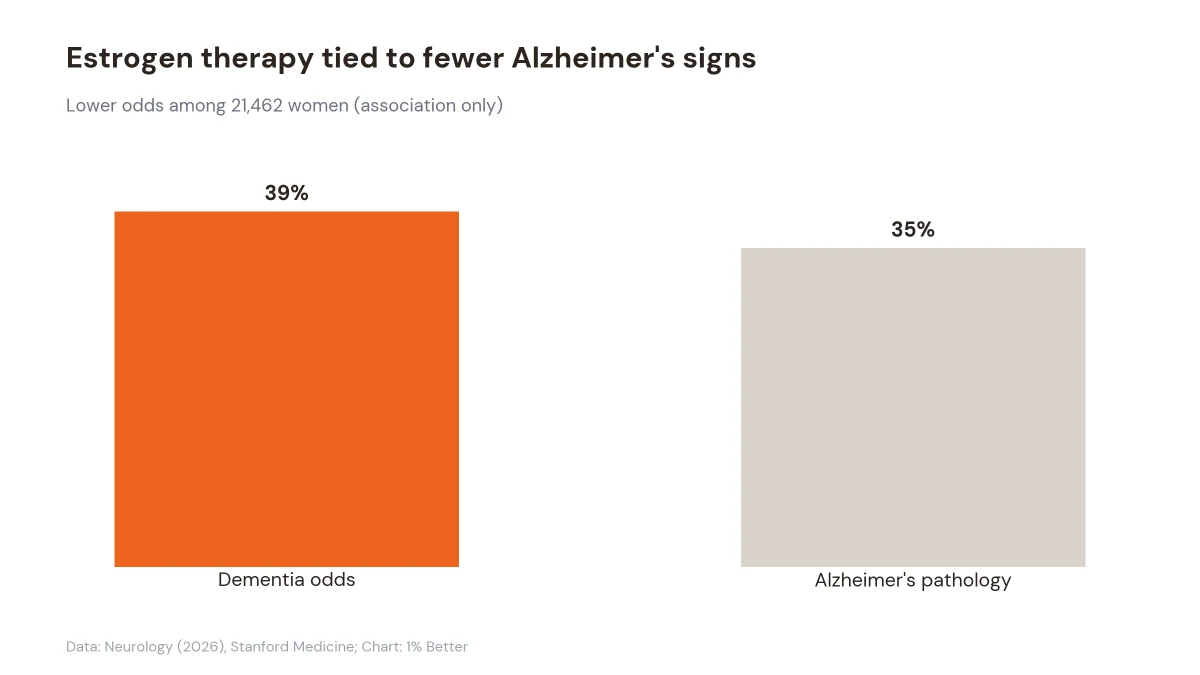
Women who used estrogen-only hormone therapy had 39% lower odds of dementia and 35% lower odds of Alzheimer's pathology at autopsy, a study of 21,462 women found.
Why it matters: The Stanford analysis is among the first to link estrogen therapy to physical reductions in Alzheimer's deposits, beyond symptom scores. Researchers stress it shows association only, so more study is needed before treatment advice changes.
Health & Science
Full-fat dairy may be fine for your heart after all

A 12-week trial found adults eating three daily servings of full-fat dairy saw improved blood pressure and steady cholesterol, plus more calcium and protein.
Why it matters: Decades of guidance pushed low-fat dairy on the assumption that saturated fat harms the heart. This University of Toronto trial adds to evidence that the whole-food 'dairy matrix' behaves differently, giving eaters more room to enjoy cheese, milk, and yogurt.
Business & Money
Anthropic's revenue rockets past $11 billion in a quarter
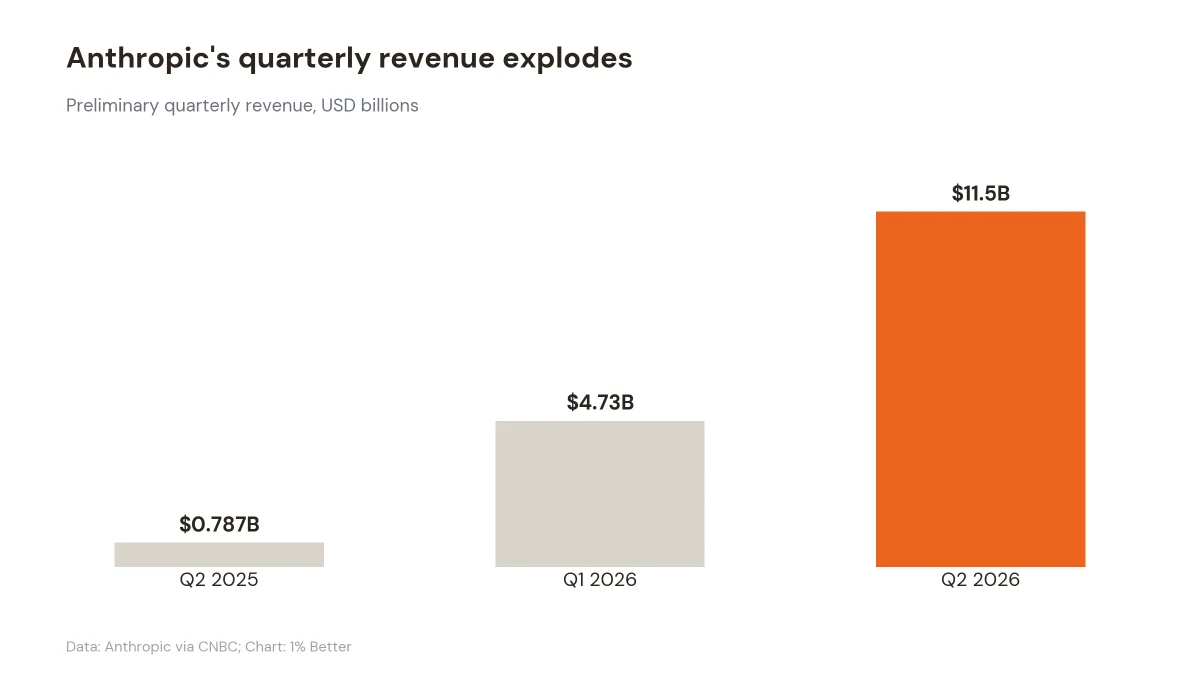
AI firm Anthropic reported preliminary quarterly revenue above $11.5 billion, up from $4.73 billion in Q1 and $787 million a year earlier.
Why it matters: The blistering growth lifted tech stocks Monday, with Nasdaq and S&P 500 futures rising as investors bet heavy AI spending will hold. It also fuels Anthropic's march toward an October IPO at a valuation near $965 billion.
Business & Money
US shoppers pull back as retail sales cool
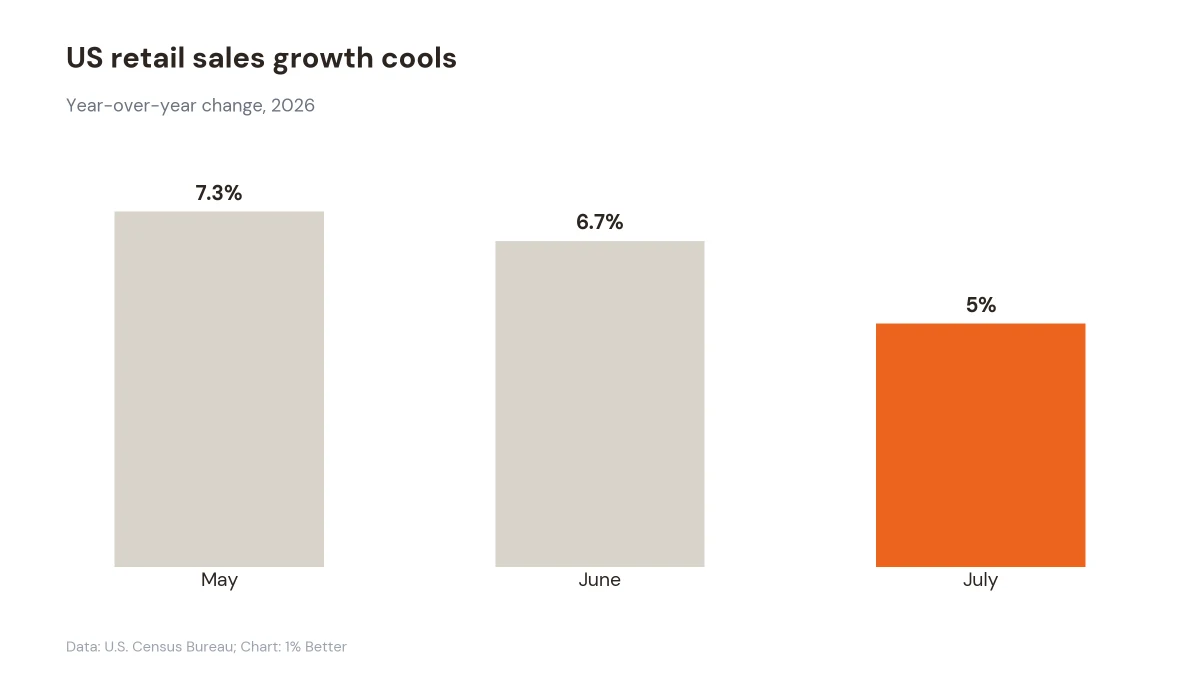
US retail sales slipped 0.6% in July to $763.6 billion, and year-over-year growth cooled to 5% from 6.7% in June.
Why it matters: Consumer spending powers about two-thirds of the economy, so a pullback paired with softer confidence is a warning sign. Retail earnings this week from Walmart, Target, and Home Depot will show how households are holding up.
Productivity
Company AI adoption just jumped six points
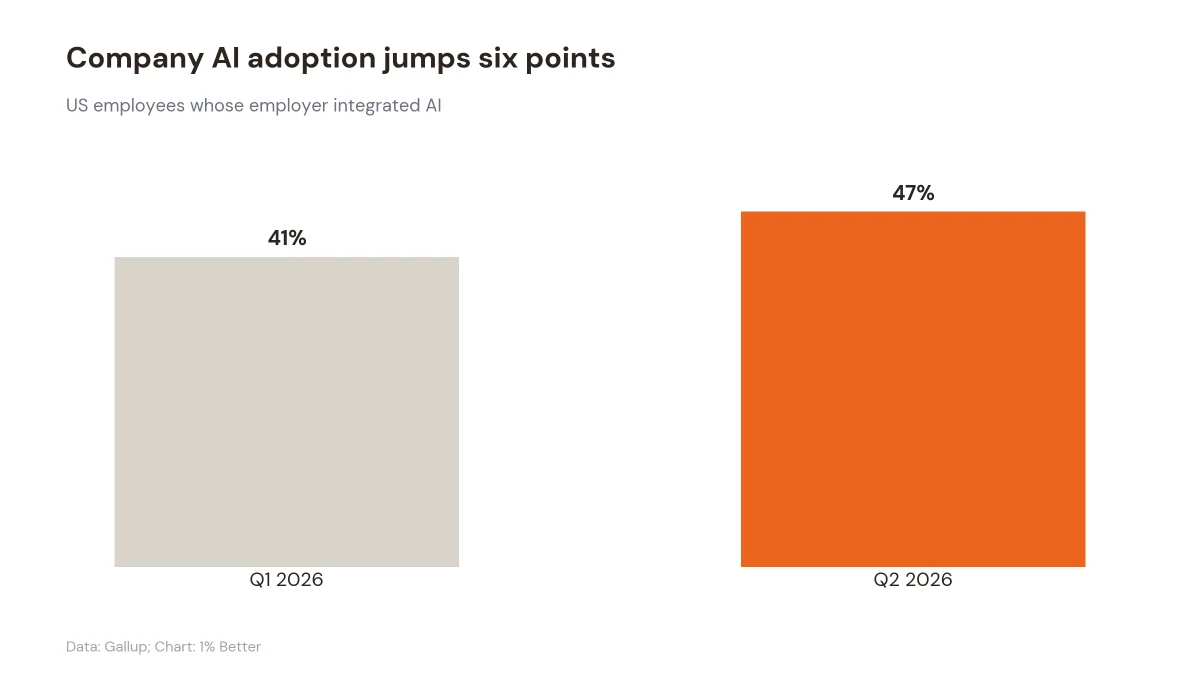
The share of US employees whose employer has rolled out AI tools climbed to 47% in Q2, up from 41%, Gallup's sharpest quarterly jump yet.
Why it matters: Adoption is broadening fast, and workers using AI for coding or automation report the biggest productivity gains at 77%. For employees, breadth of use matters: those applying AI across seven or more tasks report gains up to 90%.
Self-Improvement
Exercise can rival medication for anxiety and depression

A review of 23 trials covering 2,298 postmenopausal women found aerobic exercise eased anxiety and depression, at times matching therapy or medication.
Why it matters: Movement offers a low-cost, gentle mental health tool that compounds with regular practice. The research points to accessible aerobic activity like walking, cycling, or swimming as a first-line habit worth building.
Self-Improvement
Daily tracking is the quiet engine behind lasting habits

A new report on the psychology of habit finds that logging behavior each day builds the awareness and accountability that make new routines stick.
Why it matters: Self-monitoring turns vague goals into visible streaks, and the small sting of breaking one taps loss aversion to keep you going. Pair tracking with clear environmental cues and habits form faster.