Daily Brief: August 15, 2026
Today: a Stanford enzyme switch that regrows worn cartilage, estrogen therapy tied to fewer Alzheimer's signs, flat wholesale inflation, Pokemon cards outrunning stocks, and why disciplined people simply meet less temptation.
1% Better EditorialYour Saturday rundown across health, money, work, and getting a little better each day. Charts where the numbers matter, and the science behind the headlines.
Health & Science
Scientists regrow worn cartilage by blocking one aging enzyme
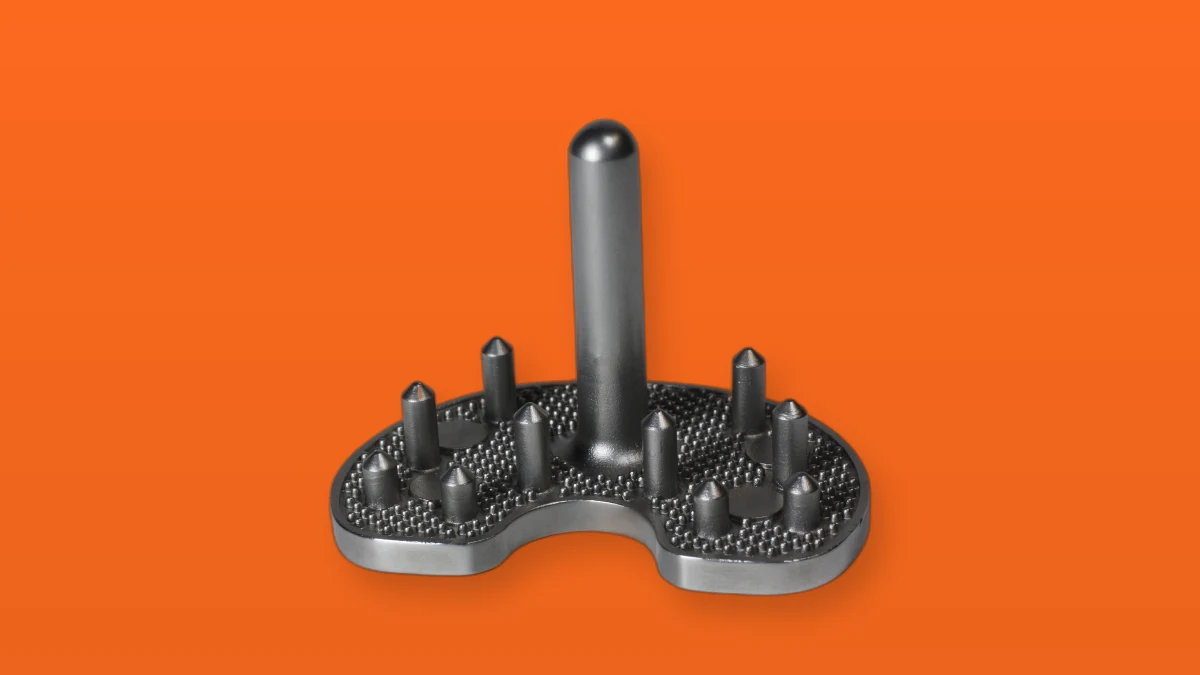
Stanford researchers traced age-related cartilage loss to a single enzyme called 15-PGDH, and blocking it made worn joints in mice thicken and heal.
Why it matters: Osteoarthritis affects hundreds of millions of people and has long been treated as irreversible once cartilage wears down. The same approach thickened cartilage taken from human knee-replacement patients, pointing toward a possible drug that repairs aging and injured joints.
Health & Science
Estrogen therapy is tied to fewer Alzheimer's signs in the brain

Women who used estrogen-only hormone therapy after menopause had 39% lower odds of a dementia diagnosis in a study of more than 21,000 participants.
Why it matters: Published in Neurology, the autopsy-based work is among the first to link menopausal hormone therapy to fewer of the physical brain deposits that define Alzheimer's. If trials confirm it, the timing and type of hormone therapy could factor into how women weigh menopause treatment against long-term brain health.
Business & Money
Wholesale prices came in flat in July, cooler than forecast
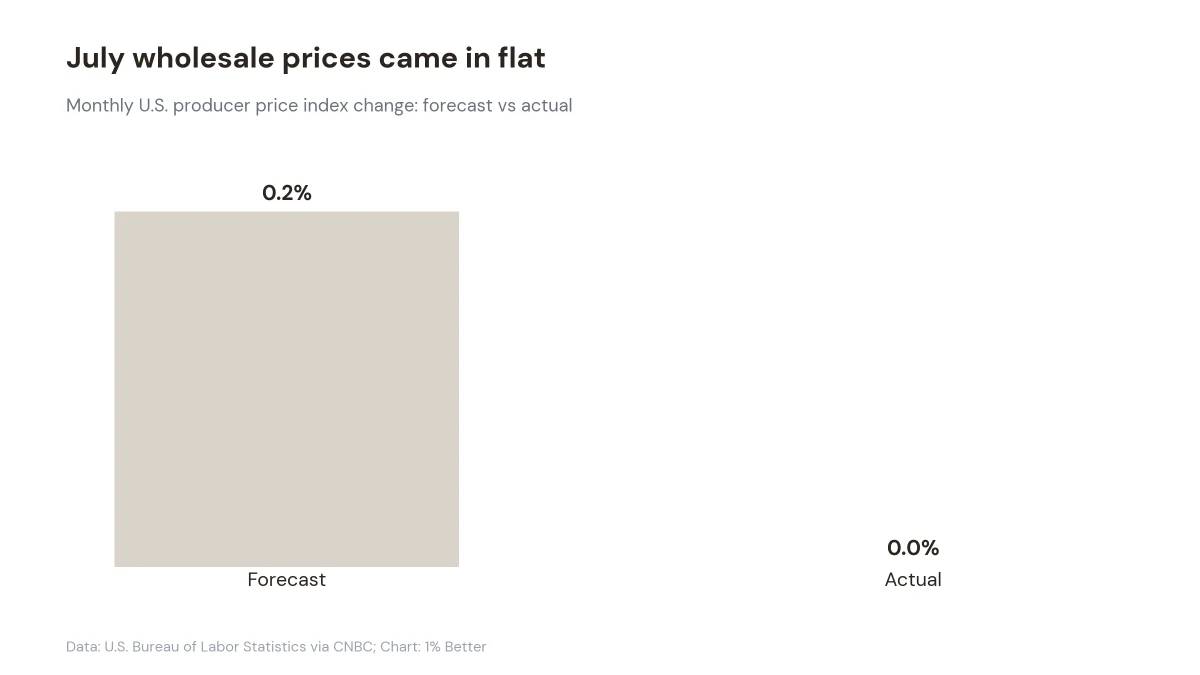
The July producer price index was flat versus expectations for a 0.2% rise, while core wholesale prices climbed 0.2% against a 0.3% forecast.
Why it matters: Softer wholesale inflation, with the annual rate easing to 4.7%, gives the Federal Reserve more room to wait before cutting interest rates. Producer prices often flow through to the consumer prices households pay a few weeks later, so a cool reading hints at calmer inflation ahead.
Business & Money
Pokemon cards are outrunning the S&P 500 and Bitcoin in 2026
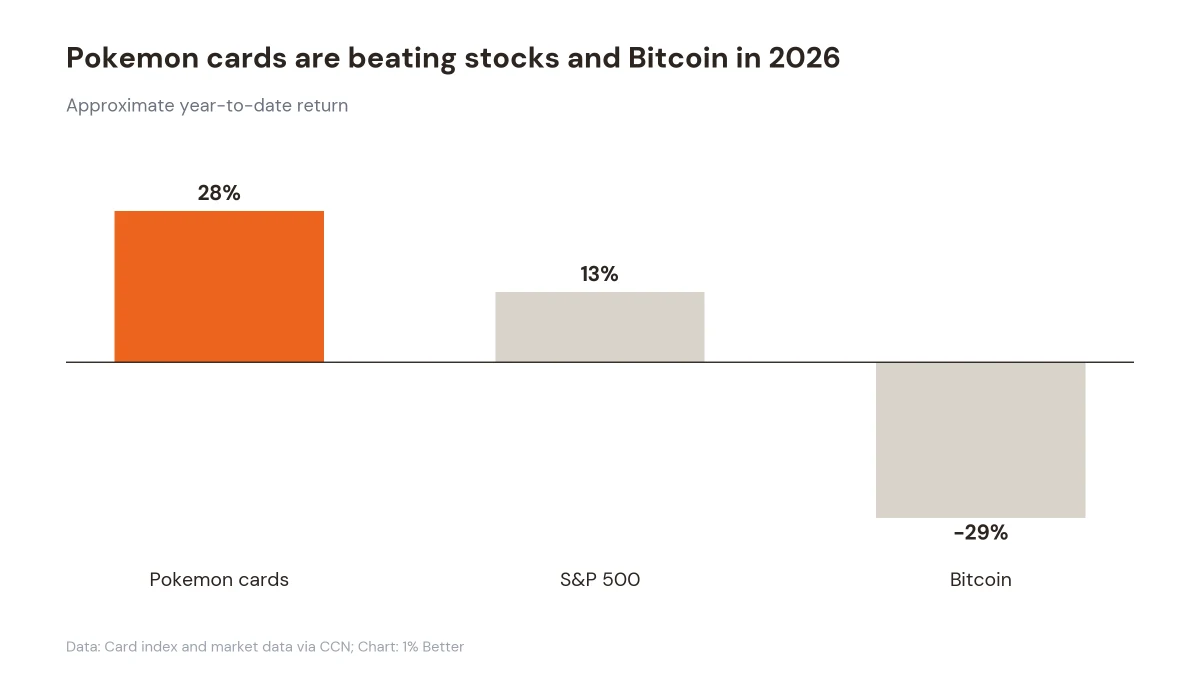
A Pokemon card index has gained roughly 28% so far in 2026, topping a 13% rise for the S&P 500 and a 29% slide in Bitcoin.
Why it matters: The graded-card market, now worth an estimated $13 billion to $15 billion, has matured into a serious alternative asset, and crypto platforms are racing to tokenize it. Collectibles are pulling in money as investors hunt for returns beyond a shaky crypto market.
Productivity
Always-employed workers are facing the sharpest hiring slowdown
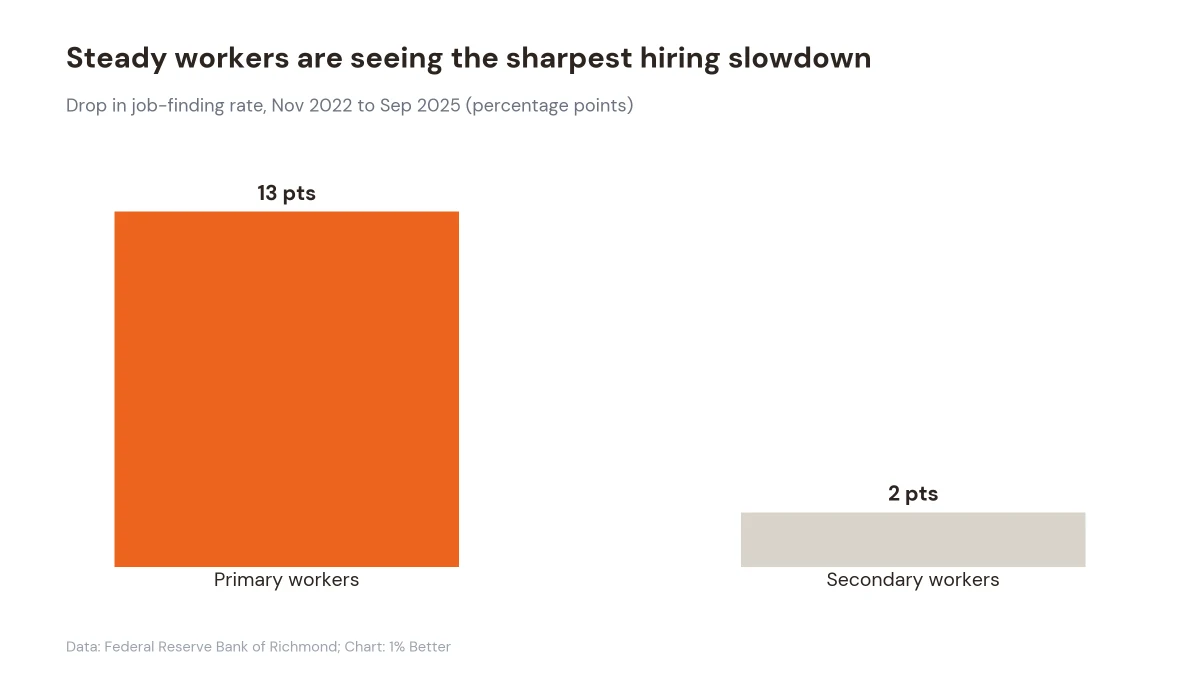
A Richmond Fed analysis found that steadily employed 'primary' workers saw their job-finding rate fall 13 percentage points from late 2022 to 2025, the biggest drop of any group.
Why it matters: Reliable workers usually bounce back fastest, so this reversal is unusual for an economy that keeps growing. The analysis ties the steepest declines to roles most exposed to AI, a hint that the technology is quietly reshaping who gets hired.
Productivity
AI-driven layoffs may sabotage the productivity they promise

New research argues that cutting staff in the name of AI erodes worker trust in the technology, one of the strongest predictors of whether AI actually lifts output.
Why it matters: In one Atlanta Fed study, about 90% of executives said AI has yet to boost productivity at their firms. The finding suggests leaders chasing efficiency through layoffs may be undercutting the employee goodwill that makes AI tools pay off.
Self-Improvement
The most disciplined people simply meet fewer temptations

Experience-sampling studies tracking thousands of everyday urges found that people high in self-control succeed largely by meeting fewer temptations, thanks to habits and settings that head off hard choices.
Why it matters: In one study of first-year students, those who felt less temptation made more progress toward their goals, while raw willpower predicted little. The takeaway: shape your surroundings to remove temptation, so daily grit carries far less of the load.
Self-Improvement
How much your peers scroll quietly shapes your own happiness

The 2026 World Happiness Report finds the biggest driver of online wellbeing is 'keeping pace,' or unconsciously matching how much everyone around you uses social media.
Why it matters: The same hour online can lift wellbeing in a light-using peer group and corrode it in a heavy-using one. That helps explain why young people, whose circles are saturated with heavy use, report the steepest happiness declines tied to time online.