Huberman Lab: Latest Episode
Newest Huberman Lab episode: Essentials: How... with Dr. Mary Helen Immordino-Yang (November 12, 2026). Key takeaway, summary and previous episodes from 1%...
Page updated by 1% Better. New episodes are summarised within hours of release.
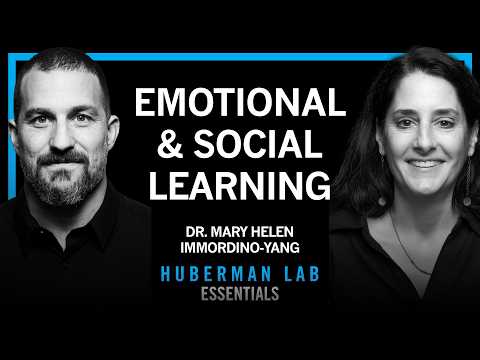
Essentials: How Emotions & Social Factors Impact Learning | Dr. Mary Helen Immordino-Yang
Huberman Lab with Dr. Mary Helen Immordino-Yang · Published · 38m
Key takeaway
Pay attention to what a student or child gets emotional about, then connect the academic skill to that interest. If a kid hates math but loves skateboarding, use the physics of a ramp or the geometry of a trick as the entry point. The same principle applies to adults: notice which problems genuinely hold your attention and practice the relevant skill there first. Dr. Imordino-Yang's argument is that emotion directs thinking. Whatever produces a strong feeling is what the mind is actually working on, so the most direct path to learning is through what already matters to the learner.
Episode overview
How do emotions drive learning, and what happens when education systems work against that process? Dr. Mary Helen Imordino-Yang, a neuroscientist and education researcher at USC, argues that the brain's basic survival machinery, including the physiological states that produce attachment, fear, and wonder, is the same machinery that generates meaning, belief, and conscious experience. The conversation covers how that works at every scale from a toddler to a classroom to a society. - **Emotion as the engine of thought.** What you feel strongly about is what your mind is actually processing, which makes emotional engagement the entry point for genuine learning. - **Narrative as the organizing structure.** From a child naming her love of her mother's arm to cultures interpreting the Holocaust, humans continuously construct stories that filter what they notice and how they act. - **Education designed against curiosity.** Western schooling tends to redirect students' emotional energy toward grades and test outcomes rather than ideas, and Dr. Imordino-Yang argues this actively stunts intellectual development. The conversation references the Performance Assessment Consortium, a network of New York City public schools that use long-term projects and student presentations in place of standardized exams.
Read the full Huberman Lab episode summary for key insights, quotes and action items.
Previous Huberman Lab episodes
- Essentials: Cold & Heat Exposure for Metabolic Health | Dr. Susanna Søberg
- Access the Sublime & Live Your Best Life | Robert Greene
- Essentials: How Smells Influence Our Hormones, Health & Behavior | Dr. Noam Sobel
- Unlocking Persistent Motivation & Extreme Resilience | Ross Edgley
- Essentials: Developing a Rational Approach to Supplementation for Health & Performance
About this page
This page always shows the newest Huberman Lab episode in the 1% Better library. We summarise each episode from its audio or captions within hours of release, so bookmark it to check what is new. Browse every Huberman Lab summary and guide or all episode summaries.